
Docsio
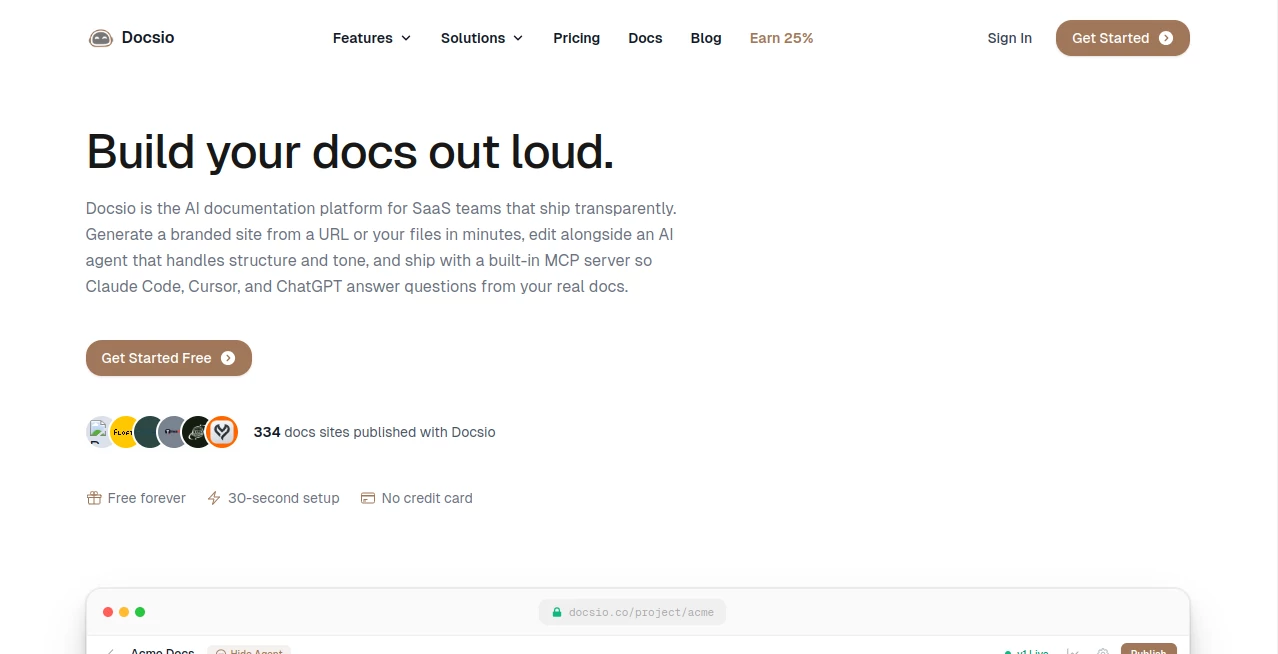
What is Docsio?
Creating professional product documentation has traditionally been a slow process that requires technical writers, developers, and countless hours of manual editing. Docsio changes this workflow by helping teams transform existing product information into a complete, branded documentation website in minutes.
Designed for SaaS companies, startups, and product teams, this AI-powered documentation platform can generate structured docs from a website URL or uploaded files, while keeping the final result aligned with the product’s brand identity. It combines content generation, editing, publishing, and maintenance into one streamlined experience.
Instead of starting with empty pages and complicated configurations, teams can begin with the information they already have. The platform analyzes available content, creates documentation structures, and provides tools to refine and publish a polished documentation portal. This makes it especially useful for companies that need reliable documentation without building an entire documentation workflow from scratch.
Key Features
User Interface
The platform provides a clean workspace where users can create, review, and improve documentation without dealing with complicated technical setups. The editing experience is designed around natural instructions, allowing users to describe changes and see them reflected in their documentation.
The live preview environment makes it easier to understand how the final documentation website will appear before publishing. Users can navigate pages, check layouts, and make adjustments while seeing updates instantly.
- Simple documentation creation workflow
- Live preview with instant updates
- AI-assisted editing experience
- Automatic brand matching with logos, colors, and fonts
- No-code customization options
Accuracy & Performance
A major advantage of this platform is its focus on generating documentation from real product information instead of creating unsupported content. The AI system analyzes provided sources and builds documentation based on available material, helping teams maintain trustworthy product information.
The generation process is optimized for speed, allowing teams to move from raw information to a structured documentation website quickly. This is valuable for startups and growing companies that need to launch products faster without sacrificing documentation quality.
- Content generation based on real sources
- Structured documentation organization
- Fast website-to-documentation conversion
- Quality review before publishing
Capabilities
The platform covers the complete documentation lifecycle, from initial generation to ongoing updates. Users can connect existing sources, upload documents, generate pages, customize layouts, and publish their documentation site.
- AI-generated documentation websites
- Website URL and file-based documentation creation
- GitHub synchronization
- AI chat assistant for documentation websites
- Automatic creation of AI-readable documentation indexes
- One-click publishing
- Custom domain support
- Documentation analytics
Security & Privacy
Security is an important consideration for teams working with internal product materials. The platform is designed to process documentation content in protected environments and focuses on preventing sensitive information from appearing in published documentation.
Uploaded materials can be analyzed while removing unnecessary internal details, helping companies create customer-facing documentation while maintaining control over their information.
- Protected processing environments
- Sensitive information filtering
- Customer-controlled publishing workflow
- Focus on responsible AI-generated content
Use Cases
This platform is suitable for many teams that need professional documentation without investing significant time into manual creation.
- SaaS Companies: Create product guides, onboarding pages, and developer documentation quickly.
- Startups: Launch a complete documentation portal without hiring a large documentation team.
- Developers: Turn technical information into accessible resources for users and customers.
- Product Managers: Maintain updated documentation alongside product improvements.
- Customer Support Teams: Reduce repetitive questions with organized self-service resources.
Pros and Cons
Pros
- Creates complete documentation websites quickly
- Requires minimal technical setup
- Automatically matches existing brand identity
- Includes AI-assisted editing and publishing tools
- Supports modern developer workflows
- Helps reduce documentation maintenance effort
Cons
- Advanced customization may require technical knowledge
- Teams with highly specialized documentation needs may still require manual review
- Some premium features are available only on paid plans
Pricing Plans
The platform offers a free plan that allows users to explore documentation creation and publishing features. Paid options provide additional capabilities designed for professional teams, including expanded AI editing usage, advanced documentation management features, and additional publishing options.
Pricing is structured to support different types of users, from individual creators and startups to growing SaaS organizations that need a reliable documentation system.
How to Use Docsio
Getting started is straightforward. Users can provide a website URL or upload existing documentation materials. The AI system analyzes the content, creates a documentation structure, applies branding elements, and prepares pages for review.
- Create an account and start a documentation project
- Add a website URL or upload documents
- Review the generated documentation structure
- Edit pages using AI-assisted commands
- Customize branding and navigation
- Publish the final documentation website
Comparison with Similar Tools
Traditional documentation platforms often require users to manually write pages, configure themes, and manage publishing workflows. This can become time-consuming, especially for small teams.
This platform focuses on automation by combining AI content creation, brand adaptation, editing assistance, and deployment in one place. Compared with standard documentation systems, it reduces the amount of manual preparation needed before launching a professional documentation website.
For teams that want more control than simple website builders but less complexity than custom documentation development, this approach offers a balanced solution.
Conclusion
Documentation plays a major role in customer experience, product adoption, and developer success. A well-organized knowledge base can reduce support workload and help users get more value from a product.
By combining artificial intelligence with modern publishing tools, this platform provides a practical way for teams to create, update, and manage documentation without spending weeks on setup. Its focus on automation, branding, and usability makes it a strong option for companies looking to build professional product documentation faster.
Frequently Asked Questions (FAQ)
Can AI create a complete documentation website?
Yes. The platform can generate structured documentation pages from website content or uploaded files and prepare them for review and publishing.
Is it suitable for SaaS products?
Yes. It is designed especially for SaaS teams, startups, and companies that need product documentation, guides, and developer resources.
Can users customize the generated documentation?
Yes. Users can edit content, change layouts, adjust branding, and refine documentation before publishing.
Does it support developer documentation workflows?
Yes. Features such as GitHub synchronization and AI-powered documentation access make it useful for developer-focused products.
Can teams publish documentation on their own domain?
Yes. Custom domain support allows teams to connect their documentation website with their preferred domain.
AI Documents Assistant , AI Knowledge Base , AI Developer Tools .
These classifications represent its core capabilities and areas of application. For related tools, explore the linked categories above.

Docsio Alternatives Product

Emergent

Toonifyit

AI Agent Ski…

LongTerMemory

Remove Handw…

Ito AI

Somnio

DeepSeek

Standard Com…