















MP3toMIDI
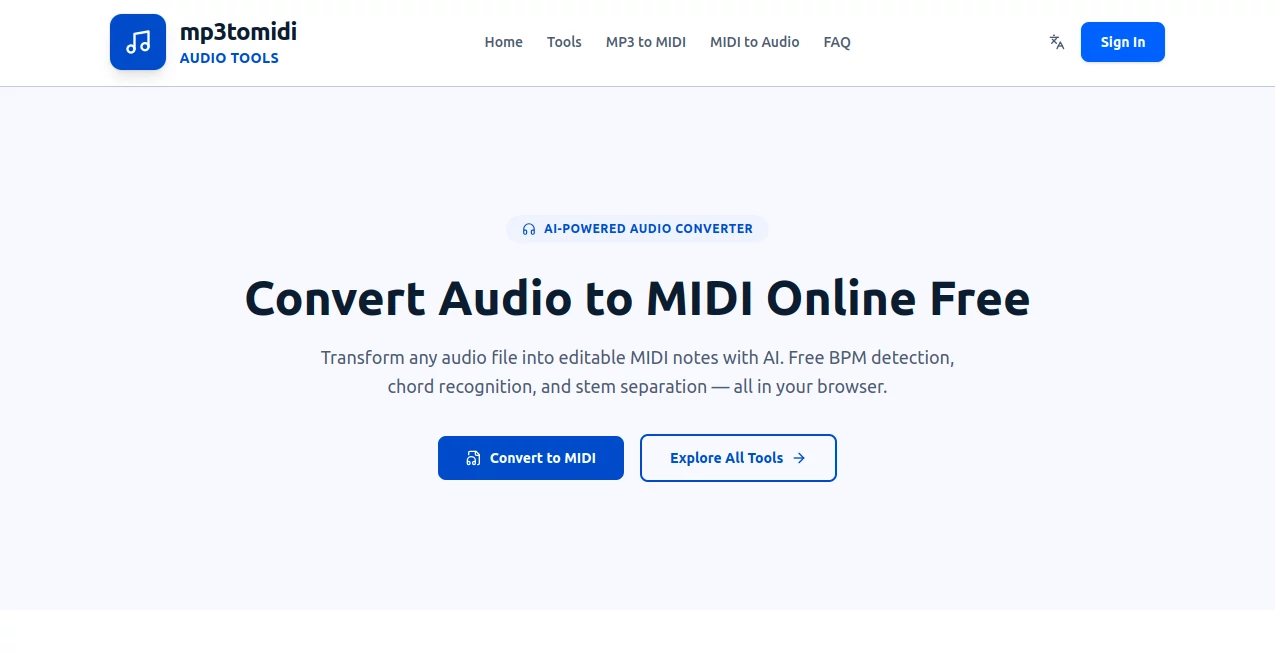
What is MP3toMIDI?
Music creation has become more accessible than ever, but transforming raw audio into editable musical data is still a challenge for many creators. This tool bridges that gap by converting audio recordings into MIDI format, allowing musicians, producers, and hobbyists to reshape sound into something fully customizable.
Instead of manually transcribing notes or spending hours trying to recreate melodies, users can quickly extract musical structure from audio files and work with it directly inside their preferred DAW. It feels like giving your recordings a second life—one that is flexible, editable, and creatively open-ended.
Key Features
User Interface
The interface is designed to be simple and distraction-free. Even first-time users can upload audio files and get results without navigating through complicated settings. Everything is placed where it should be, making the workflow smooth and intuitive.
Accuracy & Performance
Audio-to-MIDI conversion depends heavily on precision, and this tool focuses on detecting pitch, rhythm, and timing with strong consistency. While complex polyphonic audio can be challenging, melodic lines and instrumental tracks are handled with impressive clarity.
Capabilities
- Convert audio recordings into MIDI files
- Extract melodies from vocal or instrumental audio
- Support for creative remixing and arrangement workflows
- Useful for learning and transcription purposes
Security & Privacy
Uploaded files are processed securely and are not shared publicly. Users can experiment freely with their creative material without worrying about exposure or misuse of their content.
Use Cases
This type of tool is especially valuable for musicians who want to remix existing tracks, producers who need quick melodic extraction, and students learning composition. It also helps sound designers experiment with transforming real-world audio into digital instruments.
Pros and Cons
Pros
- Fast conversion from audio to MIDI
- Easy to use for beginners
- Useful for music production and education
- Supports creative experimentation
Cons
- Complex audio layers may reduce accuracy
- Best results require clean input recordings
Pricing Plans
The platform typically offers flexible access options, making it suitable for casual users as well as professionals. Some features may be available for free, while advanced functionality can be part of a premium plan depending on usage needs.
How to Use It
- Upload your audio file from your device
- Let the system process and analyze the sound
- Download the generated MIDI file
- Import it into your DAW or music software
- Edit, remix, or build new compositions from it
Comparison with Similar Tools
Compared to traditional transcription methods or basic audio analysis software, this solution offers a more direct and creative workflow. Many alternatives require manual tuning or technical knowledge, while this approach focuses on speed and accessibility without sacrificing usability.
Conclusion
For anyone working with music production or sound experimentation, converting audio into MIDI opens up a world of creative possibilities. It reduces technical barriers and allows ideas to move from inspiration to production much faster. Whether you're a beginner or a seasoned producer, it can become a practical part of your creative toolkit.
Frequently Asked Questions (FAQ)
What type of audio works best?
Clear melodic recordings with minimal background noise tend to produce the most accurate results.
Can it handle complex songs?
It performs best with single-instrument or vocal tracks, while heavily layered music may require manual adjustment after conversion.
Do I need music production experience?
No, the process is designed to be beginner-friendly, though basic DAW knowledge can help you get more out of the output.
What can I do with the MIDI file?
You can import it into any music production software to edit notes, change instruments, or build full compositions.