


















nene.im
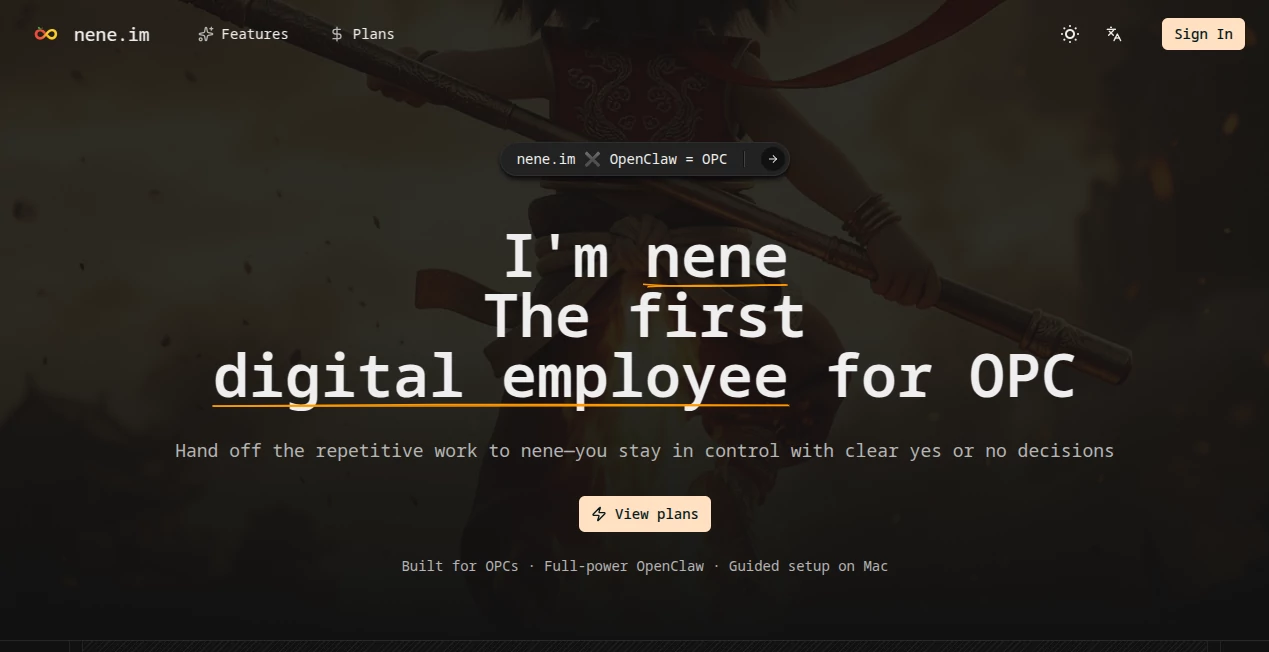
What is nene.im?
Running a one-person company often feels exciting and exhausting at the same time. There are messages to answer, tasks to organize, repetitive actions to repeat every day, and small decisions constantly competing for attention. This platform takes a different approach to productivity by introducing the idea of a digital employee rather than just another AI assistant.
Instead of acting like a simple chatbot waiting for prompts, it works more like an always-available teammate that stays connected to workflows, remembers context, and supports day-to-day execution. Built specifically for solo founders and creators, the experience focuses on reducing repetitive work while allowing users to stay in complete control. The result feels less like software and more like having an extra pair of hands quietly handling background operations.
For independent builders trying to move faster without hiring a full team, this concept feels surprisingly practical.
Key Features
User Interface
The interface is refreshingly straightforward. Setup is guided through a step-by-step process, making installation and configuration less intimidating for non-technical users. The dashboard keeps essential controls visible without creating clutter. Users can monitor health status, manage settings, restart services, and adjust configurations from a single location.
Rather than hiding important options behind complex menus, the system favors plain language and visual controls. That design decision makes daily use feel natural even for someone managing a business alone.
Accuracy & Performance
Performance is centered around persistence and continuity. Since the assistant remembers interactions and ongoing activities, responses become increasingly contextual over time. Instead of repeatedly reintroducing projects or workflows, users benefit from an evolving memory layer that reduces friction.
This creates a more practical experience than many tools that treat every interaction like a brand-new conversation.
Capabilities
- Digital employee workflow management
- Persistent memory across activities
- Multi-platform messaging integration
- Visual operation controls
- Budget and usage limits
- Mobile interaction support
- Guided installation process
- Centralized configuration settings
The platform supports communication environments such as business messaging systems and allows users to control activities directly from mobile devices. This flexibility creates a feeling of continuous assistance instead of isolated task execution.
Security & Privacy
Privacy and control are treated as practical necessities. Users can separate memory threads, organize information by projects, and remove stored context when needed. Budget limitations and operational controls also prevent unexpected usage patterns.
For solo operators and creators, maintaining visibility into how automation behaves is just as important as the automation itself.
Use Cases
- Solo entrepreneurs managing multiple communication channels
- Content creators handling repetitive workflow tasks
- Independent consultants organizing client interactions
- Small digital businesses automating operational routines
- Founders looking to reduce administrative workload
- Creators wanting mobile access to AI-powered workflows
Imagine receiving updates, managing communications, and coordinating background tasks directly from your phone while traveling or working remotely. For many independent businesses, that convenience can save significant time each week.
Pros and Cons
Pros
- Built specifically for one-person businesses
- Simple onboarding process
- Persistent memory creates continuity
- Works across multiple communication platforms
- Offers spending and usage controls
- Feels more like an assistant than a chatbot
Cons
- Some setup steps require configuration of external services
- Mac-focused experience may limit some users
- Advanced workflows may require experimentation
Pricing Plans
Several pricing structures are available depending on usage needs.
- Trial: Entry-level access designed for experimentation
- Monthly Plan: Suitable for everyday operation and continuous use
- Annual Plan: Higher limits and expanded capabilities for long-term users
The structure feels flexible enough for solo builders at different stages of growth.
How to Use nene
- Choose a suitable subscription option
- Install the application locally
- Follow the guided setup wizard
- Connect messaging and workflow channels
- Configure usage preferences and limits
- Begin interacting through desktop or mobile
The onboarding process avoids unnecessary complexity and helps users become operational quickly.
Comparison with Similar Tools
Many AI assistants focus heavily on answering prompts or generating content. Others specialize in task automation. The difference here is the attempt to merge ongoing memory, operational workflows, communication channels, and persistent assistance into a unified experience.
Traditional chatbot tools often disappear after a conversation ends. Digital employee systems aim to remain active in the background and continue participating in work processes. That distinction creates a very different user experience.
Conclusion
The idea of having a digital employee once sounded futuristic. Now it feels surprisingly practical. Independent founders and creators often need support but may not have the resources to build a full team. A system designed around persistence, communication, and ongoing assistance offers an interesting middle ground.
Rather than replacing human decision-making, the platform focuses on handling repetitive work while allowing users to remain in control. For people building businesses independently, that balance may be one of its most appealing qualities.
Frequently Asked Questions (FAQ)
Is this tool designed for teams or individuals?
It primarily targets solo founders, creators, and one-person companies, although smaller teams can also benefit.
Does it remember previous interactions?
Yes. Persistent memory is one of its core features and helps create contextual workflows.
Can it work with communication platforms?
Yes. Multiple messaging environments can be integrated for workflow management.
Can users control spending?
Yes. Usage limitations and budget controls are available.
Is setup difficult?
No. Guided installation and visual configuration simplify the onboarding process.
AI Workflow Management , AI Productivity Tools , AI Task Management , AI Team Collaboration .
These classifications represent its core capabilities and areas of application. For related tools, explore the linked categories above.

nene.im Alternatives Product

AI text clea…

Miro

FINIITE AI

Nifty

DemoDash

Youfiliate
KwaKwa Cours…

Zivy

Notion
