
















Recruiter
What is Recruiter?
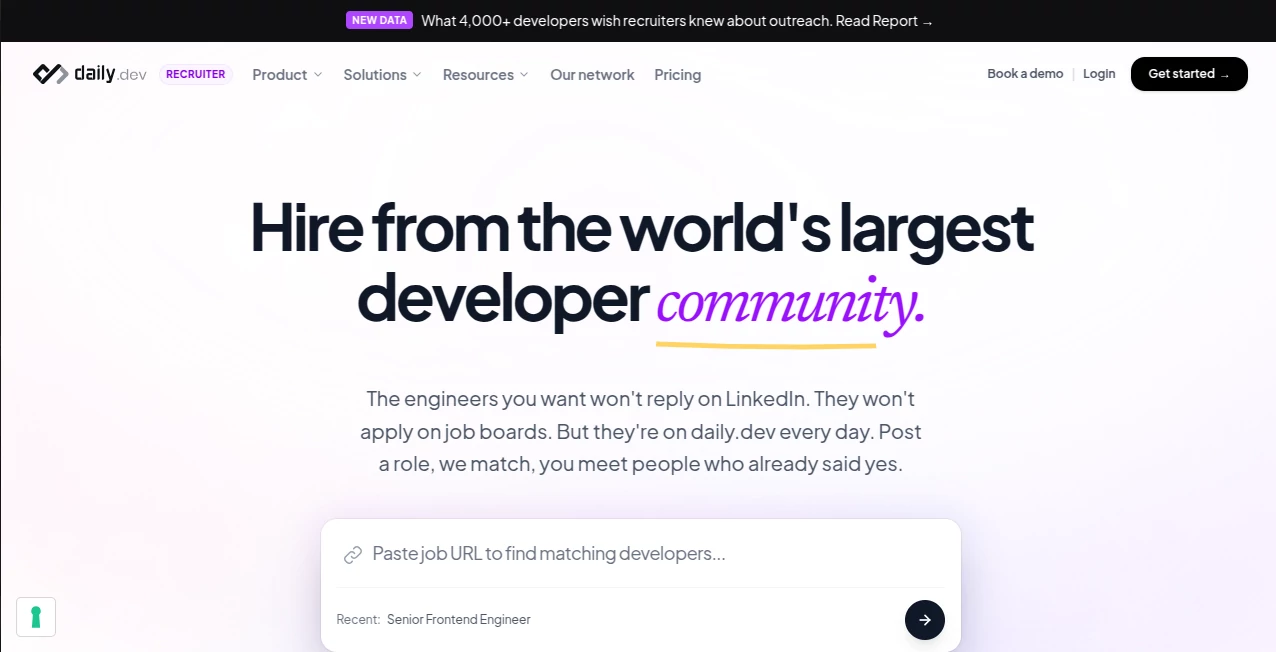
I’ve talked to enough recruiters to know the pain: you post a job, get flooded with applications, but the best developers — the ones who are actually good and actively learning — rarely show up. They’re too busy building things. This platform flips the script. Instead of chasing passive candidates on traditional job boards, it reaches developers where they already spend their mornings: reading tech news, discussing trends, and staying sharp. The matches feel warmer, the response rates higher, and the whole process respects everyone’s time. It’s not just another recruiting tool — it feels like a smarter way to connect.
Introduction
Technical hiring has been broken for a while. Traditional job boards attract active job seekers, but the strongest engineers are often happily employed and not scrolling through listings. This recruiter platform solves that by tapping into a highly engaged developer community. Developers come to daily.dev every day to learn, not to hunt for jobs. When a role matches their interests and skills, they get a gentle, relevant nudge and can choose to engage. It’s opt-in, privacy-first, and built on real behavioral signals instead of just keywords on a resume. Recruiters and engineering managers finally get access to talent that’s actively growing — exactly the kind of people you want on your team.
Key Features
User Interface
The dashboard is clean and focused on what matters. You describe your role in plain English, set preferences, and the system starts surfacing relevant developers with clear context on why they might be a good fit. Everything is intuitive — from reviewing candidate profiles with their actual activity patterns to managing outreach. No overwhelming feature bloat. It feels like a tool designed by people who understand both recruiting and engineering workflows.
Accuracy & Performance
Matching is noticeably smarter because it uses real-time data from how developers actually behave on the platform — what they read, what they discuss, what technologies they engage with. This leads to higher relevance and better response rates than keyword-based systems. The platform filters out noise early, so you spend time on promising conversations instead of sorting through hundreds of mismatched resumes. In practice, recruiters report warmer intros and faster pipeline movement.
Capabilities
You can post roles, get AI-assisted matching, review detailed candidate context, send warm introductions, and integrate directly with your existing ATS. It supports a wide range of technical roles — from frontend and backend to specialized positions like DevOps, data science, and more. The system respects developer privacy (they opt in before any outreach) while giving recruiters rich insights beyond what a traditional resume shows.
Security & Privacy
Privacy is a core principle here. Developers control their data and must explicitly opt into conversations. The platform is built with strong compliance standards, giving both sides confidence. Recruiters get the insights they need without compromising trust, which makes the whole process feel more human and sustainable.
Use Cases
A startup engineering manager looking for their first few backend engineers posts a role and gets introductions from developers already interested in their stack. A scaling company fills senior roles faster by reaching passive talent who wouldn’t have applied through traditional channels. A recruiter building a pipeline for niche skills (like Rust or AI infrastructure) finds engaged candidates who are actively learning those technologies. It works especially well for teams tired of low-response cold outreach and generic job board spam.
Pros and Cons
Pros:
- Reaches highly engaged developers who aren’t actively job hunting.
- Warm, opt-in introductions lead to better response rates and candidate experience.
- Rich context beyond resumes — you see what candidates actually care about.
- Seamless ATS integration keeps your existing workflow intact.
- Privacy-first approach builds long-term trust in the platform.
Cons:
- Best for roles that appeal to curious, learning-oriented developers.
- As a newer platform, the pool is still growing compared to massive traditional networks.
Pricing Plans
Pricing is built around recruiter needs — from individual recruiters to larger teams. You pay for access to quality matches and warm introductions rather than volume of cold applications. Many teams find the ROI clear because each conversation starts with higher intent. They offer flexible options so you can scale as your hiring needs grow.
How to Use Recruiter
Sign up, connect your ATS if you want seamless flow, then create a role by describing it in natural language. The system finds relevant developers based on their activity. Review the suggested matches with context, choose who to reach out to, and send a warm introduction. Candidates review your role privately and opt in if interested. From there, conversations happen through the platform or your preferred channel. It keeps the process respectful and efficient for everyone involved.
Comparison with Similar Tools
Traditional job boards and LinkedIn often rely on active job seekers and keyword matching, leading to high volume but low relevance. This platform stands out by focusing on engaged, passive talent within a trusted developer community. It trades quantity for quality and cold outreach for warm, opt-in conversations. For teams hiring serious technical talent, that difference in candidate caliber and experience is significant.
Conclusion
Hiring great developers shouldn’t feel like throwing darts in the dark. This platform brings recruiters and strong technical talent together in a more natural, respectful way. By meeting developers where they already learn and grow, it surfaces better matches and creates better first impressions. For any team serious about building strong engineering organizations, it’s a refreshing and effective approach in a space that desperately needed one.
Frequently Asked Questions (FAQ)
How is this different from LinkedIn Recruiter?
It focuses on engaged developers in their natural environment rather than active job seekers, leading to higher relevance and better response quality.
Do candidates have to be actively looking for jobs?
No — many strong matches are happily employed but open to the right opportunity when it’s presented thoughtfully.
Is it only for big companies?
Not at all — startups and growing teams benefit greatly from accessing engaged talent efficiently.
How does privacy work for developers?
They control their data and must explicitly opt into any conversation — no unwanted cold outreach.
AI Recruiting , Other .
These classifications represent its core capabilities and areas of application. For related tools, explore the linked categories above.

Recruiter Alternatives Product

PetShard

Hunty Zombie…

HeyZinc

Lessie AI

Ultimate Too…

JobbTwine

URL to Any

Four-Leaf

ChatView-AI …