
ResonanceMetrics
What is ResonanceMetrics?
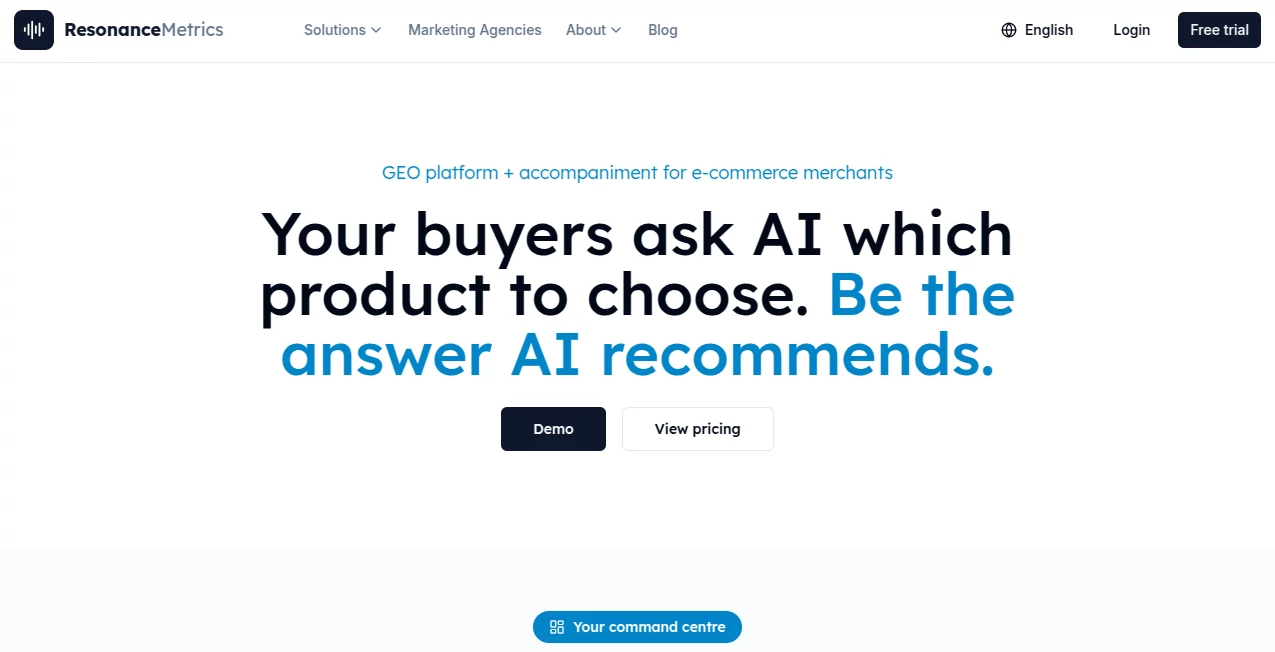
When someone asks an AI “which laptop should I buy?” or “best running shoes for wide feet,” your product either appears in the answer or it doesn’t. Most brands still treat this like a future problem. This platform treats it like the present reality it already is. It shows you exactly how today’s AI models see your brand and products, then gives you a clear, actionable roadmap to become the one they recommend. I’ve watched e-commerce teams go from being completely invisible in AI answers to appearing in the top suggestions after a few targeted changes. The shift in traffic and conversions can be surprisingly fast once you start speaking the language AI actually understands.
Introduction
Search behavior is changing. People aren’t just typing keywords into Google anymore—they’re having full conversations with ChatGPT, Claude, Gemini, and Perplexity. If your brand isn’t part of those conversations, you’re quietly losing customers before they even reach your site. ResonanceMetrics maps exactly how these AI engines currently perceive your products, your positioning, and your competitors. More importantly, it turns that insight into a practical plan you can execute. It’s not another vanity dashboard—it’s a strategic tool built for brands that want to win in the new AI-first discovery world.
Key Features
User Interface
The dashboard feels refreshingly business-focused rather than technical. You see clear metrics like “share of voice in AI answers,” sentiment trends, and competitor gaps presented in plain language. One-click audits scan your site in seconds and highlight what’s helping or hurting your visibility. Everything is organized around real business outcomes instead of abstract SEO jargon. It’s the kind of interface where a marketing manager can understand the data in minutes, not hours.
Accuracy & Performance
It tracks major AI engines in real time—ChatGPT, Claude, Gemini, Perplexity, and more—running actual buyer-intent prompts to see what the models actually say. The insights are updated regularly so you’re not working with stale data. Teams report that the recommendations translate into measurable improvements in how often their brand appears in AI responses. The accuracy comes from testing thousands of real prompts rather than guessing what might work.
Capabilities
Beyond tracking, it delivers semantic audits, technical GEO checks, competitor comparison, and prioritized action plans that link directly to business goals. You can track multiple brands or markets, monitor sentiment, and see which sources the AIs are citing. The platform doesn’t just tell you you’re missing—it shows you concrete steps to fix it, from content adjustments to structured data improvements to messaging tweaks that AI models respond to better.
Security & Privacy
Your data and competitive insights stay protected. The system is designed for serious brands, with proper controls around what gets analyzed and how results are stored. You can run audits without exposing sensitive internal information, and the focus stays on public visibility rather than scraping private data.
Use Cases
An online furniture brand discovers their sofas are rarely recommended by AI for “comfortable seating for small apartments” and uses the insights to rewrite key pages—within weeks they start appearing in relevant answers. A skincare startup tracks how competitors dominate certain queries and carves out their own space with targeted messaging. A B2B SaaS company monitors brand perception across AI platforms and adjusts their thought leadership content to become the default recommendation. Whether you sell physical products or digital services, knowing—and influencing—what AI says about you has become a real competitive edge.
Pros and Cons
Pros:
- Turns the black box of AI recommendations into something you can actually measure and improve.
- Actionable plans that connect directly to business results, not just vanity metrics.
- Covers the major AI engines that people are actually using for buying decisions.
- Clear reporting that marketing and leadership teams both understand.
Cons:
- Still a relatively new field, so best results come from consistent monitoring and iteration.
- Higher-tier plans are needed for deep competitive tracking and multi-market views.
Pricing Plans
It offers a practical tiered structure starting with a self-service Starter plan for growing brands, moving up to Growth for competitive analysis and international markets, and Enterprise for custom needs with dedicated support. Many teams find the return on investment clear after the first month once they see improved AI visibility translating into real traffic and sales.
How to Use ResonanceMetrics
Sign up and connect your main website URL. Run the initial brand intelligence scan to see how AI currently perceives you. Review the diagnostic report and prioritized recommendations. Implement the highest-impact changes—usually a mix of content, technical, and messaging tweaks. Set up ongoing tracking to monitor progress over time. The loop is straightforward: measure, act, improve, repeat. Most users see noticeable movement within the first 30–60 days of consistent execution.
Comparison with Similar Tools
Traditional SEO tools focus on Google. Pure AI monitoring tools often stop at reporting without clear next steps. This platform bridges both worlds—giving you deep visibility into AI behavior while delivering practical, business-oriented recommendations. It’s less about ranking positions and more about becoming the answer AI chooses to give. That shift in focus makes all the difference for brands serious about the new discovery channels.
Conclusion
The way people discover and choose products is changing faster than most companies realize. Tools like this help you stay ahead instead of playing catch-up. It turns uncertainty about AI search into clear, actionable intelligence you can use today. For any brand that wants to be found, trusted, and recommended in the age of conversational AI, having this kind of visibility isn’t a nice-to-have—it’s becoming table stakes. The brands that act early will be the ones AI mentions first.
Frequently Asked Questions (FAQ)
How often does the data update?
Regularly, with major AI engines tracked continuously so you see real trends over time.
Do I need technical knowledge to use it?
No—the interface and recommendations are built for marketing and e-commerce teams, not just developers.
Can I track my competitors?
Yes—Growth and higher plans include detailed competitive intelligence and gap analysis.
Is it only for e-commerce?
Primarily built for product-driven businesses, but the principles apply to any brand wanting AI visibility.
What makes it different from regular SEO?
It optimizes for how AI models understand and recommend, not just traditional search rankings.
AI SEO Assistant , AI Marketing Plan Generator , AI Research Tool , AI E-commerce Assistant .
These classifications represent its core capabilities and areas of application. For related tools, explore the linked categories above.
ResonanceMetrics details
Website unavailable — View Alternatives
Pricing
- Free
Apps
- Web App
Categories

ResonanceMetrics Alternatives Product

Medialyst
OGimage

Where Is Thi…

ForexCoupons

Sorank

Skygen AI

Serplux

seedancetwo2…

SEOTakeoff