

















Thrum.FM
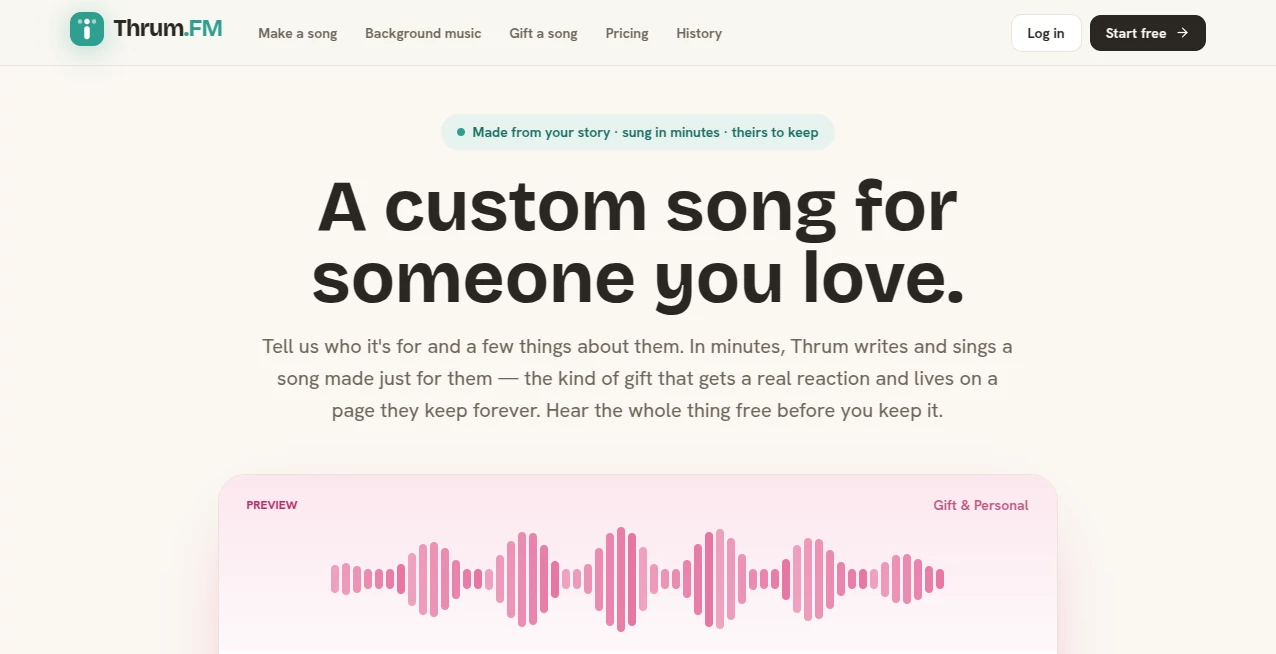
What is Thrum.FM?
Modern AI development often involves multiple agents working on the same project, but keeping every session synchronized can quickly become a challenge. Conversations expire, context disappears, and important updates are easily lost. This platform introduces a persistent messaging layer designed specifically for AI agents, allowing them to communicate across sessions, repositories, worktrees, and even different machines without losing important information. Instead of relying on temporary chat history, every message becomes part of a durable workflow that helps autonomous agents collaborate with confidence.
Built with developers in mind, the platform combines a lightweight command-line experience with support for AI-powered environments. It eliminates the need for external databases by storing messages in an append-only Git history, making collaboration portable, transparent, and offline-friendly. Whether a project involves a single coding assistant or an entire team of specialized AI agents, it creates a reliable communication backbone that keeps every participant informed and productive. :contentReference[oaicite:0]{index=0}
Key Features
- Persistent messaging across AI sessions
- Works across multiple worktrees and repositories
- Offline-first architecture using Git storage
- No external database required
- Built-in command-line interface for developers
- MCP server integration for AI agents
- Real-time message notifications
- Named agents with deterministic identities
- Cross-machine synchronization
- Session recovery after interruptions
- Role-based communication
- Integrated monitoring and worktree management
User Interface
The experience is intentionally developer-focused. Most daily tasks are handled through a clean command-line interface with straightforward commands for sending messages, checking inboxes, managing sessions, and monitoring active agents. For teams that prefer visual feedback, an embedded web interface provides an overview of running agents and message activity without introducing unnecessary complexity. The result is a workflow that feels fast, predictable, and comfortable for software engineers.
Accuracy & Performance
Instead of rebuilding project context after every restart, agents can recover previous conversations and continue from where they stopped. Messages remain available even after session compaction or machine changes, reducing duplicated work and minimizing misunderstandings between autonomous agents. Since synchronization relies on Git rather than an external messaging service, performance remains efficient while preserving reliability. :contentReference[oaicite:1]{index=1}
Capabilities
The platform supports agent registration, direct messaging, broadcast communication, threaded conversations, event subscriptions, worktree management, session snapshots, monitoring tools, and runtime integrations for popular AI coding environments. It also enables secure synchronization across multiple machines while keeping every participant aware of project progress through real-time updates. :contentReference[oaicite:2]{index=2}
Security & Privacy
Privacy is one of the strongest aspects of the platform. Messages are stored inside Git rather than third-party databases, giving development teams full ownership of their communication history. Offline operation is supported by default, while secure synchronization options and cryptographic signing help protect message integrity during collaboration across distributed environments. :contentReference[oaicite:3]{index=3}
Use Cases
- Coordinating multiple AI coding agents on one software project.
- Maintaining project context across interrupted AI sessions.
- Managing distributed development teams working on different machines.
- Synchronizing feature branches and worktrees.
- Improving collaboration between autonomous software engineering agents.
- Building long-running AI automation workflows.
- Tracking development progress without relying on temporary chat history.
Pros and Cons
- Pros
- Purpose-built for AI agent collaboration.
- No external database dependency.
- Reliable context preservation.
- Offline-first architecture.
- Git-native synchronization.
- Supports complex multi-agent workflows.
- Developer-friendly command-line tools.
- Cons
- Primarily designed for technical users.
- Requires familiarity with Git-based workflows.
- May provide more functionality than needed for simple solo projects.
Pricing Plans
Public pricing information is not prominently listed. The project provides documentation, installation instructions, and open development resources, while users should refer to the official website for the latest availability and licensing details. :contentReference[oaicite:4]{index=4}
How to Use Thrum
- Install the command-line tool.
- Initialize it inside your Git repository.
- Register one or more AI agents.
- Assign roles and responsibilities.
- Send and receive persistent messages between agents.
- Monitor conversations and project activity.
- Resume interrupted sessions with preserved context.
- Synchronize work across machines when required.
Comparison with Similar Tools
Unlike traditional chat applications or temporary AI conversations, this solution focuses on long-term coordination between autonomous agents. While many development assistants concentrate on code generation, this platform specializes in maintaining communication, preserving context, and organizing collaboration throughout the software development lifecycle. Its Git-native architecture also removes the need for external messaging infrastructure, making it particularly attractive for engineering teams that value transparency, portability, and local control.
Conclusion
Coordinating multiple AI agents becomes significantly easier when communication is treated as a permanent part of the development process instead of a temporary conversation. By combining persistent messaging, Git-based storage, real-time synchronization, and developer-oriented tooling, this platform provides a practical foundation for building reliable multi-agent software workflows. Teams looking to scale AI-assisted development while maintaining organization and continuity will find it to be a thoughtful and highly capable addition to their engineering toolkit.
Frequently Asked Questions (FAQ)
What problem does this platform solve?
It preserves communication between AI agents across sessions, machines, and worktrees, preventing valuable context from being lost.
Does it require an external database?
No. Messages are stored using an append-only Git-based approach instead of a traditional database.
Can multiple AI agents collaborate simultaneously?
Yes. It is specifically designed to support coordinated communication between multiple autonomous agents.
Is it suitable for individual developers?
Yes. Although it excels in multi-agent environments, solo developers can also benefit from persistent project context and session recovery.
Does it work offline?
Yes. Its offline-first design allows projects to continue operating without depending on cloud-based messaging services.
AI Workflow Management , AI Code Assistant , AI Team Collaboration , AI Developer Tools .
These classifications represent its core capabilities and areas of application. For related tools, explore the linked categories above.

Thrum.FM Alternatives Product

Yorph AI

Latency Atlas
AI Wire

onuml

Read

Solovio

PatentFig AI

4ga Boards
Gemini Omni