
Viktor
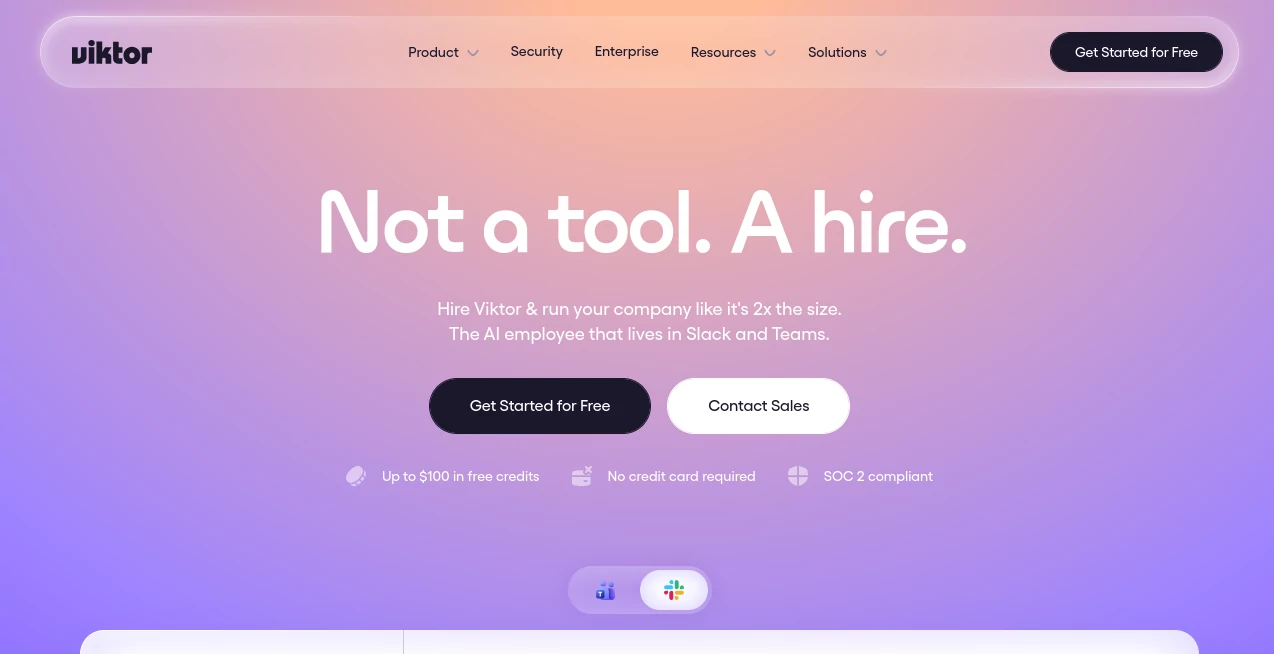
What is Viktor?
Engineering teams often spend countless hours repeating calculations, transferring data between software platforms, and manually preparing reports. This platform transforms those repetitive processes into intelligent, reusable workflows that dramatically reduce manual effort while improving consistency across projects.
Built specifically for engineering and construction professionals, it combines AI-powered applications, workflow automation, and seamless software integrations into a single environment. Instead of replacing engineering expertise, it empowers professionals to focus on solving complex design challenges while routine work happens automatically behind the scenes.
Whether developing structural calculations, connecting BIM models, automating CAD workflows, generating technical reports, or creating custom engineering applications, organizations can centralize their knowledge and deploy it safely across teams. The result is faster project delivery, better collaboration, and greater confidence in every engineering decision.
Key Features
User Interface
The platform offers a clean workspace designed for technical professionals rather than traditional software developers. Engineers can build automation tools through an intuitive visual environment or extend functionality with code when advanced customization is required. Applications can be shared across departments without requiring every user to understand the underlying logic.
Accuracy & Performance
Engineering calculations require precision, transparency, and validation. Every workflow is designed to produce consistent outputs while minimizing human error caused by repetitive manual work. Parametric studies, design iterations, and automated calculations can be completed in a fraction of the time typically required, allowing teams to evaluate more design alternatives without sacrificing quality.
Capabilities
- Build AI-powered engineering applications.
- Create intelligent workflow automation.
- Connect CAD, BIM, FEM, spreadsheets, and databases.
- Generate engineering reports automatically.
- Create reusable engineering knowledge libraries.
- Run parametric design studies.
- Automate repetitive calculations.
- Deploy applications across organizations.
- Support both no-code and code-based development.
- Integrate with existing engineering software ecosystems.
Security & Privacy
Large engineering organizations require governance as much as automation. The platform includes centralized deployment, version control, role-based permissions, controlled sharing, validation workflows, and secure access management. Teams maintain visibility into engineering logic while ensuring trusted applications remain consistent across multiple projects and departments.
Use Cases
- Structural engineering automation.
- Geotechnical analysis workflows.
- BIM and CAD integration.
- Mechanical engineering calculations.
- Hydraulic design automation.
- Process engineering tools.
- Automated technical documentation.
- Parametric building design.
- Infrastructure project optimization.
- Engineering knowledge sharing across global teams.
Pros and Cons
Pros
- Purpose-built for engineering professionals.
- Supports both AI-assisted and code-based development.
- Excellent integration with engineering software.
- Reduces repetitive manual tasks significantly.
- Scales from individual projects to enterprise deployment.
- Strong governance and collaboration features.
- Reusable automation improves long-term productivity.
Cons
- Primarily designed for engineering and construction industries.
- Advanced customizations may require programming knowledge.
- Enterprise implementations may involve onboarding and process planning.
Pricing Plans
Pricing is available upon request. Organizations can contact the sales team for customized plans based on company size, deployment requirements, and engineering workflow needs. A free account is available for users who want to explore the platform before committing to a larger implementation.
How to Use VIKTOR
Begin by creating an account and identifying a repetitive engineering process that consumes valuable project time. Build an automation workflow using the visual tools or custom code, connect it with existing engineering software, validate the results, and publish the application for your team. As projects evolve, workflows can be refined, expanded, and reused across future engineering challenges, allowing organizations to preserve valuable technical knowledge instead of rebuilding solutions repeatedly.
Comparison with Similar Tools
Unlike general workflow automation platforms, this solution focuses entirely on engineering operations. Rather than offering generic business automation, it understands engineering calculations, technical validation, CAD connectivity, BIM workflows, simulation software, and project-specific requirements. Compared with traditional scripting approaches, it provides centralized deployment, governance, collaboration, and AI-powered automation without sacrificing transparency or engineering control.
Conclusion
For engineering organizations seeking practical digital transformation, this platform delivers a compelling combination of AI, automation, and engineering expertise. It helps eliminate repetitive work while preserving technical accuracy and organizational knowledge. From small engineering teams to multinational firms, the ability to automate calculations, integrate specialized software, and safely deploy reusable applications makes it an outstanding solution for improving productivity and accelerating project delivery without compromising engineering quality.
Frequently Asked Questions (FAQ)
Who is this platform designed for?
It is built primarily for engineering, construction, infrastructure, architecture, and industrial organizations that want to automate technical workflows.
Does it require programming experience?
No. Engineers can build applications using visual tools, while developers can extend functionality with code for more advanced workflows.
Can it connect with existing engineering software?
Yes. It integrates with many engineering tools, including CAD, BIM, FEM applications, spreadsheets, databases, and cloud services.
Is it suitable for enterprise deployment?
Yes. Features such as governance, role-based permissions, validation, centralized deployment, and version management make it well suited for enterprise environments.
What problems does it solve?
It reduces repetitive engineering tasks, automates calculations, standardizes workflows, minimizes manual errors, and enables teams to reuse engineering knowledge across projects.
AI Workflow Management , AI App Builder , AI No-Code & Low-Code , AI Productivity Tools .
These classifications represent its core capabilities and areas of application. For related tools, explore the linked categories above.

Viktor Alternatives Product

broop

Free AI Chat

AI Entity
Vurge

GPT Image 2 …

Vibebot.gg

Lovable APP

Grok 4

Hands Off