
Web Anatomy
What is Web Anatomy?
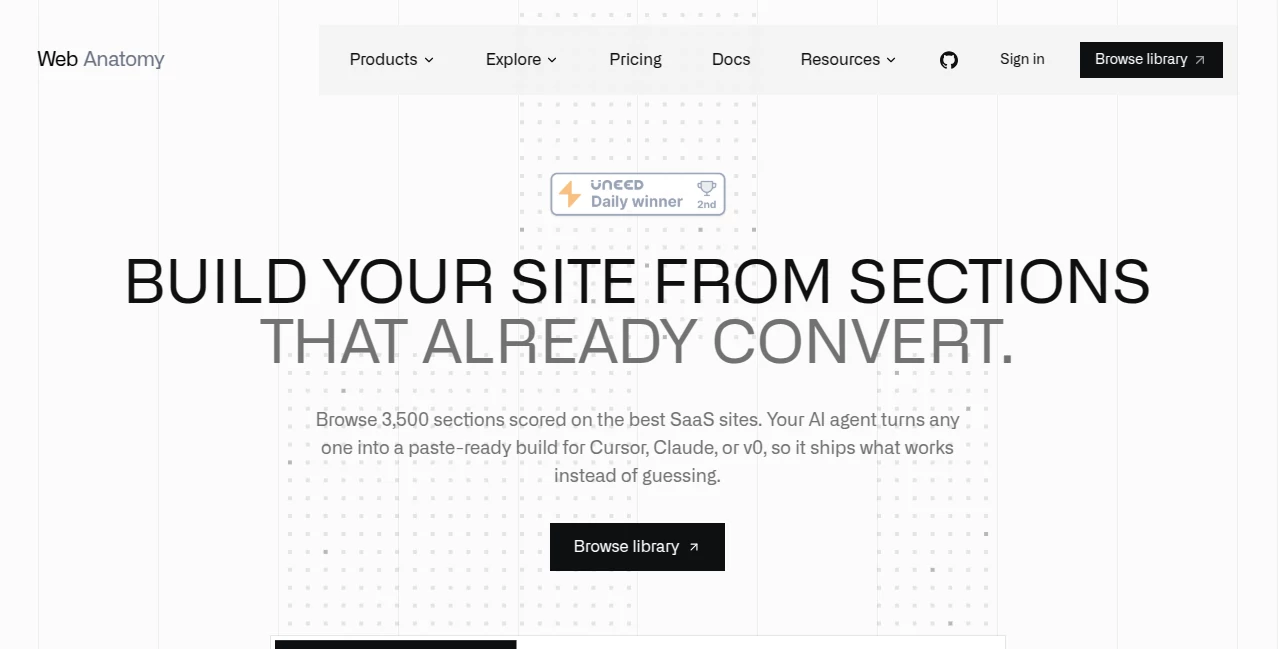
Creating a high-performing website is not only about having attractive visuals. The structure, messaging, and placement of every section can determine whether visitors stay, trust a brand, or take action. This platform helps designers, marketers, founders, and developers build better pages by learning from real-world examples of successful websites.
Instead of relying on generic design assumptions, it provides access to a curated library of thousands of website sections from successful companies. Users can explore proven layouts, analyze landing pages, and bring stronger ideas into their own projects. The focus is simple: help teams create websites based on patterns that have already demonstrated results.
Key Features
User Interface
The interface is designed around simplicity and fast discovery. Users can browse website sections by category, explore examples, and quickly identify patterns that match their goals. The organized structure makes it easier for both experienced designers and beginners to find inspiration without spending hours researching competitors manually.
The platform feels more like a practical design research tool than a traditional inspiration gallery. Each section is connected to real examples, helping users understand why certain layouts work and how they can adapt them for their own products.
Accuracy & Performance
The platform focuses on real website performance patterns rather than theoretical recommendations. Its library includes thousands of analyzed sections collected from successful companies, allowing users to make decisions based on practical examples.
By comparing pages against proven structures, teams can identify missing elements, improve messaging, and create more effective user experiences. The analysis approach helps reduce guesswork during the design process.
Capabilities
The tool provides several capabilities for improving website creation and optimization, including:
- Access to a large collection of scored website sections.
- Landing page analysis based on proven design patterns.
- Benchmarking against high-performing websites.
- AI-assisted recommendations for improving page structure.
- Reusable prompts and ideas for AI coding assistants.
- Support for modern AI development workflows.
- Research across sections such as pricing, hero areas, testimonials, FAQs, and calls-to-action.
For example, a startup preparing a new pricing page can study successful SaaS pricing layouts, understand the structure behind them, and apply similar principles instead of starting from a blank page.
Security & Privacy
The platform is built around research and analysis of publicly available website patterns. It focuses on helping users improve their own projects while providing tools and resources that fit modern development workflows.
Users can work with the platform as part of their preferred AI-assisted development environment, making it a flexible option for teams that already use AI coding tools.
Use Cases
This solution can support a wide range of professionals who need better website decisions and faster production workflows.
- Startup founders: Create stronger landing pages without expensive design research.
- Web designers: Discover proven layouts and improve creative decisions.
- Marketing teams: Build pages with clearer messaging and conversion-focused structures.
- Developers: Use AI-ready insights when building websites with modern coding assistants.
- SaaS companies: Compare important pages such as pricing, signup, and product sections.
- Agencies: Speed up client projects with reliable design references.
Pros and Cons
Pros:
- Based on real website examples rather than generic templates.
- Large collection of analyzed website sections.
- Useful for both designers and developers.
- Helps reduce research time during website creation.
- Works well with AI-powered development workflows.
Cons:
- Users who need completely original design concepts may still require additional creative exploration.
- The value depends on how effectively users adapt the provided insights to their own brand.
Pricing Plans
The platform offers a free option for exploring and auditing the benchmark library. Users can access thousands of scored sections and basic analysis features without payment.
Paid plans expand access with advanced analysis capabilities, AI agent integration, additional credits, and tools for copying high-performing sections into development workflows. Pricing starts from affordable monthly options designed for individuals and teams.
How to Use Web Anatomy
Getting started is straightforward. Users can browse the available website sections, search for specific patterns, or connect the platform with compatible AI development tools.
- Explore examples from successful websites.
- Select a section type such as pricing, hero, testimonials, or FAQ.
- Analyze the structure and reasons behind its effectiveness.
- Apply the insights to your own website project.
- Use AI-assisted workflows to create improved versions.
A typical workflow might begin with reviewing several successful landing pages, identifying common conversion patterns, and then using those ideas as a foundation for a new product page.
Comparison with Similar Tools
Many website inspiration platforms focus mainly on visual screenshots. This solution takes a more analytical approach by connecting examples with performance-focused insights and structured recommendations.
Compared with traditional design galleries, it provides deeper context about why certain sections work. Compared with general AI website builders, it focuses less on automatically generating pages and more on helping users make smarter design decisions using real market examples.
Conclusion
Building an effective website requires more than creativity alone. Understanding what successful companies already do well can save time, improve decision-making, and lead to stronger user experiences.
This platform gives founders, designers, marketers, and developers a practical way to study proven website structures and bring better ideas into their projects. By combining real examples with AI-powered workflows, it makes modern website creation more informed, efficient, and results-focused.
Frequently Asked Questions (FAQ)
What is this platform used for?
It helps users analyze successful website sections, discover proven design patterns, and improve their own landing pages and digital products.
Who can benefit from using it?
Founders, designers, developers, marketers, and agencies can use it to create stronger websites and reduce the time spent researching layouts.
Does it provide website templates?
Rather than traditional templates, it provides examples of real website sections with insights that help users understand effective structures.
Can it work with AI coding tools?
Yes, it is designed to support modern AI-assisted development workflows and can provide useful context for compatible AI tools.
Is there a free plan available?
Yes, users can explore the benchmark library and access basic features through the free option, with additional capabilities available through paid plans.
Marketing , AI Website Builder , AI Design Assistant , AI Productivity Tools .
These classifications represent its core capabilities and areas of application. For related tools, explore the linked categories above.

Web Anatomy Alternatives Product

Vibe Coding …

CloudByte PMS

KwaKwa Cours…

Rierino

ModelsLab

gpt-plus.ai

Website Clon…
Online White…

Mentor