
Imagine.bo
What is Imagine.bo?
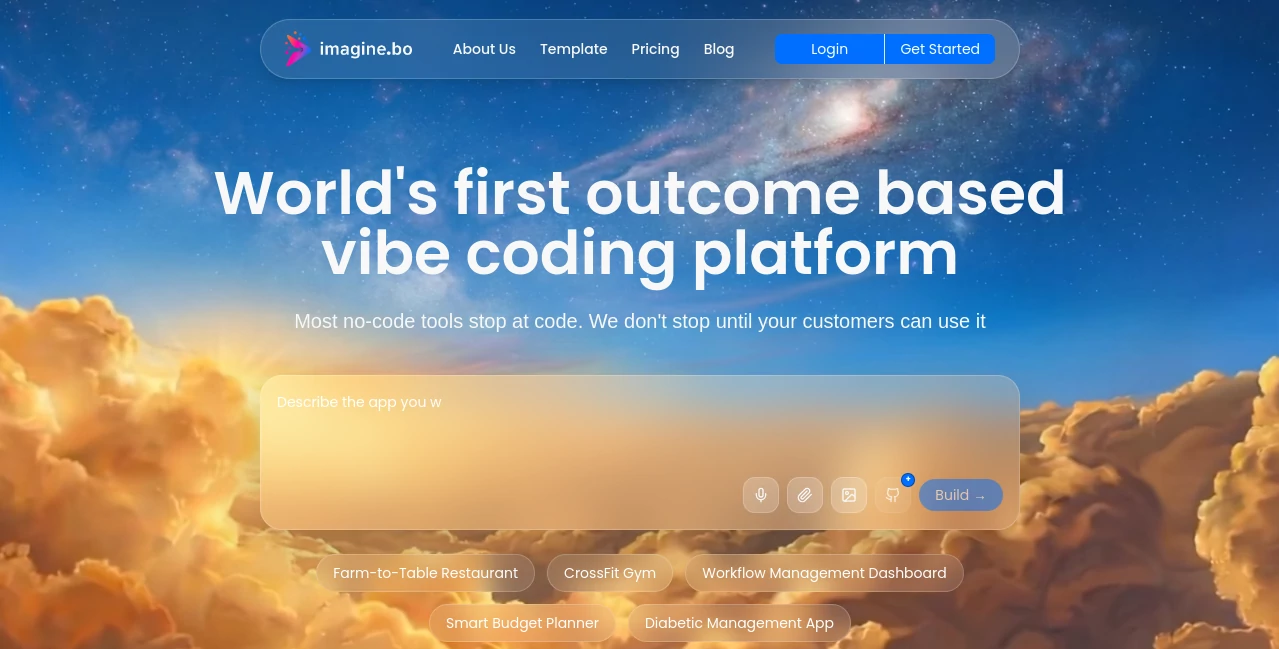
Imagine.bo is an AI-powered application builder designed to help creators, entrepreneurs, startups, and businesses transform ideas into fully functional software products without traditional coding requirements. The platform follows an outcome-based approach, allowing users to describe their application concept in plain English and receive a complete product structure including frontend, backend, database logic, and deployment workflow.
Instead of creating simple visual prototypes, this platform focuses on building real applications that can be launched and used by customers. It combines AI-generated development with optional human engineering support, making it suitable for users who want speed without sacrificing quality. Whether you are validating a startup idea, creating an internal business tool, or launching a SaaS product, this solution provides a practical path from concept to production.
Key Features
User Interface
The interface is built around simplicity. Users do not need to understand complex programming concepts or technical frameworks. They can explain what they want to create, define the target audience, describe important features, and let the AI handle the initial development process.
The conversational building experience makes app creation feel more natural. Instead of navigating through dozens of configuration menus, users can refine their product by communicating their requirements and adjusting the generated results step by step.
Accuracy & Performance
The platform focuses on generating complete application structures rather than isolated code snippets. It analyzes project requirements, creates architecture decisions, builds database models, and generates frontend and backend components that work together as a complete system.
This approach helps reduce the gap between an early idea and a usable product. For example, a founder can describe a marketplace concept and receive a working foundation instead of spending weeks preparing technical specifications before development begins.
Capabilities
The tool provides a broad range of application-building capabilities designed for modern software projects. Users can create dashboards, SaaS platforms, business applications, marketplaces, productivity tools, and other web-based solutions.
- AI-powered full-stack application generation
- Natural language app creation
- Frontend, backend, and database generation
- Automatic application architecture planning
- API and workflow generation
- One-click deployment options
- AI-assisted improvements and refinements
- Templates for faster project creation
- Human developer assistance for advanced requirements
Security & Privacy
Security is an important part of the development workflow. The platform includes automated checks during the building process and supports production-focused deployment practices. Users can create applications with structured infrastructure rather than temporary demos.
For businesses handling important projects, the combination of AI automation and professional engineering support offers additional confidence when applications require more advanced customization.
Use Cases
This AI development platform can support many different types of users and projects. Startup founders can quickly test business ideas before investing heavily in development. Marketing teams can build interactive campaigns or customer-facing tools without waiting for engineering resources.
Small businesses can create custom internal systems for managing workflows, customers, or operations. Product managers can use it to turn concepts into functional prototypes that can be tested with real users.
- Building SaaS products
- Creating startup MVPs
- Developing internal business applications
- Launching online marketplaces
- Creating dashboards and management tools
- Testing product ideas quickly
- Building custom workflow solutions
Pros and Cons
Pros
- Creates complete applications instead of simple mockups
- No advanced coding knowledge required
- Speeds up the software development process
- Supports frontend, backend, and database generation
- Useful for founders, marketers, and non-technical teams
- Provides human developer support for complex needs
Cons
- Complex enterprise applications may still require expert customization
- Users need clear project descriptions for the best results
- Advanced development teams may prefer direct coding environments for complete control
Pricing Plans
The platform uses a flexible usage-based model where development resources are managed through Sparks. Different projects and updates require different amounts depending on complexity, features, and technical requirements.
Users can start with smaller projects and increase usage as their applications grow. The pricing structure is designed around actual development outcomes rather than charging only for individual AI interactions.
- Free access option for exploring the platform
- Usage-based project building with Sparks
- Paid plans for creators and growing teams
- Enterprise options for larger organizations
How to Use Imagine.bo
Creating an application begins with describing your idea in everyday language. Explain what the product should do, who will use it, and what features are important. The AI then analyzes the requirements and creates the application structure.
- Describe your application idea
- Review the generated product blueprint
- Refine features and workflows through AI conversations
- Add custom improvements when needed
- Deploy the finished application
Comparison with Similar Tools
Many AI development platforms focus mainly on generating interface designs or small pieces of code. This solution takes a broader approach by aiming to create complete applications with connected systems, databases, and deployment options.
Compared with traditional no-code builders, it offers more flexibility for custom software projects. Compared with standard development workflows, it reduces the time required to move from an idea to a working product.
Conclusion
Building software traditionally requires significant time, technical knowledge, and development resources. This AI-powered platform changes that process by allowing people to communicate their ideas naturally and transform them into functional applications.
For entrepreneurs, creators, and businesses looking for a faster way to experiment, validate, and launch digital products, it provides an impressive combination of automation and professional-level development capabilities. It is especially valuable for anyone who has a great idea but does not want technical limitations to slow down execution.
Frequently Asked Questions (FAQ)
What can I build with this platform?
Users can create many types of web applications, including SaaS platforms, marketplaces, dashboards, business tools, and custom software solutions.
Do I need programming experience?
No. The platform is designed for users who want to build applications through natural language descriptions instead of writing code manually.
Can I modify applications after creation?
Yes. Users can continue improving their projects by requesting changes, adding features, and refining workflows through AI assistance.
Is it suitable for businesses?
Yes. It can help businesses create internal tools, customer applications, and digital products while reducing development time.
Can developers use it too?
Developers can use it as a productivity accelerator for generating application foundations, testing ideas, and speeding up repetitive development tasks.
AI Website Builder , AI No-Code & Low-Code , AI Developer Tools , AI App Builder .
These classifications represent its core capabilities and areas of application. For related tools, explore the linked categories above.

Imagine.bo Alternatives Product

tanship

Reverse Imag…

ShipAhead
LogoAI
BootstrapKing

Mythx AI
TutuoAI

Claude and C…

DeepSeek