
Aria Networks
What is Aria Networks?
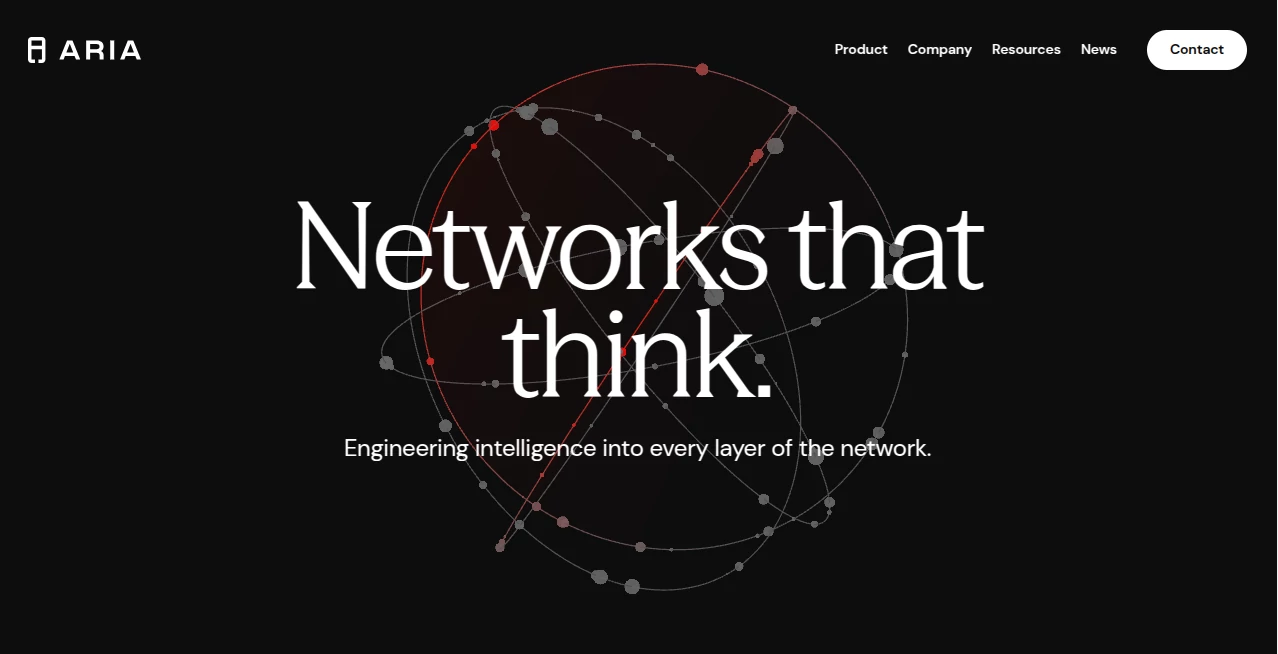
Modern AI infrastructure is only as effective as the network connecting its GPUs, hosts, switches, and workloads. As AI clusters become larger and more demanding, small inefficiencies in networking can translate into significant losses in GPU utilization, training time, and overall infrastructure efficiency. Aria Networks approaches this problem by bringing intelligence directly into the network layer, combining detailed telemetry, hardware, software, and workload information to help teams understand what is happening across an AI environment.
The platform is designed around the idea of “Networks that Think,” with a particular focus on AI clusters ranging from smaller deployments to very large-scale environments. Instead of treating network data as isolated signals, it brings information from switches, host systems, GPUs, NICs, firmware, and machine-learning workloads into a shared context. This gives engineering teams a more complete picture when investigating performance problems or optimizing infrastructure.
Key Features
- High-resolution network telemetry: The platform is built to capture network signals at a much finer resolution than traditional monitoring approaches, with the company stating a resolution advantage of 100 to 10,000 times compared with competitors.
- AI cluster visibility: Network telemetry can be correlated with GPU state, NIC counters, firmware information, and system details.
- Workload intelligence: Training and inference metrics can be connected with infrastructure telemetry to help teams understand how networking affects machine-learning workloads.
- Intelligent investigation: The platform is designed to continuously analyze infrastructure signals and help identify issues without requiring engineers to manually inspect every individual data source.
- AI-optimized networking hardware: The company's networking approach includes switches engineered to expose detailed information that conventional hardware may not be designed to capture.
- Agent-ready architecture: The software is designed so that both engineers and autonomous agents can work from the same telemetry, context, and reasoning layer.
User Interface
The product experience is centered on turning large amounts of infrastructure information into a unified view rather than forcing engineers to jump between disconnected monitoring systems. This approach is particularly useful in AI environments where network behavior, GPU performance, host systems, and workload activity can influence one another.
For a network engineer investigating an unexpected slowdown, having these signals connected can make the investigation considerably more practical. Instead of starting with a single switch metric and working outward, the environment can be examined as a connected system.
Accuracy & Performance
Performance monitoring becomes especially important in large AI clusters because network inefficiencies can affect expensive GPU resources. The company highlights telemetry resolution between 100 and 10,000 times that of competitors, aiming to expose network behavior at a much finer level of detail.
The platform also focuses on connecting infrastructure measurements with actual AI workload behavior. That distinction matters because a network metric on its own does not always explain whether a training or inference workload is being affected. Correlating these signals can provide a more useful foundation for diagnosing bottlenecks and improving utilization.
Capabilities
The system brings together several layers of an AI infrastructure environment. Network telemetry can include traffic behavior, congestion, protocol health, optics, and network state. Host-level information can include GPU state, NIC counters, firmware, and other system details. Workload intelligence adds metrics related to training and inference across the machine-learning toolchain.
This layered approach makes the platform particularly interesting for organizations operating dedicated AI infrastructure or large GPU clusters. The goal is not simply to collect more monitoring data, but to connect the data so that engineers and software agents can reason about the infrastructure as a whole.
Security & Privacy
The company operates as a business-to-business provider and states that its solutions may collect technical information such as IP addresses, DNS queries, usernames, MAC addresses, host IDs, network traffic data, logs, device information, and telemetry where applicable. This information may be processed to operate, improve, secure, and understand the use of its solutions.
The published privacy policy also states that industry-standard safeguards are used to protect personal information from accidental loss and unauthorized access. Organizations evaluating the platform should review the company's privacy documentation and commercial agreements carefully, particularly when deploying monitoring infrastructure inside sensitive production environments.
Use Cases
- AI cluster monitoring: Gain deeper visibility into the infrastructure supporting GPU-heavy machine-learning workloads.
- Network performance optimization: Investigate congestion, traffic behavior, protocol conditions, and other factors that can affect cluster performance.
- GPU utilization improvement: Correlate network and system conditions with GPU behavior to identify infrastructure inefficiencies.
- Training and inference optimization: Connect workload metrics with networking information to better understand performance changes.
- Large-scale infrastructure operations: Provide networking teams with a unified view across switches, hosts, and AI workloads.
- Automated infrastructure investigation: Give software agents access to the same underlying intelligence used by engineering teams.
- NeoCloud environments: Support organizations building and operating dedicated AI computing infrastructure at different scales.
Pros and Cons
Pros:
- Designed specifically around the demanding networking requirements of AI clusters.
- Very high-resolution telemetry is a central part of the product strategy.
- Combines network, host, and workload information instead of treating them as separate monitoring domains.
- Supports a vision where AI agents can participate in infrastructure investigation.
- Combines hardware and software rather than relying solely on a conventional monitoring layer.
- Suitable for organizations where GPU utilization and network efficiency have a significant financial impact.
Cons:
- The solution is primarily aimed at businesses operating serious AI infrastructure rather than casual users.
- The technology may be more relevant to organizations running their own GPU clusters than teams using standard cloud AI APIs.
- Public pricing information is not provided, so prospective customers need to contact the company for commercial details.
- The platform is still developing as the company expands its products and customer deployments.
Pricing Plans
No standard public pricing plans are displayed on the website. The company positions its offering as a business-to-business solution and has described customer trials and commercial engagements for organizations interested in improving AI networking performance.
This type of pricing model is understandable for infrastructure software and networking hardware because deployment requirements can vary considerably depending on cluster size, networking architecture, hardware requirements, and the level of engineering support needed. Businesses interested in the solution should contact the sales team to discuss their environment and obtain current commercial terms.
How to Use the Platform
Getting started is intended for organizations rather than individual users looking for a simple browser-based AI application. A typical evaluation begins by discussing the existing AI cluster, networking architecture, workloads, and performance requirements with the provider.
Once the environment is suitable, the networking and software components can be introduced into the infrastructure so that network, host, and workload signals can be correlated. Engineering teams can then use the resulting telemetry and intelligence to investigate performance issues, identify inefficiencies, and evaluate potential improvements.
For larger deployments, the company also promotes hands-on deployment support, making the solution more suitable for teams that need assistance integrating networking hardware and software into production AI infrastructure.
Comparison with Similar Tools
Traditional network monitoring products generally concentrate on conventional infrastructure metrics such as traffic, device health, protocol state, and alerts. AI infrastructure introduces another layer of complexity because network behavior can directly influence GPU utilization and distributed training performance.
The main distinction here is the attempt to connect those traditionally separate layers. Network telemetry is considered alongside host systems and machine-learning workloads, creating a broader operational picture. The platform also goes beyond monitoring by targeting infrastructure that can support automated investigation and agent-driven operations.
For a small development team running a few cloud instances, a conventional monitoring platform may be simpler and more economical. For an organization operating a substantial GPU cluster where every percentage point of utilization matters, the deeper correlation between network and workload performance can be considerably more valuable.
Conclusion
Aria Networks takes a focused approach to one of the less visible challenges of modern AI infrastructure: the network. As GPU clusters grow, networking is no longer just a supporting component. It can become a major factor in how efficiently expensive computing resources are used.
By combining high-resolution telemetry with switch hardware, host information, and machine-learning workload data, the platform aims to give infrastructure teams a much clearer understanding of what is happening inside an AI cluster. Its emphasis on both human engineers and autonomous agents also points toward a future where network operations become increasingly intelligent and proactive.
For organizations building or operating large-scale AI infrastructure, this is a solution worth evaluating, particularly when network performance, GPU utilization, and infrastructure efficiency have a direct impact on operating costs and revenue.
Frequently Asked Questions (FAQ)
What is this platform designed for?
It is designed primarily for AI infrastructure and GPU clusters, providing detailed network telemetry and connecting it with host systems and machine-learning workload information.
Is it suitable for small AI deployments?
The technology can be relevant to different cluster sizes, but its strongest value is likely to appear in environments where networking performance and GPU utilization have a meaningful operational or financial impact.
Does it provide network telemetry?
Yes. Network telemetry is a core part of the platform and covers areas such as traffic behavior, congestion, protocol health, optics, and network state.
Can it monitor GPU-related information?
The platform is designed to correlate GPU state and other host-system information with network telemetry, helping teams understand the relationship between computing workloads and network behavior.
Can AI agents use the platform?
The architecture is designed for both human users and agents. The company's approach allows agents and engineers to work from the same intelligence, telemetry, context, and reasoning layer.
Is pricing publicly available?
No standard pricing plans are publicly listed. Organizations interested in commercial deployment need to contact the company for current pricing and engagement details.
Who would benefit most from this technology?
AI infrastructure teams, network engineers, cloud and infrastructure providers, and organizations operating GPU clusters are among the groups most likely to benefit from its capabilities.
Does the company provide deployment support?
The company has described a white-glove approach that can include field deployment engineering support, particularly for organizations deploying its networking hardware and software stack.
AI Developer Tools , Other , AI Monitor & Report Builder , AI DevOps Assistant .
These classifications represent its core capabilities and areas of application. For related tools, explore the linked categories above.
Aria Networks details
Website unavailable — View Alternatives
Pricing
- Freemium
Apps
- Web App
Categories

Aria Networks Alternatives Product

Screenshot t…
DiRe-RAPIDS

Any2URL

Project Mela

AI Complianc…
Skillselion
TutuoAI

Geekflare AI

Firefox