Callable
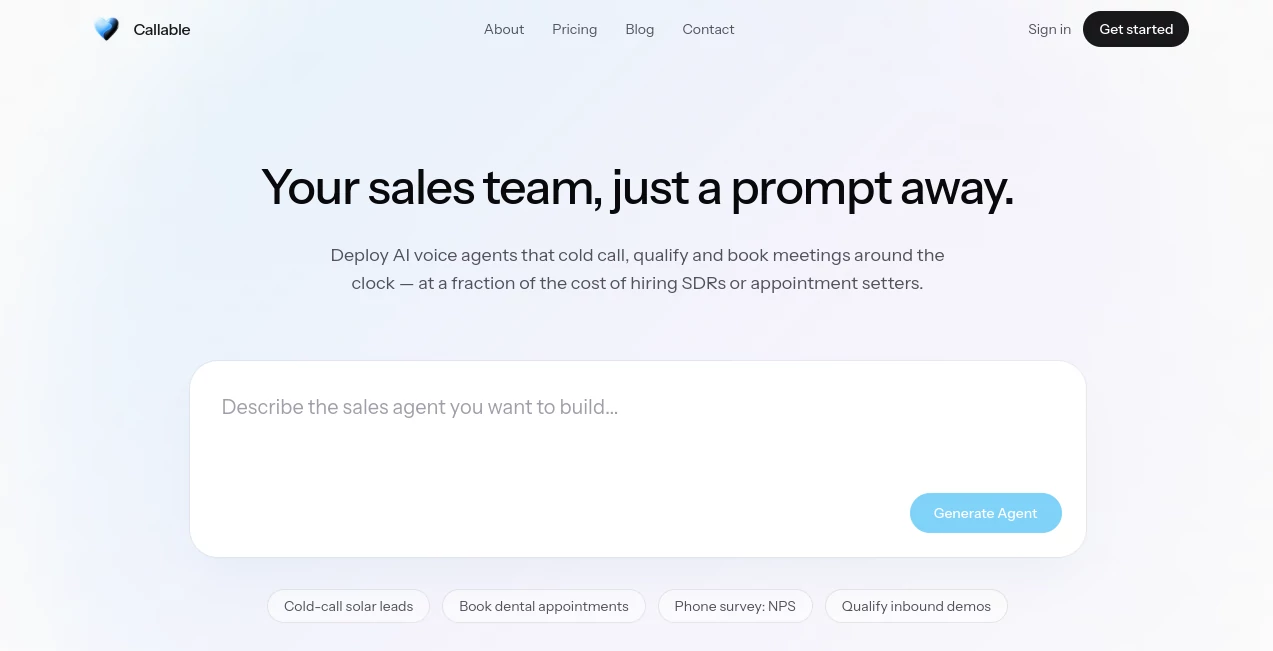
What is Callable?
Modern digital products rely heavily on automation, integrations, and seamless communication between services. This platform is designed to simplify that complexity by giving developers and teams a clean, efficient way to create and manage executable workflows without unnecessary overhead. It bridges the gap between idea and implementation, allowing users to focus on logic rather than infrastructure.
What makes it stand out is its balance between flexibility and simplicity. Whether you're building internal tools, connecting APIs, or designing automated systems, it offers a structured yet adaptable environment that fits both small projects and enterprise-level solutions.
Key Features
User Interface
The interface is built with clarity in mind. Instead of overwhelming dashboards or cluttered controls, users are presented with a streamlined workspace where workflows can be created, tested, and deployed intuitively. Navigation feels natural even for users who are not deeply technical.
Accuracy & Performance
Performance is optimized for speed and reliability. Requests are processed quickly, and workflows execute with minimal latency. This ensures that automation tasks run smoothly even under high demand, making it suitable for production environments.
Capabilities
The platform supports a wide range of use cases including API orchestration, automated task execution, and multi-step logic flows. Users can connect different services together and define conditional behavior without writing extensive boilerplate code.
Security & Privacy
Security is treated as a core foundation. Data handling follows strict practices to ensure that sensitive information remains protected. Access controls and secure execution environments help reduce risks associated with external integrations.
Use Cases
- Building backend automation for SaaS applications
- Connecting multiple APIs into a single workflow
- Automating repetitive business operations
- Creating internal developer tools and utilities
- Handling event-driven processes in real time
Pros and Cons
Pros
- Simple and intuitive workflow builder
- Fast execution and reliable performance
- Flexible integration options
- Suitable for both developers and non-technical users
Cons
- Advanced configurations may require learning curve
- Some enterprise features may be limited depending on plan
Pricing Plans
Pricing is typically structured around usage and scale. Smaller projects can start with lightweight plans, while larger teams may require custom enterprise solutions. This flexibility allows users to choose a model that fits their needs without unnecessary cost pressure.
How to Use This Tool
Getting started is straightforward. Users begin by creating a new workflow, defining triggers, and adding actions step by step. Each block represents a logical part of the process, making it easy to visualize how data flows through the system.
Once configured, workflows can be tested in real time before deployment. This reduces errors and ensures that automation behaves exactly as expected in production environments.
Comparison with Similar Tools
Compared to traditional automation platforms, this solution focuses more on developer flexibility while still maintaining ease of use. Many alternatives require heavy configuration or lack customization depth, while this platform strikes a balance between control and simplicity.
Conclusion
For teams looking to streamline operations and reduce manual work, this platform offers a practical and efficient solution. It is particularly valuable for developers who want control over workflow logic without dealing with unnecessary complexity. The combination of performance, usability, and flexibility makes it a strong choice in the automation space.
Frequently Asked Questions (FAQ)
What can this platform be used for?
It is designed for building automated workflows, connecting services, and managing backend processes efficiently.
Is it suitable for beginners?
Yes, the interface is designed to be accessible while still offering advanced capabilities for experienced users.
Can it handle large-scale automation?
Yes, it is built to support scalable workflows and high-volume execution environments.
Does it require coding knowledge?
Basic understanding of logic and APIs is helpful, but many workflows can be created with minimal coding.
AI Workflow Management , AI App Builder , AI API Design , AI Developer Tools .
These classifications represent its core capabilities and areas of application. For related tools, explore the linked categories above.

Callable Alternatives Product

Workik

You.bot

Simple Dev T…
Kimi K2.5

JSON-Tools

AI Agent Ski…

Ito AI

ModelsLab

BuildrShip