Cintra
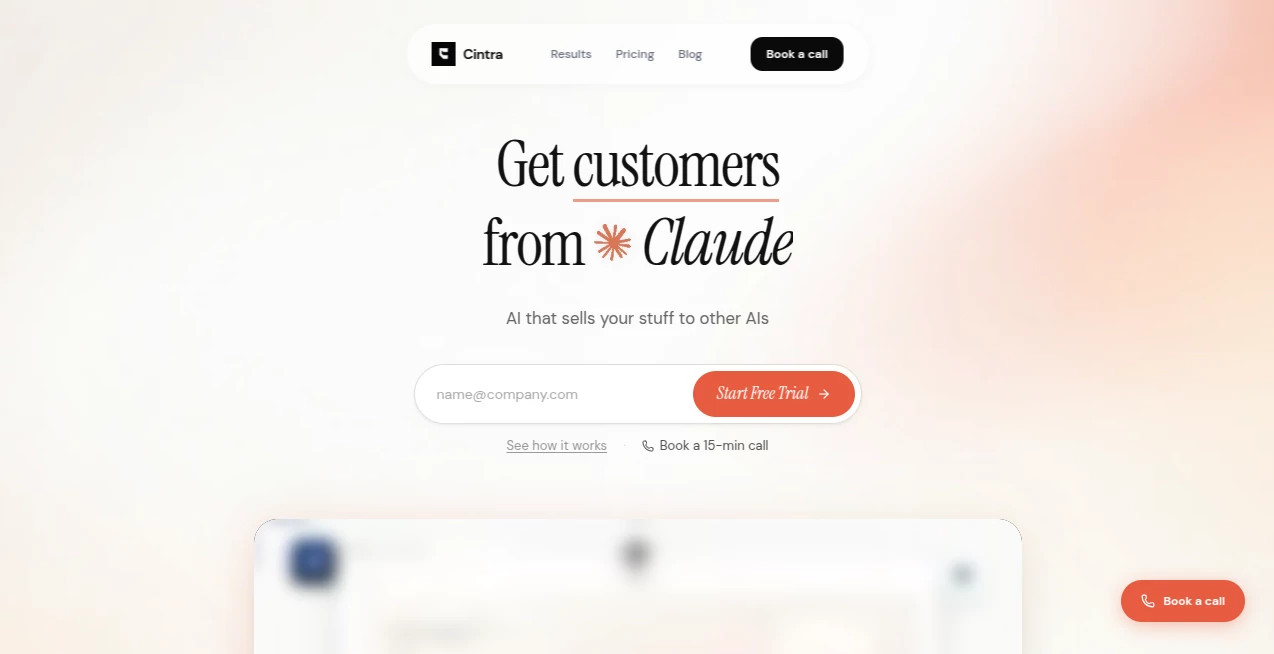
What is Cintra?
There’s a new kind of search happening. People aren’t just typing into Google anymore—they’re asking ChatGPT, Perplexity, Claude, or Grok real questions about solutions they need. And most brands are completely invisible in those answers. This platform changes that. It finds exactly what your buyers are asking AI, maps where you’re missing, then creates and publishes content that gets you cited. I’ve watched teams go from “we don’t show up anywhere” to seeing their brand recommended by AI tools within weeks. It feels less like traditional SEO and more like building a moat in the new way people actually discover things.
Introduction
AI search is rewriting how customers find solutions. Traditional SEO still matters, but if you’re not showing up when someone asks an AI a question related to your product, you’re losing ground to competitors who are. Cintra was built specifically for this shift. It studies how your team talks, listens to your calls, reads your existing content, and then creates material that sounds exactly like you—while being structured in the way AI models love to cite. The best part? You don’t spend your time reviewing endless drafts. You review results: citations, traffic, and pipeline influence. It’s the difference between hoping to rank and actively becoming the answer AI recommends.
Key Features
User Interface
The dashboard is calm and focused. You connect your website, optionally upload call recordings or existing pages, and the system starts building your “brand brain.” From there, everything lives in one clean workspace—gap analysis, content calendar, published pieces, and citation tracking. No overwhelming menus or scattered tools. It feels like having a strategic teammate who already knows your business instead of another complicated platform.
Accuracy & Performance
The brand voice cloning is impressively accurate. After feeding it your material and conversations, the content genuinely sounds like your team wrote it—not generic AI slop. Citation tracking is reliable across major AI engines, and the gap mapping shows real opportunities instead of vague suggestions. Teams report seeing measurable AI mentions and organic traffic lifts within 6–12 weeks, which is fast for this kind of work.
Capabilities
It finds questions your buyers ask across Google, Reddit, ChatGPT, Perplexity and more. It maps exactly where you and your competitors stand in AI responses. Then it publishes full articles, rewrites key pages, builds supporting links, and even creates community threads—all optimized for AI citation. The system keeps monitoring and refreshing so your visibility compounds over time. You stay in the loop with clear reports instead of managing tasks.
Security & Privacy
Your data stays protected. Call recordings and internal documents are used only to learn your voice and never shared. The platform focuses on public visibility while keeping sensitive inputs secure. For companies serious about their brand presence, that balance of openness and control matters.
Use Cases
A DTC health brand used it to dominate AI answers for their category and saw significant revenue from organic channels in under two months. A SaaS company mapped gaps against bigger competitors and started showing up in Perplexity and ChatGPT responses, driving qualified demo requests. An e-commerce store refreshed key product category pages and watched traffic multiply. It works especially well for teams that already create good content but want it to work harder in the new AI-first discovery world.
Pros and Cons
Pros:
- Content actually sounds like your brand, not generic AI output.
- Full execution—publishing, linking, and monitoring included.
- Real focus on AI citations, not just traditional rankings.
- Compounding effect: visibility improves month after month.
- Clear reporting on what actually matters (citations and traffic).
Cons:
- Best results come after the system learns your brand voice (takes a few weeks).
- Still early days for AI search optimization, so patience helps.
- Higher-tier execution power requires investment.
Pricing Plans
It offers a clear path from testing to full execution. You can start with a strategy call and audit to see your current AI visibility. From there, plans scale based on how much content and execution you need. Many teams find the ROI shows up quickly once AI citations start converting into real pipeline.
How to Use Cintra
Book an intro call to get your current AI visibility audited. Connect your website and share any existing content or call recordings so the system can learn your voice. Review the gap analysis and opportunity map. Approve the content strategy, then let the platform handle creation, publishing, and promotion. Check weekly reports to see new citations and traffic impact. The workflow is designed so you stay informed without getting buried in daily tasks.
Comparison with Similar Tools
Traditional SEO agencies optimize for Google blue links. General AI content tools produce generic text that rarely gets cited. This platform is built from the ground up for AI search—combining deep brand voice understanding with strategic publishing and citation tracking. It’s less about volume and more about becoming the source AI models trust and recommend.
Conclusion
The way customers discover solutions is changing fast. Brands that adapt early gain a real advantage. Cintra makes that adaptation practical and effective—turning AI search from an unknown threat into a predictable growth channel. If you want your brand to be found when it matters most, this is one of the smartest ways to make it happen right now.
Frequently Asked Questions (FAQ)
How is AI search different from regular SEO?
People ask full questions in natural language, and AI models synthesize answers from multiple sources. Being cited by AI is becoming as important as ranking in Google.
Do I need to write content myself?
No. The platform creates and publishes content in your voice. You review outcomes, not every draft.
How long until I see results?
Most teams see AI citation growth within 6–8 weeks and meaningful traffic increases around the 3-month mark.
Can it work alongside my existing SEO efforts?
Absolutely. It complements traditional SEO by targeting the new AI discovery channels.
Is it suitable for small teams?
Yes—many indie makers and small SaaS companies use it successfully to compete with much larger players.
AI SEO Assistant , AI Marketing Plan Generator , AI Digital Marketing Generator , AI Research Tool .
These classifications represent its core capabilities and areas of application. For related tools, explore the linked categories above.

Cintra Alternatives Product

Restaurant S…

Carouzel AI

Odysseus AI

PrompTessor

Aiso

Adscriptly
SEO Tools Hu…

Wild and Fre…
TokTools