
AI Threat Hunting Agent
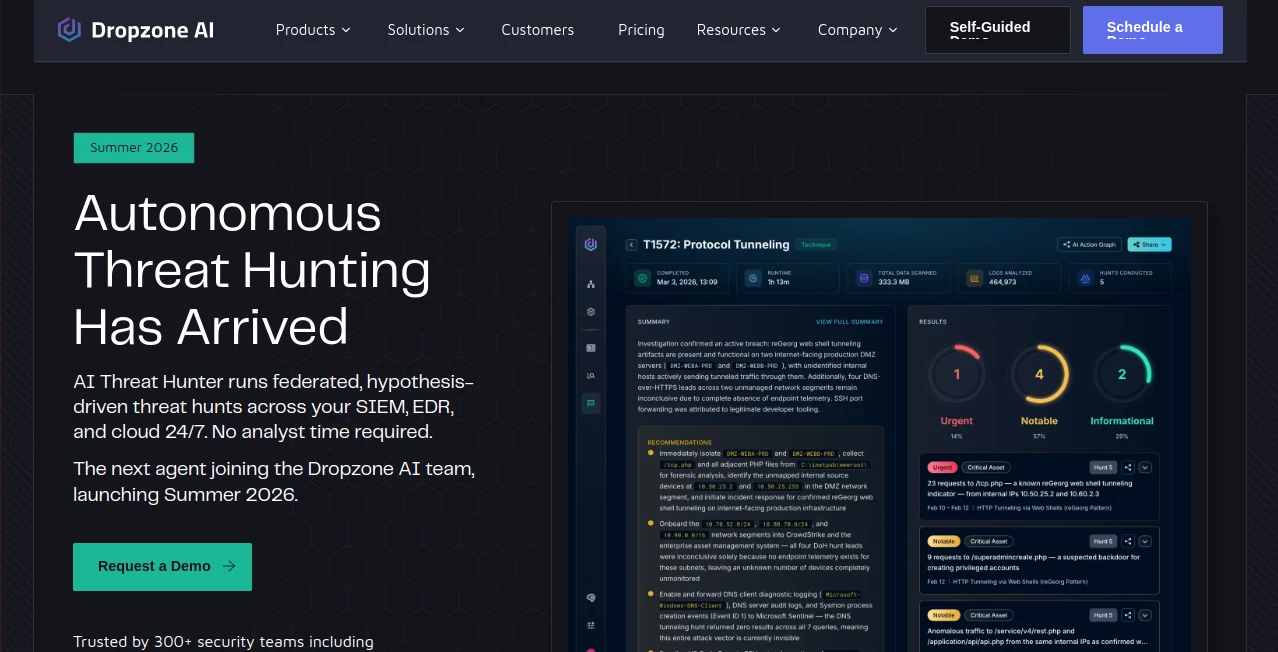
What is AI Threat Hunting Agent?
Modern security teams face a constant challenge: threats are no longer obvious, predictable, or limited to traditional attack patterns. They evolve quickly, often hiding inside normal system behavior. This is where a proactive intelligence-driven security layer becomes essential.
This advanced threat detection solution is designed to continuously analyze system activity, detect suspicious patterns, and help security teams respond before damage occurs. Instead of waiting for alerts after an incident, it focuses on uncovering hidden risks early, reducing response time, and improving overall cyber resilience.
Key Features
User Interface
The platform is designed with clarity in mind. Security analysts can easily navigate dashboards that present real-time threat insights, behavioral anomalies, and risk scoring without overwhelming complexity. The layout prioritizes speed and readability, allowing teams to focus on decisions rather than searching for data.
Accuracy & Performance
By combining behavioral analysis with intelligent pattern recognition, the system reduces false positives while maintaining high detection sensitivity. It continuously learns from environment activity, which helps refine accuracy over time and adapt to evolving attack techniques.
Capabilities
- Real-time behavioral anomaly detection across systems and networks
- Automated threat pattern recognition based on historical and live data
- Context-aware alerts with prioritized risk levels
- Continuous monitoring of endpoints, logs, and system activities
- Support for large-scale enterprise environments
Security & Privacy
Security is built into the core of the system. Data handling follows strict privacy standards, ensuring sensitive operational information remains protected. The architecture is designed to minimize data exposure while still enabling deep analytical insight. Access controls and encryption layers further strengthen trust and compliance readiness.
Use Cases
This solution is particularly valuable for organizations that need continuous security visibility. It supports security operations centers in identifying stealthy intrusions, helps IT teams monitor infrastructure health, and assists enterprises in preventing data breaches before escalation.
- Enterprise security monitoring and incident prevention
- Cloud infrastructure threat detection
- Insider threat identification and behavior tracking
- Compliance and audit support for regulated industries
- Security automation for DevOps environments
Pros and Cons
Pros
- Strong focus on proactive threat identification
- Reduces noise through intelligent alert filtering
- Scales well for enterprise-level environments
- Continuously improves detection accuracy over time
Cons
- May require initial tuning for specific infrastructures
- Best results depend on quality of available system data
Pricing Plans
Pricing is typically structured based on organizational scale and monitoring requirements. Smaller teams may adopt entry-level configurations, while larger enterprises often require expanded coverage, advanced analytics, and dedicated support. Custom plans are usually available for complex environments.
How to Use AI Threat Hunting Agent
Getting started involves integrating the system with your existing infrastructure, including logs, endpoints, and network data sources. Once connected, it begins analyzing activity patterns automatically. Security teams can then configure alert thresholds, review detected anomalies, and refine monitoring rules based on operational needs.
Comparison with Similar Tools
Compared to traditional security monitoring platforms that rely heavily on static rules, this solution takes a more adaptive approach. Instead of only flagging known signatures, it focuses on behavior-driven intelligence. This makes it more effective against unknown or emerging threats that might otherwise go undetected.
Conclusion
In an environment where cyber threats are increasingly subtle and persistent, having a system that actively hunts for risks rather than passively waiting for alerts is a major advantage. This platform brings together automation, intelligence, and scalability to strengthen modern security operations in a meaningful way.
Frequently Asked Questions (FAQ)
What makes this solution different from traditional security tools?
It focuses on behavioral analysis and proactive detection rather than relying only on predefined rules or known threat signatures.
Can it be used in cloud environments?
Yes, it is designed to integrate with modern cloud infrastructures as well as hybrid and on-premise systems.
Does it generate too many alerts?
The system is designed to reduce noise by prioritizing alerts based on context and risk scoring.
Is technical expertise required to operate it?
Basic setup requires technical configuration, but day-to-day usage is simplified for security teams through intuitive dashboards.
AI Log Management , AI Monitor & Report Builder , AI DevOps Assistant .
These classifications represent its core capabilities and areas of application. For related tools, explore the linked categories above.
AI Threat Hunting Agent details
Website unavailable — View Alternatives
Pricing
- Free
Apps
- Web App
Categories

AI Threat Hunting Agent Alternatives Product

Project Mela

DemoDash

Sound Level …

Manus

Ito AI

Website Audi…

CtrlOps

Latency Atlas

Bitbucket