
EasyMCP AI
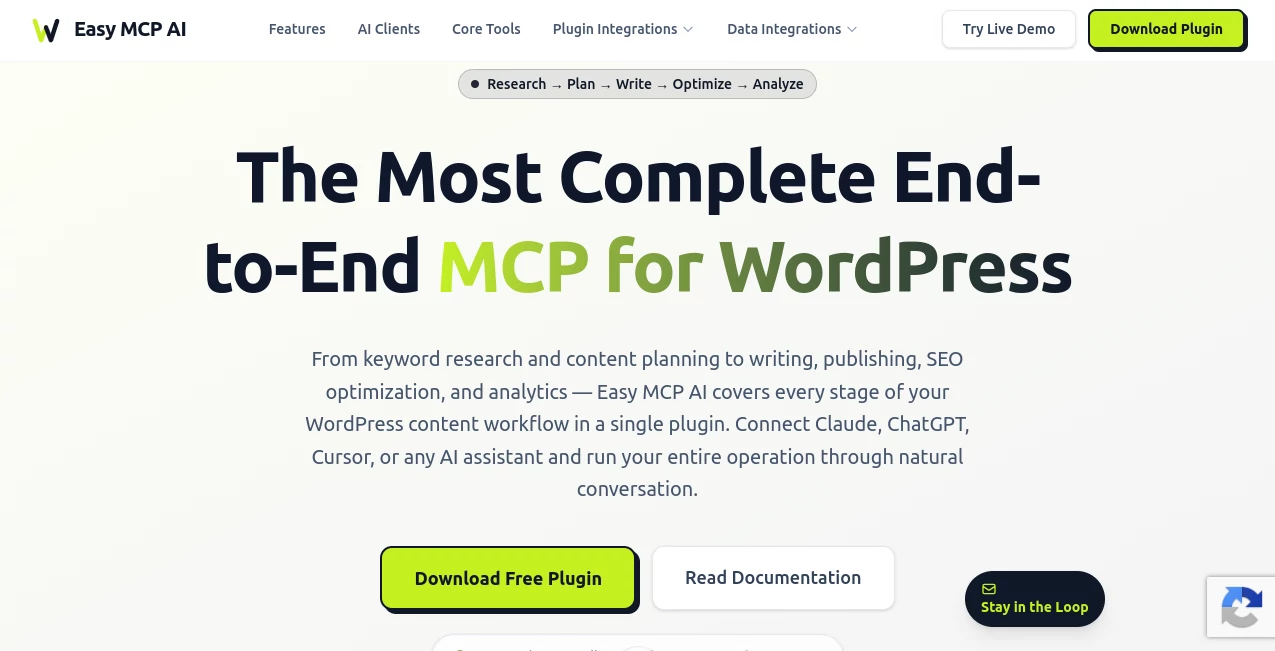
What is EasyMCP AI?
In today’s fast-moving AI ecosystem, the real challenge is no longer just building intelligent models—it’s connecting them to practical tools in a reliable and structured way. This platform is designed exactly for that purpose. It acts as a modern layer between AI agents and external systems, allowing developers and teams to extend AI capabilities without dealing with complex integrations or fragmented workflows.
Instead of spending weeks wiring APIs together, users can focus on building meaningful AI-powered experiences. The platform simplifies how large language models interact with tools, data sources, and services, making automation feel more natural and accessible.
Key Features
User Interface
The interface is designed with simplicity in mind. Developers can quickly configure connections, manage tools, and monitor interactions without navigating overly technical dashboards. Everything feels organized, clean, and intentionally minimal so users stay focused on building rather than configuring.
Accuracy & Performance
One of the strongest aspects of this system is its ability to maintain consistent performance when handling multiple tool calls. It reduces friction between AI models and external services, ensuring smoother execution and fewer breakdowns in communication between systems.
Capabilities
- Connect AI agents to external APIs and services
- Enable structured tool usage for language models
- Simplify workflow automation for developers
- Support modular integration across multiple systems
- Improve orchestration of AI-driven tasks
Security & Privacy
Security is handled with a strong focus on controlled access and safe data exchange. The system is built to ensure that only authorized actions are executed, reducing the risk of unintended operations when AI agents interact with external environments.
Use Cases
- Building AI-powered automation systems for businesses
- Connecting chat-based assistants to real-time data sources
- Developing developer tools powered by language models
- Creating workflow assistants for internal operations
- Enhancing SaaS platforms with AI-driven functionality
Pros and Cons
Pros
- Simplifies complex AI-to-tool integrations
- Reduces development time significantly
- Flexible architecture for different use cases
- Improves reliability of AI tool interactions
Cons
- May require technical understanding for advanced setups
- Ecosystem still evolving compared to older integration frameworks
Pricing Plans
Pricing information may vary depending on deployment type and usage scale. In many cases, platforms in this category offer flexible plans ranging from free tiers for experimentation to enterprise-level solutions for large-scale deployments.
How to Use EasyMCP AI
Getting started typically involves connecting your AI model or agent to the platform, selecting available tools or services, and defining how interactions should be handled. Once configured, the system manages communication between the AI and external tools automatically, allowing you to focus on logic and outcomes rather than infrastructure.
Comparison with Similar Tools
Compared to traditional API integration frameworks, this solution provides a more AI-native approach. Instead of manually defining every interaction, it allows structured and dynamic tool usage. This makes it especially useful for developers working with modern LLM-based applications and agent systems, where flexibility and speed are critical.
Conclusion
For developers and teams building the next generation of AI-powered applications, this platform offers a practical and efficient way to connect intelligence with action. It reduces complexity, improves workflow design, and opens the door to more scalable AI systems without overwhelming technical overhead.
Frequently Asked Questions (FAQ)
What is this platform used for?
It is used to connect AI agents with external tools, APIs, and workflows in a structured and efficient way.
Do I need advanced programming skills?
Basic understanding of APIs and AI workflows is helpful, but the system is designed to reduce complexity as much as possible.
Can it be used for enterprise applications?
Yes, it is suitable for both small projects and large-scale enterprise AI systems.
Does it support multiple AI models?
Yes, it is generally designed to be flexible and compatible with various AI models and agent frameworks.
Is it suitable for beginners?
Beginners can explore it, but it is especially powerful for developers building production-level AI systems.
AI Productivity Tools , AI API Design , Code & IT , AI Developer Tools .
These classifications represent its core capabilities and areas of application. For related tools, explore the linked categories above.

EasyMCP AI Alternatives Product

Ito AI

Discord Time…

AIQualityHQ

Linkflare

Tate-A-Tate

CtrlOps

Schema Synth
AI Wire

OGimage