










GPT Image 2-AI
What is GPT Image 2-AI?
Let’s be honest for a second. How many times have you asked an AI image generator to write a simple sign, a product label, or a social media caption — only to get back something that looks like alien hieroglyphics? Frustrating, right? For years, that’s been the dirty little secret of AI art. Breathtaking visuals, sure. But the moment you needed actual words inside the picture, everything fell apart.
That world just ended. The tool we are looking at today doesn’t just create beautiful images. It reads, writes, and thinks before it draws. Imagine describing a complex infographic, a multilingual billboard, or a seven-page comic strip — and getting back a perfectly polished result in under a minute. No Photoshop. No manual text edits. No pulling your hair out over misplaced letters. This is not a minor update. It is a complete reset of what we expect from creative software.
I have tested quite a few of these platforms over the years. Most claim to be “game‑changers.” But this one genuinely caught me off guard. The first time I asked it to generate a vintage‑style menu with detailed prices, dish descriptions, and a quirky restaurant name — and it worked flawlessly — I actually leaned back in my chair. If you work in marketing, product design, e‑commerce, or even just manage a small blog, you are about to see why this specific release is different from everything that came before.
Key Features
What makes this platform stand out in a crowded field of AI tools? It is not just one killer feature. It is the combination of four breakthroughs that, together, finally remove the friction between “what you imagine” and “what you can actually use.”
User Interface
You do not need to be a prompt engineer to get professional results. The interface feels like talking to a very smart design intern who actually listens. Instead of wrestling with confusing sliders or cryptic parameters, you just type naturally. “Give me a square Instagram post, dark academia aesthetic, with the quote ‘Find beauty in the ordinary’ written in a classic serif font.” That is it. The system understands layouts, aspect ratios, and even stylistic nuances like “vintage travel poster” or “brutalist web design.” For anyone who has wasted hours tweaking Midjourney parameters or fighting with Stable Diffusion settings, this simplicity is a breath of fresh air.
Another small but brilliant touch is the conversation flow. You can ask for edits the same way you would with a human designer. “Move the logo to the bottom right corner.” “Make the background a warmer tone.” “Change that heading to bright red.” No restarting from scratch. The back‑and‑forth feels natural, and because everything happens in a single chat thread, you never lose context.
Accuracy & Performance
Let me share a number that shocked me: 99% text rendering accuracy. That is not a typo. Previous models hovered around 90–95%, which sounds good until you realize that one out of every twenty words was randomly garbled. For any practical business use — menus, posters, reports, UI mockups — that failure rate was a dealbreaker.
Now, ask it to generate a detailed safety sign with ten lines of instructions in three languages. Go ahead, try to make it fail. The letters are crisp, correctly aligned, and surprisingly free of the usual AI hallucinations. I personally tested a complex historical map with small text labels for a dozen regions. The result was clean enough to be printed in a textbook. That level of reliability turns this tool from a toy into a legitimate production workhorse. And because it generates images up to 4K resolution while being roughly twice as fast as the previous generation, you no longer have to choose between speed and quality.
Capabilities
The real magic, however, lives under the hood. There is a dual‑mode system that adapts to how you work. The Instant mode is for quick ideation — perfect when you need to visualize a rough concept in seconds. But the Thinking mode is where things get wild. When activated, the model literally pauses before drawing. It outlines a composition plan, checks its own logic, and even searches the web for relevant visual references. Then it generates not just one, but up to eight images that maintain consistent characters, objects, and color palettes across the entire set.
Imagine you need a series of eight panels for a brand story. Each panel must feature the same protagonist, the same red jacket, and the same background style. Normally, that would require hours of manual tweaking or expensive studio work. Now, you simply describe the sequence, turn on Thinking mode, and walk away. A few minutes later, you have a coherent visual narrative ready for publishing. The platform also accepts reference images. You can upload a rough sketch, a competitor’s ad, or even a photo of a product, and ask the AI to reimagine it in a completely different style while keeping the core elements intact. That is not just an image generator. That is a creative partner.
Security & Privacy
Of course, with great power comes great responsibility. The developers have implemented C2PA metadata — essentially a digital nutrition label that tells viewers whether an image was machine‑generated. While no system is foolproof against screenshots or cropping, this creates a clear audit trail. More importantly, the platform includes proactive content filters. You cannot generate violent, deceptive, or harmful material. Requests involving real public figures, legal documents, or financial statements are carefully moderated. This matters because, as we have recently seen, fake viral images can damage stock prices, ruin reputations, or even trigger police investigations. By building safety into the core architecture rather than as an afterthought, the team behind this tool shows that they understand the weight of what they have created.
Use Cases
Theory is nice, but let us talk about real people using this in the real world. Here are three scenarios where this tool transforms how work gets done.
- Marketing & Social Media: A small coffee shop owner needed a week’s worth of Instagram content. They described their brand colors, a few drink photos, and some seasonal promotions. Within an hour, they had ten unique, platform‑optimized designs — complete with readable text and proper dimensions for Stories, Reels, and feed posts. No graphic designer required.
- UI/UX Prototyping: A product manager was tired of building wireframes in Figma from scratch. Instead, they described the desired user flow: a fitness app with a dark theme, a weekly progress chart, and a “start workout” button that stands out. The generated mockup was so clean that the development team used it directly for sprint planning.
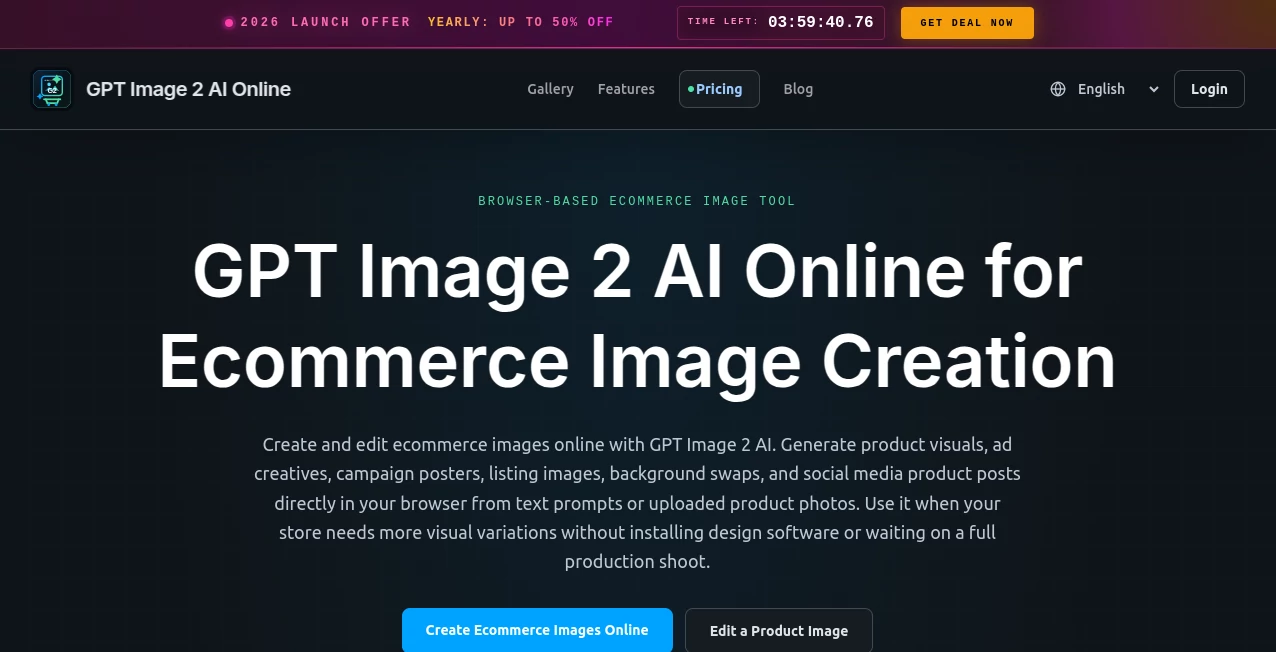
- E‑commerce & Branding: An online store owner wanted a complete set of product listing images. They uploaded one photo of a handbag and asked the AI to generate versions on different backgrounds, with promotional stickers, and in various aspect ratios for multiple marketplaces. The whole batch was ready in less time than it would have taken to set up a proper photoshoot.
Pros and Cons
No tool is perfect, and being transparent about limitations is part of providing real value to readers. Here is an honest breakdown.
Pros:
+ Flawless multi‑language text rendering – finally, Chinese, Arabic, or Hindi scripts appear correctly.
+ Thinking mode with web search reduces guesswork and iteration cycles.
+ Batch generation of up to eight consistent images saves hours of manual editing.
+ 4K output and wide aspect ratio support (from 3:1 banners to 1:3 vertical posters).
+ Natural language editing means you never touch a complex settings panel.
Cons:
– The most advanced features (Thinking mode, 2K+ resolution, high batch limits) require a paid subscription.
– API access uses token‑based pricing that can become expensive for high‑volume commercial use.
– While text is dramatically better, extremely tiny or stylized fonts can occasionally still have minor glitches.
– The ethical risks are real; always double‑check critical information, because fake images look very convincing now.
Pricing Plans
Understanding the cost structure is important before committing to any tool. Here is how it breaks down for different types of users.
- Free Tier: Access to the basic Instant mode with standard resolution. Perfect for casual users or testing the waters. However, you will face rate limits and cannot use the Thinking features.
- ChatGPT Plus ($20/month): This unlocks Thinking mode, faster generation speeds, higher resolution outputs, and the ability to generate up to eight images in a single batch. For most freelancers, content creators, and small business owners, this is the sweet spot.
- Pro & Enterprise Plans ($200+/month): Designed for teams and agencies handling massive volumes. These tiers include higher rate limits (up to 250 images per minute), priority access during peak times, and advanced safety controls for business compliance.
- API Access (Pay‑as‑you‑go): For developers integrating the technology into their own apps or workflows. Token‑based pricing means you pay roughly $0.006 for a low‑quality test image up to about $0.21 for a premium, high‑detail 4K image. Edits that use reference images cost more because the system processes the input at high fidelity.
A quick piece of advice: if you are planning on generating more than 400 medium‑quality images per month, the API might actually be cheaper than the flat $20 subscription. But for most people, the simplicity of the Plus plan is probably the better choice.
How to Use GPT Image 2
Getting started is refreshingly straightforward. You do not need a technical background or a manual full of arcane commands.
Step 1: Access the tool through the main ChatGPT interface or via the dedicated API endpoint. If you are using the free or Plus plan, simply navigate to the image creation section inside the chat window.
Step 2: Write your prompt like you are explaining a vision to a talented friend. Be specific about the subject, the style (e.g., “cyberpunk,” “watercolor,” “corporate clean”), the exact text you want to appear, and the dimensions (square, portrait, widescreen, etc.). For best results, use the formula: [Goal] + [Main Subject] + [Style] + [Exact Text] + [Constraints]. For example: “Design a tech conference banner. Wide format. Main title: ‘AI Summit 2026’ in bold neon green. Subtitle: ‘April 15th – San Francisco.’ Style: futuristic with circuit board patterns in the background.”
Step 3: Choose your mode. Instant is for quick drafts. Thinking is for complex, multi‑image projects or when you need web‑referenced accuracy. Hit generate and watch as the AI displays its reasoning process before revealing the final images.
Step 4: Iterate using natural language. Simply type “change the button color to orange,” “add a drop shadow to the main headline,” or “generate a square version for Instagram.” The conversation continues until you are completely satisfied.
Step 5: Download your creations. Because outputs are high‑resolution and properly formatted, you can directly use them in social media schedulers, print layouts, or website builders without any further editing.
Comparison with Similar Tools
How does this stack up against the competition? Let us look at the two most common alternatives.
Vs. Midjourney: Midjourney creates beautiful, artistic images. Nobody can deny that. But it has always struggled with text. Even simple words often turn into decorative squiggles. More importantly, Midjourney does not understand language the same way. You cannot ask it to generate a “menu with three columns, a 15% discount sticker, and a QR code in the lower left.” It simply does not work that way. The tool we are reviewing today, however, was built from the ground up to understand layout, hierarchy, and typography. If your work involves any kind of written information — and most business visuals do — this is a clear winner.
Vs. DALL‑E 3 (previous generation): DALL‑E 3 was a respectable effort. It handled text better than many competitors, but the accuracy was still somewhere around 90–95%. That meant you were always gambling. Would today’s poster require manual Photoshop corrections? Probably yes. With the new model, that unpleasant surprise is gone. The thinking mode, the ability to maintain character consistency across multiple images, and the web search integration are also entirely new capabilities that did not exist before. This is not a facelift. It is a completely different engine under the hood.
Conclusion
We have seen plenty of AI hype cycles. A new model gets announced, the demos look slick, but then you try it yourself and hit the same old limitations. This time, the experience is different. The developers did not just increase the resolution or add a few filters. They solved a foundational problem that has plagued the industry for years: the inability to reliably generate meaningful text inside images. By bridging the gap between visual beauty and readable information, they have turned this into production‑grade infrastructure, not just a weekend creative toy.
For business owners, content teams, and independent creators, the implications are enormous. You can now produce professional menus, social assets, UI mockups, infographics, and even multi‑page visual stories in a fraction of the time and cost. The learning curve is almost nonexistent, and the results are often indistinguishable from human‑designed work. Of course, with such power comes the need for responsibility. Always verify critical information, be transparent with your audience about AI‑generated content, and use the built‑in safety features as intended.
If you have been waiting for the moment when AI image generation becomes genuinely useful for real work — not just for fun experiments — that moment has arrived. Give it a shot. Describe something wild. See what comes back. I suspect you will be as surprised as I was.
Frequently Asked Questions (FAQ)
Q: Can I really generate editable text in different languages without errors?
A: Yes. The model supports a wide range of languages including English, Chinese, Japanese, Arabic, and most European languages. Accuracy is approximately 99% for standard fonts and clear layouts. Extremely decorative or tiny text might still need a quick check, but for practical business use, it is remarkably reliable.
Q: Is there a free version?
A: Yes, a basic free tier exists. It gives you access to the Instant mode with standard resolution and limited rate limits. To unlock Thinking mode, higher resolutions, and bulk generation, you will need the Plus plan starting at $20 per month.
Q: How does the API pricing work exactly?
A: The API uses token‑based billing, not a flat per‑image fee. Input tokens cost $8 per million, output tokens cost $30 per million. A typical 1024×1024 image at medium quality roughly translates to $0.053. However, edits with reference images cost more because the system processes the input at high fidelity. Always run a small pilot to understand your actual costs.
Q: Can I upload my own images and edit them?
A: Absolutely. You can provide a starting image and ask the AI to modify it — change the background, adjust the lighting, add new elements, or completely restyle it. This is perfect for repurposing existing content or fixing minor flaws.
Q: Is it safe for commercial projects?
A: Generally, yes, but with caveats. The platform includes C2PA metadata and content filters, which help with transparency and compliance. However, because the outputs are so realistic, you should be careful not to generate deceptive content such as fake news screenshots, counterfeit documents, or misleading endorsements. Use common sense and respect platform guidelines.