


















Intlayer
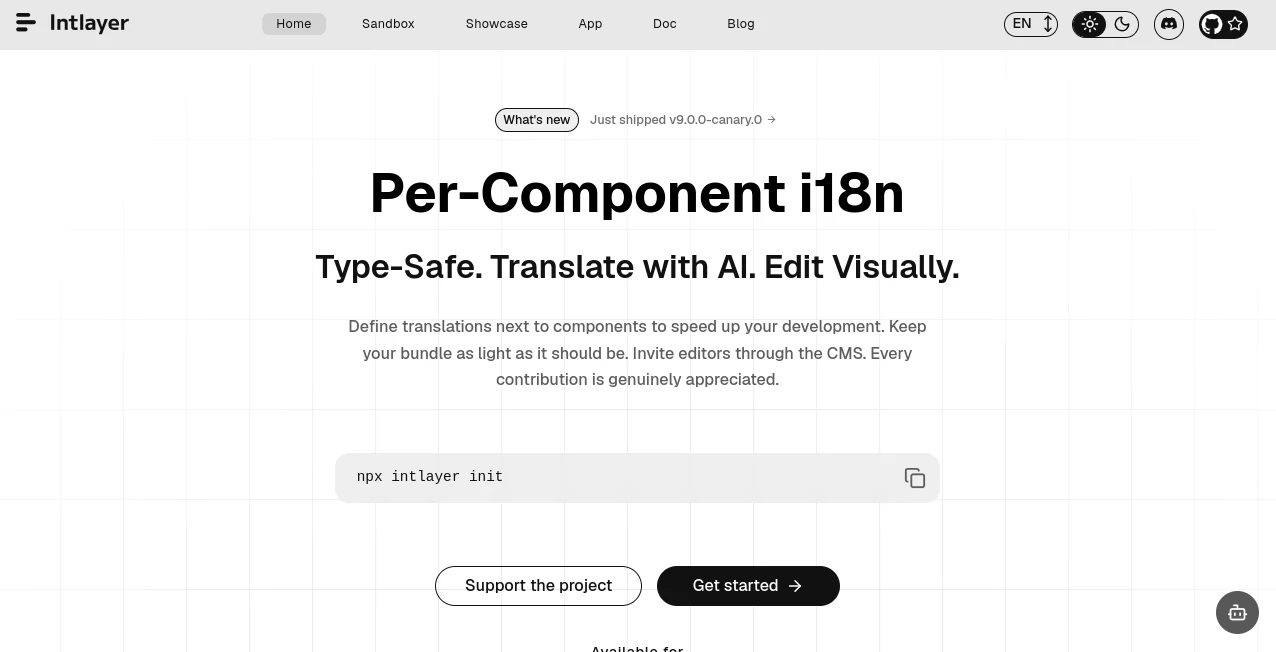
What is Intlayer?
Building multilingual applications has always been one of the most challenging parts of modern software development. Developers often struggle with managing translations, maintaining consistency across environments, and keeping performance optimized as projects scale. This platform addresses these challenges with a structured, developer-friendly approach that simplifies internationalization without adding unnecessary complexity.
Instead of relying on fragmented solutions or heavy configurations, it provides a clean architecture that integrates naturally into modern web frameworks. Whether you're working on a startup product or a large-scale enterprise system, it helps ensure that content delivery remains consistent, flexible, and easy to maintain.
Key Features
User Interface
The developer experience is designed to feel intuitive from the start. Configuration is minimal, and the system is built to fit naturally into existing project structures. Developers can define content once and reuse it across multiple languages without repetitive setup.
Accuracy & Performance
One of the standout aspects is how efficiently it handles content rendering. Instead of loading unnecessary translation bundles, it focuses on delivering only what is needed, improving both performance and responsiveness in multilingual environments.
Capabilities
- Structured content management for multiple languages
- Seamless integration with modern JavaScript frameworks
- Type-safe content handling for fewer runtime errors
- Dynamic content updates without breaking application flow
- Scalable architecture suitable for large projects
Security & Privacy
The system is built with a developer-first mindset, meaning no unnecessary data exposure or external dependencies are required for core functionality. Content remains within your control, ensuring privacy and predictable behavior across environments.
Use Cases
- Building multilingual SaaS platforms
- Creating international e-commerce websites
- Managing localized documentation systems
- Developing global-ready web applications
Pros and Cons
Pros:
- Simple integration with modern frameworks
- Strong structure for managing translations
- Performance-oriented design
- Type-safe development experience
Cons:
- May require learning curve for beginners new to structured i18n systems
- Advanced features may be overkill for very small projects
Pricing Plans
The platform is available as a free and open-source solution, making it accessible for developers and teams of all sizes. Additional ecosystem tools or services may be offered depending on deployment needs, but the core functionality remains freely available.
How to Use this Tool
Getting started is straightforward. After installation, developers define their content structure within the project and connect it to their application layer. Once configured, translations and localized content can be managed centrally, allowing updates without disrupting the core codebase.
As the project grows, new languages or regions can be added without major refactoring, making it especially suitable for long-term scalable applications.
Comparison with Similar Tools
Compared to traditional localization libraries, this solution offers a more structured and modern approach. Many older tools rely heavily on manual configuration and external JSON management, while this system integrates content handling directly into the development workflow. This reduces friction and improves maintainability over time.
Conclusion
For developers aiming to build truly global applications, this platform offers a balanced combination of simplicity, structure, and scalability. It removes much of the friction typically associated with multilingual development and replaces it with a more organized and predictable workflow. Whether you're building a small app or a complex ecosystem, it provides a solid foundation for international growth.
Frequently Asked Questions (FAQ)
What makes this solution different from traditional i18n libraries?
It focuses on structured content management and developer experience, reducing complexity while improving scalability.
Is it suitable for large applications?
Yes, it is designed with scalability in mind and works well in both small and enterprise-level projects.
Does it affect application performance?
No, it is optimized to load only necessary content, helping maintain fast performance even in multilingual setups.
Can it be used with modern frontend frameworks?
Yes, it integrates smoothly with popular JavaScript-based frameworks and modern development stacks.
Code & IT , AI API Design , AI Developer Docs , AI Developer Tools .
These classifications represent its core capabilities and areas of application. For related tools, explore the linked categories above.

Intlayer Alternatives Product

Nimbalyst

Vibe Coding …

Ito AI
JSON to TOON…

Discord Time…

Andreas Chri…

freellm.net

RepoClip

vivgrid