
















Sprokl
What is Sprokl?
Creating short-form ads that actually look native to TikTok can take far more time than expected. A product may already have strong images, screenshots, or other marketing assets, yet turning those materials into an engaging ad usually means writing a concept, arranging the visuals, editing the video, and making sure the final result feels suitable for a fast-moving social feed.
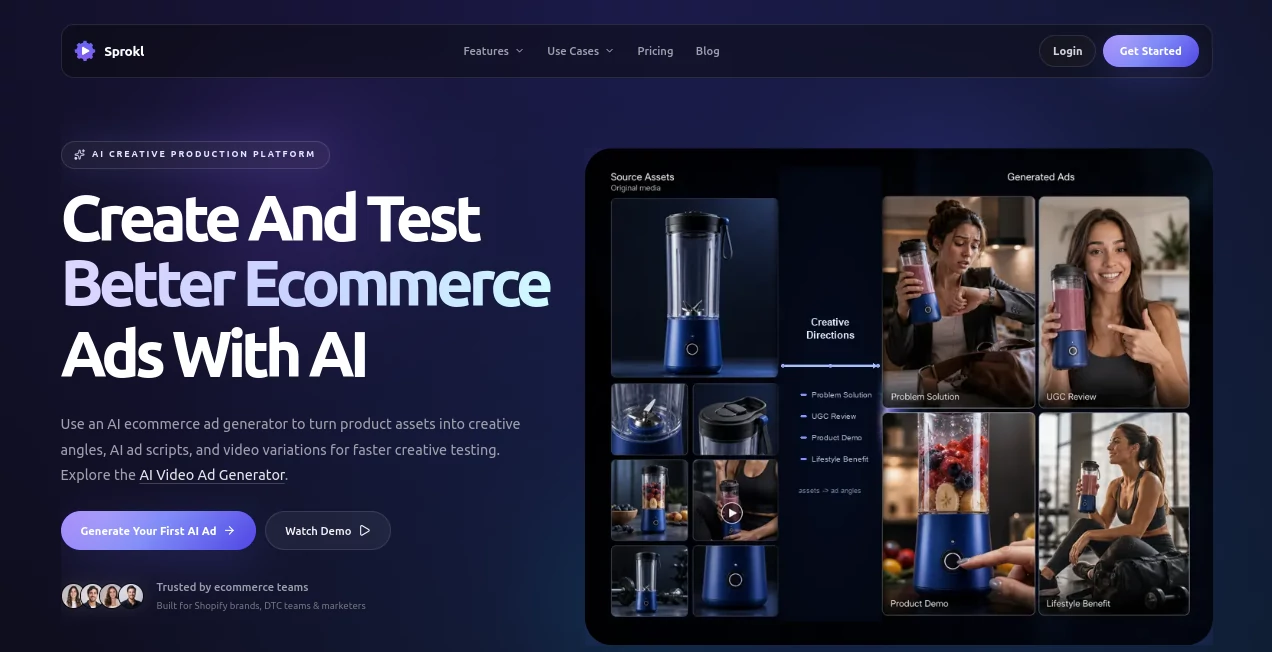
Sprokl takes a more direct approach. It uses AI to turn existing product assets into TikTok-style advertisements, giving businesses and creators a faster way to move from marketing material to short-form promotional content. Instead of starting every campaign with a blank editing timeline, users can work from assets they already have and use AI to help shape them into advertising content.
This makes the tool particularly interesting for startups, ecommerce businesses, marketers, and product teams that need a steady supply of short promotional videos without building every ad manually.
Key Features
- AI-powered ad creation: The platform is designed to transform existing product assets into short-form advertising content.
- TikTok-style formats: Content is focused on the fast, vertical, attention-driven format commonly associated with TikTok advertising.
- Product asset-based workflow: Rather than requiring users to create every visual from scratch, the workflow starts with materials they already have for their product.
- Short-form marketing: The approach is well suited to businesses that need concise promotional content for modern social media campaigns.
- Faster creative production: Automating parts of the advertising workflow can reduce the amount of repetitive manual editing involved in producing variations.
User Interface
A useful advertising tool should not make the creative process feel like a video-production course. The appeal here is the relatively straightforward idea behind the workflow: provide product material and use AI to help turn it into an advertisement.
That concept can be especially helpful for founders and marketers who understand their products well but do not want to spend hours learning complicated editing software. A simple workflow also makes experimentation easier because creating another version of an ad does not necessarily require rebuilding the entire project from the beginning.
Accuracy & Performance
For an AI advertising platform, performance is less about producing technically perfect video and more about creating useful marketing material from the information and assets supplied by the user. The quality of the original product assets therefore remains important.
Strong product images, clear branding, and a well-defined offer give the system better material to work with. The practical advantage is speed: instead of manually assembling every element of a short advertisement, marketers can use an AI-assisted process to explore creative directions more quickly.
For example, an ecommerce seller launching a new product could take its existing product imagery and use it as the starting point for a short social advertisement. The resulting creative can then be reviewed and refined before being used in a campaign.
Capabilities
The core capability is turning product assets into short-form advertising concepts designed around the style of TikTok content. This puts the platform in a useful position between conventional design software and fully manual social media production.
It can be particularly valuable when a business needs more advertising variations. Instead of relying on one polished commercial, marketers can experiment with different creative approaches and identify which presentation works best for their audience.
The asset-first approach is also practical for teams that already have an established brand library. Existing product visuals can become the foundation for new promotional content rather than being discarded whenever a new campaign begins.
Security & Privacy
When working with an AI advertising service, users should consider what happens to uploaded product assets and marketing materials. Businesses may be working with unreleased products, campaign concepts, or proprietary creative files, so reviewing the provider's current privacy policy and terms before uploading sensitive material is a sensible step.
Users should also avoid uploading confidential information unless the service's current policies clearly explain how uploaded content is handled, stored, and processed.
Use Cases
Ecommerce advertising: Online stores can turn existing product photos and promotional assets into short-form advertising concepts suitable for social campaigns.
Startup marketing: Small teams often have limited creative resources. An AI-assisted workflow can help founders produce more promotional material without relying entirely on an external video editor.
Social media campaigns: Brands that publish frequently can use short-form creative production to maintain a more consistent flow of promotional content.
Product launches: When introducing a new product, marketers can repurpose existing launch assets into additional advertising formats rather than creating every piece of content independently.
Creative testing: Producing multiple advertising concepts makes it easier for marketing teams to test different hooks, presentations, and product angles.
Pros and Cons
- Pros: AI-assisted advertising workflow, focused on short-form social content, makes use of existing product assets, potentially reduces manual creative work, and is well suited to modern social advertising.
- Cons: The quality of the final creative still depends heavily on the source assets and marketing concept, and users should verify the current pricing, privacy terms, and available export options before committing to a campaign workflow.
Pricing Plans
Pricing information could not be reliably verified during this review because the public website was not accessible as a normal product page at the time of checking. For that reason, it would be misleading to publish specific plan names or prices without confirmation.
Anyone considering the service should check the current pricing page directly and pay particular attention to limits on generated advertisements, asset usage, exports, and any restrictions that may apply to commercial campaigns.
How to Use the Tool
- Prepare your product assets: Gather the product images, visuals, and other marketing materials you want to use.
- Upload or provide the relevant assets: Start with the material that best represents the product and its main selling points.
- Build the advertising concept: Use the AI-assisted workflow to turn the supplied material into a short-form advertising creative.
- Review the result: Check the messaging, visuals, branding, and overall presentation before publishing.
- Refine your campaign: Test different creative approaches where possible and keep the versions that best match your target audience.
Comparison with Similar Tools
Traditional video editors give users extensive control, but that control comes with a learning curve and more hands-on work. Template-based advertising platforms can make production easier, although they may still require users to assemble the creative themselves.
The main distinction here is the focus on converting existing product assets into TikTok-style advertisements with AI. That makes the platform particularly appealing to marketers whose priority is producing social advertising content quickly rather than manually controlling every frame of a video.
It is not necessarily a replacement for a professional video editor in every situation. A production team creating a highly controlled brand campaign may still prefer conventional editing software. For rapid social advertising experiments, however, an AI-first workflow can be considerably more convenient.
Conclusion
For businesses that already have product assets but struggle to turn them into engaging short-form advertisements, this approach offers a practical way to speed up creative production. The focus is clear: take what a brand already has and use AI to help transform it into advertising content built around the visual language of TikTok.
The biggest advantage is likely to be workflow efficiency. Instead of treating every advertisement as a completely new video project, marketers can start with their existing product material and move more quickly toward a usable creative.
For ecommerce sellers, startups, and social media marketers who regularly need fresh advertising ideas, that can make a meaningful difference—especially when the goal is to test more creative concepts without dramatically increasing production time.
Frequently Asked Questions (FAQ)
What does the tool do?
It uses AI to create TikTok-style advertisements from existing product assets, helping marketers turn their product material into short-form promotional content.
Who can benefit from it?
Ecommerce sellers, startups, product marketers, social media managers, and small marketing teams can all benefit from an easier way to produce short-form advertising creatives.
Do I need professional video-editing skills?
The main appeal of the AI-assisted workflow is reducing the amount of manual production work required. However, users should still review the generated material and make any necessary creative or branding adjustments.
Can it be used for ecommerce products?
Yes. An asset-based advertising workflow is particularly relevant to ecommerce because sellers often already have product photography and promotional materials that can serve as the foundation for new advertisements.
Is it a replacement for professional video editors?
Not necessarily. Professional editing software remains valuable when a campaign requires precise control over every visual element. An AI advertising workflow is more attractive when speed, experimentation, and short-form content production are the priorities.
Is there a free plan?
A current free plan could not be independently verified during this review. Users should check the latest pricing information before signing up.
What should I prepare before creating an ad?
High-quality product images and clear marketing assets are a good starting point. It also helps to know the product's main benefit and the audience you want the advertisement to reach.