


















Sample Vault
What is Sample Vault?
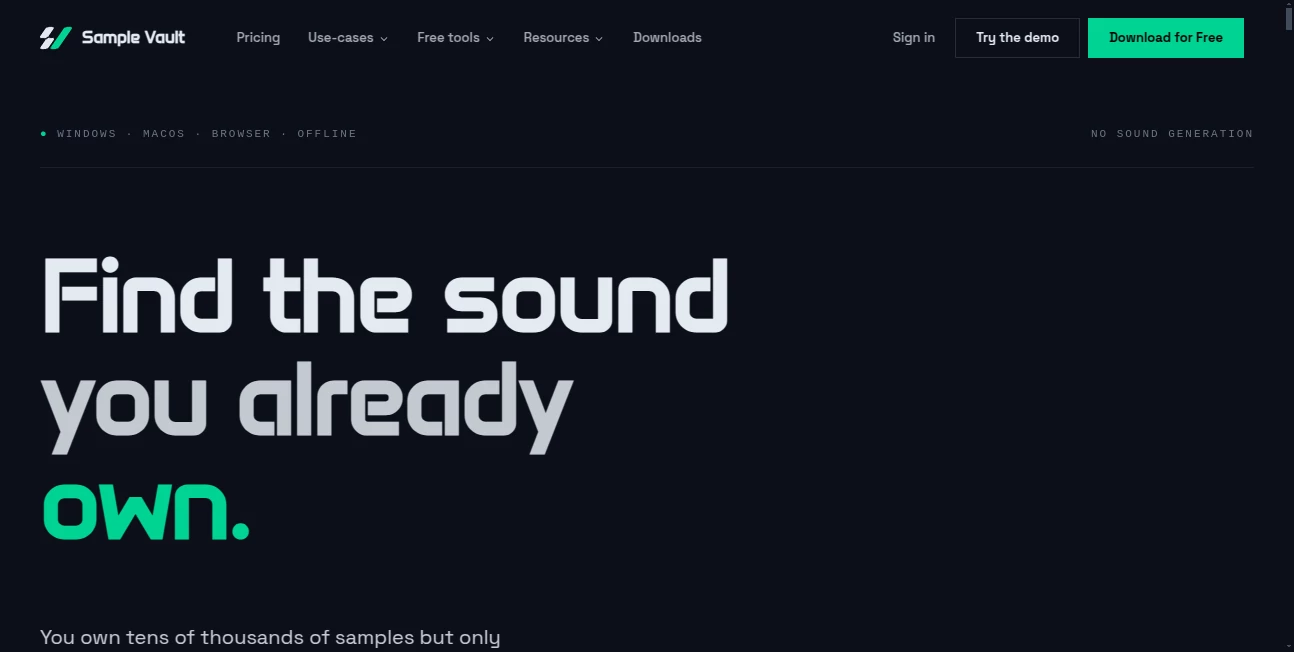
Managing a growing collection of audio samples can quickly become frustrating, especially when thousands of files are spread across multiple folders and drives. This intelligent music production assistant transforms that experience by making every sample searchable through natural language instead of relying on filenames. Producers can simply describe the sound they have in mind, and the application searches the actual audio characteristics to locate the closest match.
Rather than generating artificial sounds, the platform focuses on helping musicians rediscover the valuable sample libraries they already own. Local audio analysis extracts information such as key, tempo, stereo width, tonal balance, and dozens of additional sound characteristics while keeping original files untouched. The result is a cleaner workflow that allows producers to spend more time creating music instead of searching for files.
Whether producing EDM, hip-hop, cinematic music, lo-fi, or experimental sound design, the software brings speed and organization to every stage of production. It integrates naturally into modern DAW workflows and provides intelligent search capabilities without replacing the creativity of the producer.
Key Features
User Interface
The interface is designed with music producers in mind. It offers a clean workspace, customizable layouts, keyboard shortcuts, drag-and-drop functionality, and an always-on-top mode that keeps the browser accessible while working inside a DAW. Collections update dynamically based on searches, making it easy to build and manage projects without interrupting creativity.
Accuracy & Performance
Instead of matching filenames, the search engine analyzes the sound itself. Audio fingerprinting evaluates musical properties including key, tempo, spectral shape, envelope, stereo image, brightness, complexity, and other characteristics. This allows highly relevant search results even when samples have unclear or inconsistent names. Large libraries containing hundreds of thousands of files remain searchable thanks to optimized indexing and local processing.
Capabilities
- Natural language audio search.
- AI-assisted sample discovery.
- Automatic key and tempo detection.
- Deep tagging with genre, mood, instrument, creator, and pack information.
- Self-organizing collections.
- Smart recommendations for forgotten samples.
- Gap analysis for music arrangements.
- Support for large multi-drive sample libraries.
- Browser access on supported plans.
- Drag-and-drop integration with popular DAWs.
- Ableton Link synchronization.
- Cloud synchronization and backup options.
Security & Privacy
Privacy is one of the strongest aspects of the platform. Audio files remain on the user's computer during local analysis and are never moved, renamed, or uploaded automatically. Offline browsing, filtering, playback, and metadata extraction work without an internet connection. Cloud-powered AI features are optional, giving producers control over when and how additional services are used.
Use Cases
- Finding forgotten drum samples inside massive collections.
- Searching for sounds using plain English descriptions.
- Organizing commercial sample packs automatically.
- Managing professional music production libraries.
- Preparing sound collections for live performances.
- Speeding up beat-making sessions.
- Locating samples by key or BPM.
- Keeping multiple production computers synchronized.
- Building curated collections for specific genres or projects.
Pros and Cons
- Pros
- Fast semantic search based on actual audio.
- Works with unlimited library sizes.
- Excellent workflow integration for producers.
- Strong privacy with local-first processing.
- Automatic metadata extraction and intelligent tagging.
- Supports Windows and macOS.
- Flexible pricing including a lifetime license.
- Cons
- Advanced AI features require an internet connection.
- Deep tagging allowances depend on the selected plan.
- Focused exclusively on sample management rather than music generation.
Pricing Plans
The platform offers a generous free tier for browsing, organizing, and analyzing local sample libraries. Paid subscriptions unlock advanced AI search, deep tagging, browser access, cloud synchronization, and additional storage. Users can also choose a one-time lifetime license for long-term ownership without recurring subscription fees.
How to Use Sample Vault
Install the desktop application and select one or more folders containing audio samples. The software scans every file locally and extracts musical characteristics such as key, tempo, and tonal information. Once indexing is complete, simply type a natural language description like "warm ambient pad with slow attack" or "punchy distorted 808," and matching sounds appear instantly. Samples can then be previewed, organized into collections, and dragged directly into any compatible DAW.
Comparison with Similar Tools
Many traditional sample managers rely heavily on filenames, manual folders, or user-created tags. This solution goes much further by understanding the actual content of each audio file. Semantic search, automatic sound analysis, AI-assisted organization, and privacy-first local processing create a workflow that feels significantly more intelligent while respecting the producer's existing library. Instead of replacing creativity with generated content, it enhances productivity by making every owned sample easier to discover.
Conclusion
For music producers who have accumulated thousands of samples over the years, this platform solves one of the industry's most common workflow problems. Intelligent search, accurate audio analysis, thoughtful privacy protection, and seamless DAW integration make it an impressive companion for modern music production. It helps artists spend less time browsing folders and more time making music, turning forgotten collections into creative opportunities.
Frequently Asked Questions (FAQ)
Does it generate new audio with AI?
No. It focuses on organizing and searching existing sample libraries rather than generating new sounds.
Can it work without an internet connection?
Yes. Local browsing, playback, filtering, and audio analysis work offline, while cloud AI features require internet access.
Will my audio files be uploaded automatically?
No. Files remain on the local computer unless optional cloud features are explicitly enabled.
Is it suitable for large sample libraries?
Yes. It is designed to handle collections ranging from a few thousand to hundreds of thousands of samples efficiently.
Who benefits the most from this software?
Music producers, beat makers, composers, sound designers, and anyone managing extensive audio sample collections will benefit the most.
AI Search Engine , AI Audio Enhancer , AI Music Generator , AI Productivity Tools .
These classifications represent its core capabilities and areas of application. For related tools, explore the linked categories above.

Sample Vault Alternatives Product
igrecent
KronoPrompt

AI ASMR Gene…

MP3toMIDI

Reverse Vide…

Whisper Web

DocReplacer
AiZolo

Songtell