
Vozmi
What is Vozmi?
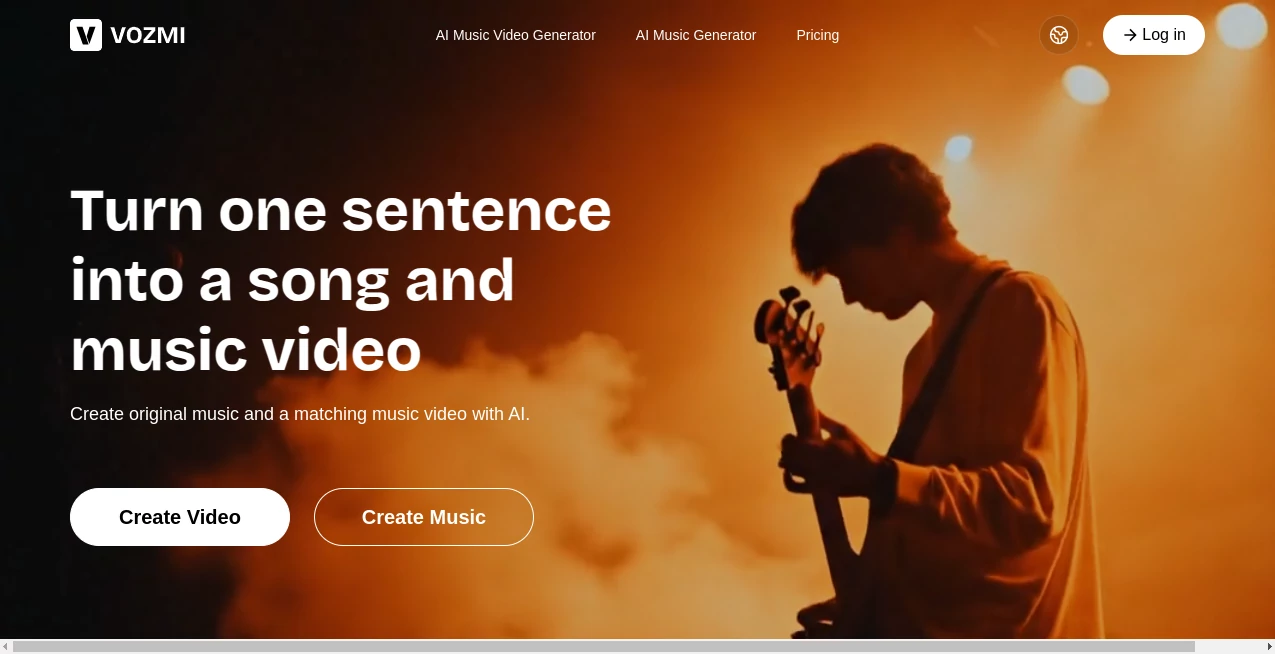
Turning an idea into a finished song usually takes more than inspiration. You may need songwriting skills, music production software, vocal recording, video editing, and plenty of time to bring everything together. Vozmi takes a much simpler approach: describe the music you have in mind, and AI can turn that idea into an original song and a matching music video.
The platform is built for people who want to experiment with music without knowing music theory or playing an instrument. Users can start with a simple prompt or their own lyrics, choose a direction for the music, and let the system handle composition, vocals, and much of the production process.
What makes the experience particularly interesting is that the workflow does not stop when the song is finished. The same creative process can continue into video, with visuals synchronized to the beat, timed lyrics, consistent characters, and built-in lip sync. That makes it useful for creators who want to move from an idea to a complete audiovisual project without juggling several different applications.
Key Features
- Generate original songs from a text prompt or supplied lyrics.
- Create music with natural male or female vocals.
- Switch between different musical genres using simple instructions.
- Turn generated songs into synchronized music videos.
- Create beat-matched scenes that respond to the music.
- Keep lyrics synchronized with the video.
- Use consistent characters and visual styles.
- Generate videos with built-in lip sync.
- Start video creation from text or an image.
- Download generated music and music videos.
- Access advanced models on eligible plans.
User Interface
The interface follows a straightforward creative workflow rather than presenting users with a complicated collection of production controls. The main experience is divided around music and music-video creation, making it easy to understand where to begin.
For a first-time user, the appeal is the small number of decisions required. Instead of building a track from individual instruments and effects, you can describe what you want and let the AI handle the technical side. Once the music is ready, the video-generation workflow provides a natural next step.
Accuracy & Performance
For generative music and video, accuracy is less about reproducing a predetermined answer and more about how well the output follows the user's creative direction. The platform is designed to connect several parts of the production process, including music generation, vocals, visual timing, lyrics, and lip synchronization.
The beat-aware video workflow is particularly useful because the visuals are designed around the music rather than being treated as an unrelated slideshow. This can save considerable manual editing when the goal is a finished music video rather than a simple audio track.
Capabilities
The core capability is turning a short description into a complete musical concept. Users can provide an idea or lyrics and receive a song with vocals and a selected musical direction. The platform supports both male and female vocal styles and allows creators to move between genres with a simple instruction.
The video side adds another layer. A finished song can become a music video featuring scenes synchronized to the beat, timed lyrics, consistent characters, and lip sync. The platform also supports workflows beginning with text or images, giving creators more flexibility when developing a visual concept.
Another useful detail is that the service brings specialized music, voice, image, and video models into a single workflow. Users therefore spend less time switching between separate AI services and more time deciding what they actually want to create.
Security & Privacy
As with any generative platform, users should pay attention to the rights associated with the material they upload and the content they generate. This is particularly important when providing lyrics, images, or other source material that may belong to someone else.
The platform also makes clear that usage rights depend on the subscription plan and the source material. Eligible plans include commercial usage rights, while creators should check the applicable terms before publishing or monetizing generated work.
Use Cases
Independent musicians: Artists can use the service to explore song ideas, experiment with genres, and quickly turn rough concepts into complete musical drafts.
Songwriters: Writers who already have lyrics can use them as a starting point and experiment with different musical directions without setting up a traditional production environment.
YouTube creators: A creator can produce original background music and continue directly into a synchronized music-video workflow, making it easier to develop audiovisual content.
Social media creators: Short-form content often needs music and visuals that work together. Beat-aware scenes and timed lyrics can help create more cohesive clips.
Beginner creators: Someone who has never played an instrument or used professional music software can still experiment with complete songs from a simple written idea.
Visual artists: Creators starting from an image can use it as part of a broader music-video concept instead of treating the image and soundtrack as separate projects.
Pros and Cons
- Pros: Simple prompt-based music creation, natural vocal options, music-video generation, beat synchronization, timed lyrics, character consistency, built-in lip sync, and a unified creative workflow.
- Pros: Suitable for both beginners and creators who want to speed up early-stage production.
- Pros: Eligible paid plans provide commercial usage rights.
- Cons: Advanced generation depends on a credit-based subscription system.
- Cons: Commercial rights are not included with every plan.
- Cons: AI-generated music and video may still require creative review and editing before professional publication.
Pricing Plans
The service uses monthly subscription plans based on credits. The Basic plan provides 1,800 credits per month for $15 and includes music and music-video downloads. The Plus plan costs $40 per month and provides 5,200 credits, commercial usage rights, and priority access to advanced models. The Pro plan costs $90 per month and includes 12,000 credits alongside commercial usage rights and priority access to advanced models.
Additional credit packs can be purchased by active subscribers, while unused subscription credits expire at the end of the monthly billing cycle. Annual subscriptions are also available with a lower monthly equivalent, although credits continue to be issued monthly rather than all at once.
How to Use Vozmi
- Start with a simple description of the song you want to create.
- Alternatively, provide your own lyrics as the starting point.
- Choose the musical direction or genre you want to explore.
- Let the AI compose the song and generate the vocals.
- Review the result and refine the creative direction if needed.
- Move to the music-video workflow once the song is ready.
- Use text or an image as the starting point for the visual concept.
- Generate synchronized scenes with lyrics, beat matching, and lip sync.
- Download the finished music or music video according to your plan.
Comparison with Similar Tools
Many AI music applications concentrate primarily on generating an audio track. This platform takes a broader approach by connecting music creation directly with music-video production. That distinction matters for creators who need a finished visual piece rather than an isolated soundtrack.
Traditional music-production software still provides much deeper manual control over instruments, mixing, arrangement, and mastering. However, it also requires considerably more technical knowledge. Here, the trade-off is convenience: the AI handles much of the production process while the creator focuses on the idea, style, lyrics, and desired visual direction.
The combination of music generation, vocals, beat-aware visuals, timed lyrics, character consistency, and lip sync makes the workflow particularly appealing when the end goal is an audiovisual release.
Conclusion
For anyone who has ever had a song idea but lacked the technical skills or time to produce it, this platform offers an approachable alternative. A short sentence can become the starting point for a complete song, and that song can then be transformed into a synchronized music video.
The strongest part of the experience is the connection between audio and visuals. Instead of creating music in one tool and then searching for another solution to build the video, creators can move through both stages in the same environment. That makes the platform especially interesting for musicians, YouTubers, social media creators, and beginners experimenting with AI-assisted production.
It is not a replacement for every professional music-production workflow, but that is not necessarily the point. Its real strength is making the path from a rough creative idea to a shareable song and music video considerably shorter.
Frequently Asked Questions (FAQ)
Can I create a song without musical experience?
Yes. The platform is designed so users can describe the music they imagine without needing music theory or instrument-playing skills.
Can I provide my own lyrics?
Yes. Users can start with their own lyrics as well as a written description of the music they want to create.
Can I generate a music video from a song?
Yes. A generated song can be used as the basis for a synchronized music video with beat-matched scenes, timed lyrics, characters, and lip sync.
Can I start a video from an image?
Yes. The video workflow supports starting with either a text prompt or an image.
Can I use the generated content commercially?
Commercial usage rights are included with eligible plans. The exact rights also depend on the source material provided, so creators should review the applicable plan and usage terms before commercial publication.
Does the service offer a free option?
Yes. The website allows users to start for free without requiring a credit card.
What are the paid plans?
The current monthly plans are Basic at $15, Plus at $40, and Pro at $90. They provide 1,800, 5,200, and 12,000 monthly credits respectively, with additional benefits available on the higher tiers.
AI Music Video Generator , AI Music Generator .
These classifications represent its core capabilities and areas of application. For related tools, explore the linked categories above.

Vozmi Alternatives Product

Leonardo.ai

MusicGPT AI

Happyhorse

Lyria.run

Happy Horse …

happyhorse ai

AudioVideoGe…

Lyria 3
MemoTune