
🧠 AI Quiz
Think you really understand Artificial Intelligence?
Test yourself and see how well you know the world of AI.
Answer AI-related questions, compete with other users, and prove that
you’re among the best when it comes to AI knowledge.
Reach the top of our leaderboard.


















Agenta

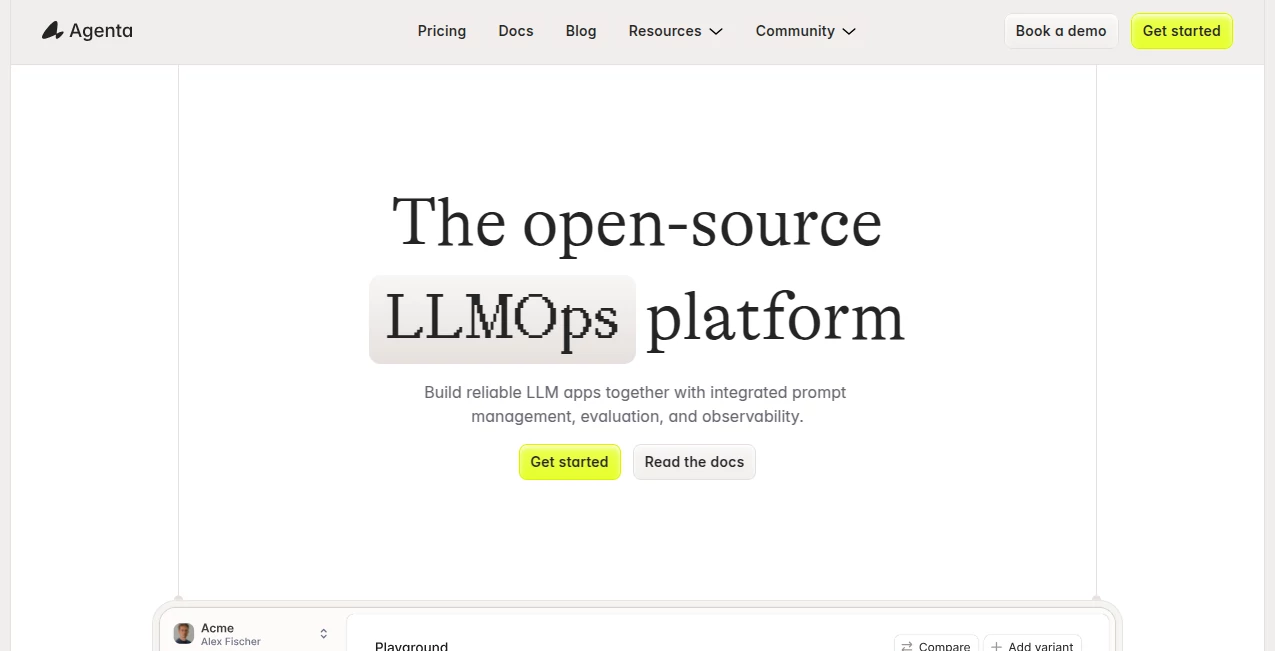
What is Agenta?
Agenta serves as a central hub for teams crafting language model applications, pulling together scattered ideas into a streamlined flow that boosts reliability and speed. This open-source setup lets product folks, developers, and experts work side by side, turning vague concepts into solid builds without the usual silos or guesswork. Many who've switched to it recount how it cut down on endless back-and-forths, making the path from brainstorm to rollout feel more like a shared adventure than a solo slog.
Introduction
Agenta came together a few years back when a group of builders noticed how AI projects often stumbled over disjointed notes and hard-to-track changes, especially in fast-moving teams. They set out to create a spot where everything—from early drafts to final checks—could live in one place, drawing on real-world pains to shape a tool that feels built for the messiness of group work. It quickly drew in outfits of all sizes, with users sharing wins like spotting weak spots in a model swap before it hit production. What keeps it fresh is the community pulse, where tweaks come from folks in the trenches, ensuring it stays a step ahead of the curve in handling the quirks of modern app development.
Key Features
User Interface
The dashboard hits you with a clean slate for side-by-side peeks at different setups, making it easy to spot what works without flipping tabs. Version logs roll out like a clear timeline, so you can rewind changes or branch off without losing the thread. Non-tech team members jump in via simple edits, blending their insights with code tweaks in a flow that feels natural, not forced, keeping everyone in the loop without extra hurdles.
Accuracy & Performance
It leans on smart checks to flag dips in quality right away, running tests that mirror real runs to catch issues before they snowball. Outputs stay steady even as you scale experiments, with quick turnaround that lets you iterate without waiting around. Teams often highlight how it turns fuzzy hunches into hard numbers, helping decisions stick without the second-guessing that slows things down.
Capabilities
From storing every tweak in one spot to tracing full paths through a build, it covers the whole loop of testing steps and gathering input from the crowd. It plays nice with a range of setups, dodging lock-ins so you can mix and match without headaches. The real strength shows in closing gaps, like turning user notes into fresh checks that keep things sharp over time.
Security & Privacy
Your project bits stay tucked away in controlled spaces, with options to limit who sees what based on roles, ensuring sensitive runs don't spill over. It follows solid practices for handling data flows, keeping traces and tests secure without extra setup. Builders count on that baseline trust, letting them push boundaries knowing the backend has their back.
Use Cases
Product leads map out early versions with input from specialists, refining flows that hit user needs spot-on. Dev squads debug tricky chains by following traces back to the root, fixing flaws faster than poring over logs. Startups run quick model swaps to see what lifts results, while bigger crews gather feedback loops that turn one-off tests into ongoing wins. Even lone wolves find it handy for tracking personal experiments, building a history that pays off down the line.
Pros and Cons
Pros:
- Pulls teams together in one workflow, cutting miscommunications.
- Built-in checks replace gut feels with solid proof.
- Open roots mean it grows with your stack, no ties.
- Traces make hunting bugs a breeze, not a burden.
Cons:
- Shifting from loose habits takes a bit to settle in.
- Deeper dives might need some setup for custom fits.
- Community-driven means occasional waits for niche asks.
Pricing Plans
As an open-source gem, the core stays free for anyone to grab and run, perfect for small teams or solo spins. Hosted options likely step up for smoother scales, with tiers that match growing needs without heavy hits. It keeps the door wide, letting you start light and layer on as the project pulls more players.
How to Use Agenta
Dive in by pulling the basics from the repo, then set up a shared space to drop your first drafts and run a quick check. Invite the crew to tweak and test, following the traces to refine weak links. As things firm up, push to staging with built-in watches, looping back feedback to keep the build breathing. It's a cycle that builds confidence step by step, turning raw runs into ready releases.
Comparison with Similar Tools
Where some setups lock you into one way of working, Agenta's open arms let you weave in what fits, though those might offer quicker out-of-box shines for cookie-cutter needs. Against heavier platforms, it lightens the load for flexible flows, skipping bloat but perhaps needing a nudge for enterprise extras. It stands out for crews craving collaboration without chains, blending ease with depth in a way that feels tailored.
Conclusion
Agenta wraps up the scramble of AI builds into a collaborative calm, where teams turn trials into triumphs with clear eyes and shared shoulders. It proves that the best apps come from blended brains, not isolated islands, fostering flows that last beyond the launch. As the field keeps folding in new twists, this hub holds steady, inviting more hands to shape the next wave of smart creations.
Frequently Asked Questions (FAQ)
Is it tied to specific builders?
No, it meshes with whatever stack you're running, keeping options open.
How does feedback factor in?
Traces turn notes into tests, closing loops that sharpen over time.
Best for small or big groups?
Scales smooth from duos to dozens, with rooms that fit the fit.
Open-source mean no support?
Community chats and docs fill the gaps, with paths for paid helps.
Quick start possible?
Grab and go in minutes, with guides that ease the entry.
AI Code Assistant , AI Testing & QA , AI Developer Tools , AI Workflow Management .
These classifications represent its core capabilities and areas of application. For related tools, explore the linked categories above.
Agenta details
This tool is no longer available on submitaitools.org; find alternatives on Alternative to Agenta.
Pricing
- Free
Apps
- Web Tools
Categories

Agenta Alternatives Product

Luma AI

Nifty

Interview Co…

KaneAI

Lovable APP

Kimi K2.5

Kimi K2.5

cznull

Vurge