
🧠 AI Quiz
Think you really understand Artificial Intelligence?
Test yourself and see how well you know the world of AI.
Answer AI-related questions, compete with other users, and prove that
you’re among the best when it comes to AI knowledge.
Reach the top of our leaderboard.


















APIPod

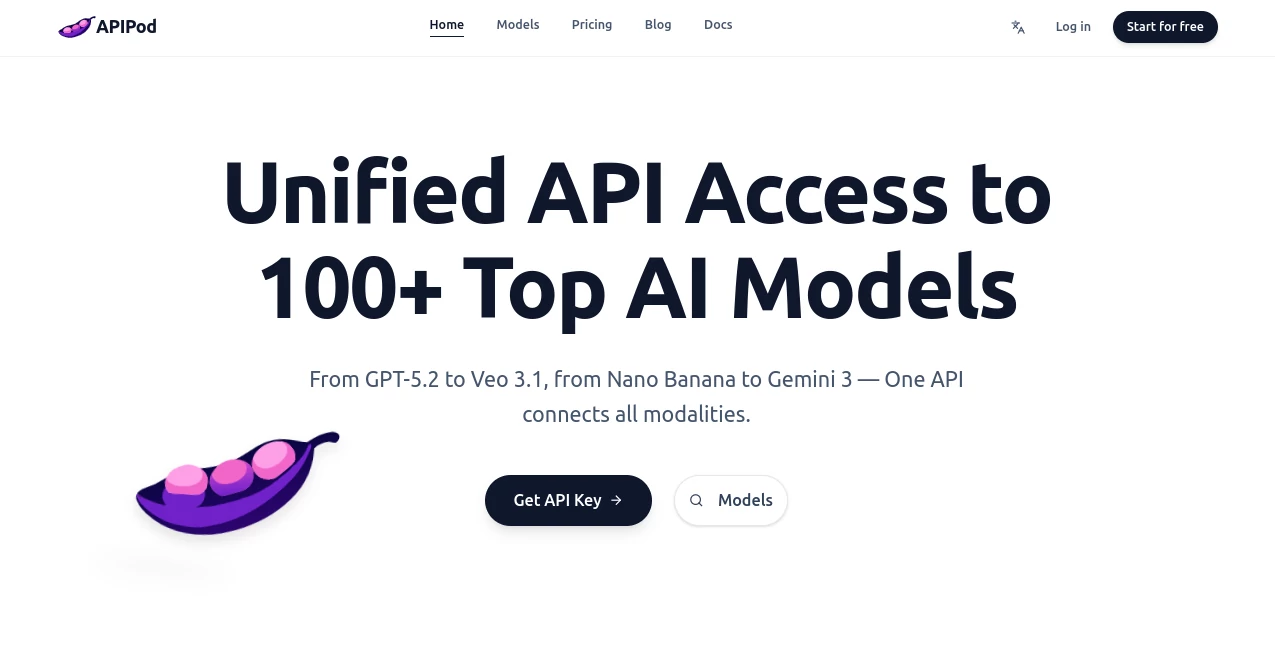
What is APIPod?
Imagine juggling a dozen different keys just to unlock the best AI capabilities out there—sounds exhausting, right? This platform sweeps that hassle away, handing you one sleek gateway to over a hundred cutting-edge models across text, images, video, and more. I've dipped into similar setups before, but the way this one lets you chain models seamlessly, switch providers on the fly, and keep costs in check had me building prototypes faster than ever, with results that punch way above the usual fragmented experience.
Introduction
In the whirlwind of AI development, where new models drop almost weekly, staying agile without drowning in integrations is a real challenge. This service steps up as that reliable backbone, aggregating powerhouse options from giants like OpenAI, Google, Anthropic, and beyond into a single, developer-friendly endpoint. It's not just a proxy; it's smart routing, fault tolerance, and observability baked in, handling millions of requests daily with uptime you can bank on. For anyone from solo hackers to enterprise teams, it's the shortcut to harnessing multimodal magic—text reasoning one call, video generation the next—all without rewriting code or chasing separate bills.
Key Features
User Interface
The dashboard greets you with a no-fuss layout: grab your key, browse featured models with clear specs on pricing and strengths, and dive into code snippets that work out of the box. Python examples using familiar OpenAI libraries mean you're up and running in minutes, no steep dives into new docs. It's thoughtfully sparse, focusing on what matters—model discovery, usage stats, and quick tests—leaving the heavy lifting to the backend while you tinker freely.
Accuracy & Performance
With intelligent routing that picks the best channel in real time and circuit breakers that isolate hiccups before they spread, reliability hits that coveted near-perfect mark. Low latency—often dipping below 50ms globally—and a track record of processing tens of millions of calls daily mean your apps stay snappy, even under load. In my own trials chaining a reasoning model to a video one, the handoff felt invisible, delivering consistent quality without the dreaded timeouts.
Capabilities
Covering everything from advanced LLMs for deep reasoning to state-of-the-art generators for ultra-realistic images and videos, it opens doors to complex workflows like autonomous agents or bulk content pipelines. Multi-channel backups ensure stability, while full observability tracks tokens, costs, and logs for fine-tuning. It's the versatility that impresses—swap in a new model mid-project, blend modalities, or scale for enterprise gating, all through one consistent interface.
Security & Privacy
Traffic flows through protected channels with built-in monitoring that flags issues without exposing data, plus compliance-ready features for logging and spend controls in bigger setups. It's reassuring for production apps, knowing faults get contained and insights stay yours, fostering that trust needed for pushing boundaries.
Use Cases
Indie devs craft multi-modal apps, like chat agents that reason then generate visuals on demand, without juggling providers. Marketing teams automate campaigns—bulk copy from one model, paired images or shorts from others—all routed for best value. Enterprises centralize AI spend, enforcing policies while logging every call for audits. Even researchers prototype agent chains, testing cutting-edge combos quickly to stay ahead of the curve.
Pros and Cons
Pros:
- Single endpoint simplicity that saves endless integration time.
- Smart routing and fault protection for rock-solid apps.
- Broad multimodal coverage keeping you future-proof.
- Transparent observability to optimize costs and performance.
Cons:
- Relies on upstream providers, so rare outages can ripple.
- Pricing varies per model, needing a watch on heavy use.
Pricing Plans
Dive in free to grab a key and test the waters—no upfront commitment. Usage bills per model call, often beating direct providers on value through routing smarts, with dashboards to track every penny. Scales naturally for growing needs, from hobby spikes to enterprise volumes, keeping things predictable and fair.
How to Use APIPod
Sign up for your key, tweak your code to point at the unified base URL, and specify any model like you're chatting with OpenAI directly. Fire off requests—text completion one moment, image gen the next—and watch responses roll in with unified formatting. Monitor the dashboard for usage insights, set up multi-channels for backups, and chain calls for advanced flows. It's that drop-in compatibility that makes migration a breeze.
Comparison with Similar Tools
While some gateways stick to one modality or lack smart failover, this one spans the full spectrum with proactive routing and deep monitoring that edges out the pack in stability and ease. It's less about basic proxying and more about empowering builders with tools that anticipate needs, often at better effective rates, making it the thoughtful choice for serious multi-model work.
Conclusion
This platform quietly solves one of the biggest pains in AI development—fragmentation—delivering a cohesive gateway that feels like an extension of your toolkit. It's the enabler for bolder builds, where ideas flow freely across modalities without the usual roadblocks. If you're weaving AI into your next project, this is the foundation worth betting on.
Frequently Asked Questions (FAQ)
How easy is the switch from direct providers?
Often zero code changes—just update the URL and key.
What modalities are covered?
Text, images, video, audio—over 100 models strong.
Any uptime guarantees?
99.99%, backed by smart isolation and routing.
Good for enterprise?
Absolutely—centralized control, logging, and compliance tools.
Free to start?
Yes, key in hand and testing encouraged.
AI Research Tool , AI API Design , AI Developer Tools .
These classifications represent its core capabilities and areas of application. For related tools, explore the linked categories above.
APIPod details
This tool is no longer available on submitaitools.org; find alternatives on Alternative to APIPod.
Pricing
- Free
Apps
- Web Tools
Categories

APIPod Alternatives Product

JSON to TOON…

SuperAI

Project Genie

Pinpoint Ans…

HostFinder

LocaFlow

GLM 5

Prelight

SciSpace