
🧠 AI Quiz
Think you really understand Artificial Intelligence?
Test yourself and see how well you know the world of AI.
Answer AI-related questions, compete with other users, and prove that
you’re among the best when it comes to AI knowledge.
Reach the top of our leaderboard.


















byliner.ai
Supercharge Your Journalistic Workflow

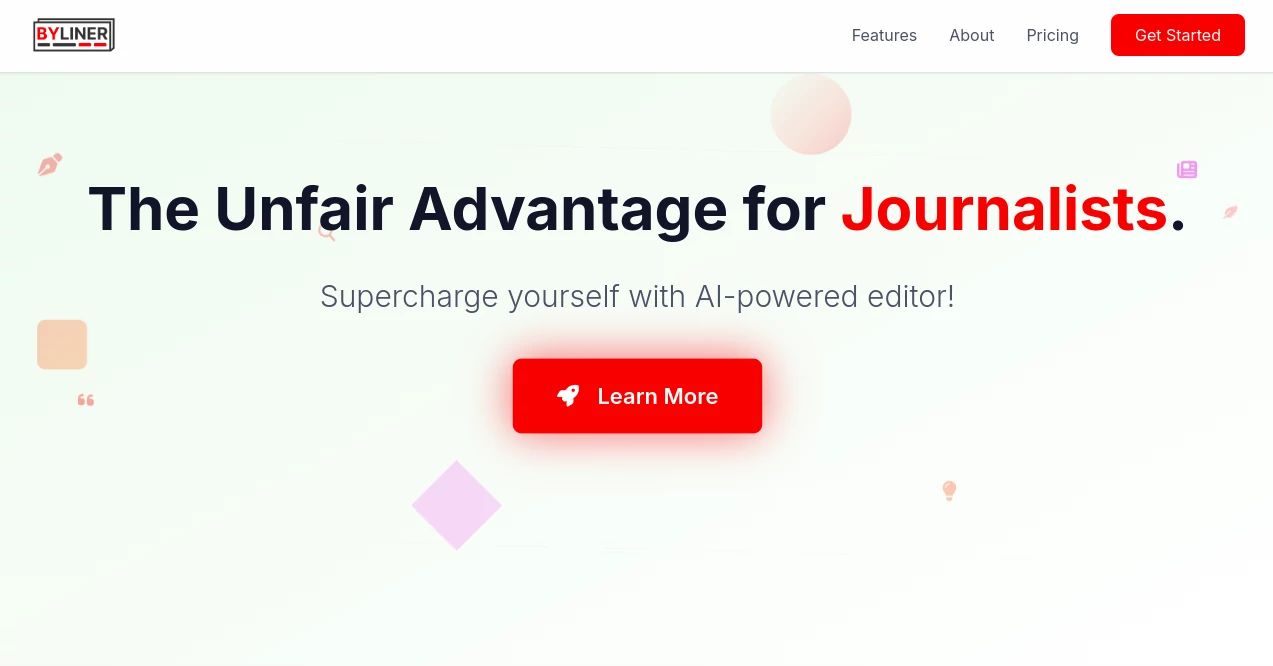
What is byliner.ai?
Byliner slips into the daily grind of newsrooms like a trusted sidekick, turning hours of drudgery into sharp, ready-to-file stories. This editor catches the eye of reporters juggling deadlines, offering nudges that sharpen facts and polish prose without stealing the spotlight. Veterans recall the first time it pulled a key line from a fuzzy recording, sparking that 'aha' moment that turns a rough draft into front-page gold.
Introduction
Byliner took shape in the thick of breaking news cycles, born from a crew of ink-stained pros who knew the ache of chasing leads while the clock ticked mercilessly. It hit the scene not long ago, but already it's the quiet engine behind scoops that land with precision, drawing nods from editors who spot the edge it gives. What started as a way to sift audio for nuggets has grown into a full-throated ally, blending checks and tweaks that let writers breathe easier. Folks in the trenches swap tales of how it unearthed a buried quote that flipped a narrative, proving it's less a gadget and more a sharpened pencil in a world gone digital.
Key Features
User Interface
The screen opens to a familiar workspace, much like your go-to word processor but with subtle helpers hovering nearby, ready to chime in without crowding the page. Drop in a clip or jot a claim, and panels slide open just enough to show the goods—transcripts unspool below, suggestions flicker in the margins. It's the kind of setup that fades into the background after a few goes, letting you chase the story while it handles the busywork, all in a layout that feels built by someone who's stared down the same blank screens.
Accuracy & Performance
When you flag a stat or snippet, it dives quick into the weeds, surfacing back with sources that hold water and scores that flag the shaky ones, often before you've poured your next cup. Audio unravels in a flash, pulling clean lines from mumbles that would stump a human ear, keeping the pace brisk even on marathon edits. Reporters lean on it for those gut-check moments, where a slip could sour the whole piece, and it delivers steady, rarely fumbling the ball in the clutch.
Capabilities
It chews through recordings to spit out summaries and standout bits, flags dodgy details against a web of checks, and whispers tweaks that tighten your turns of phrase without rewriting your voice. Dial in the vibe for a tabloid zing or a wire-service straight shot, and it nudges the flow to fit, all while prepping files for the press or the pixel push. From raw tapes to final cuts, it bridges the gaps that eat time, handing back pieces that read like they sprang whole from your mind.
Security & Privacy
Your drafts and drops stay close to the chest, wrapped in everyday locks that keep outsiders at bay while you work the angles. It follows the usual playbook on handling scraps—grabbing just enough to help and ditching the rest when the job's done—so you can chase tips without glancing over your shoulder at what might linger.
Use Cases
A stringer in the field uploads a roadside chat, watching it bloom into a tight recap with quotes that pop, ready for the evening wire. Desk jockeys run fresh dispatches through the wringer, catching a fib or two before it prints, while freelancers shape pitches that sing to picky gatekeepers. Even podcasters find it handy for clipping highlights from hours of talk, turning chatter into clips that hook listeners fast.
Pros and Cons
Pros:
- Shaves the slog from tape reviews and truth hunts, freeing headspace for the hunt.
- Keeps the prose punchy and true, with hints that build on your style.
- Trial run lets you test the waters deep before diving in.
Cons:
- Leans on your eye for the final say, as no machine nails every nuance.
- Paid tiers gate the full kit, so light users might feel pinched.
- Best with clear inputs—muddy files can trip the quick steps.
Pricing Plans
You kick off with a full month free, no card on file, to roam the tools and see the spark. Once hooked, basics run in the mid-teens monthly for core checks and clips, scaling to thirties for the works with team shares and speedy turns. Lock in yearly and pocket a slice off the top, with easy outs if the fit fades.
How to Use Byliner
Sign on through the quick link, skipping the wallet for that first spin around. Fire up a fresh sheet, drag in your tape or type a tip to probe, and let the checker light up the reliable from the rest. Weave in the pulled gems as you build, leaning on the sidekick for smoother sails, then shape the shade to suit your spot. When it sings, pick your path out—ink on paper or glow on screen—and hit send, circling back to refine if the edit gods call.
Comparison with Similar Tools
Where broad scribes spit generic lines, Byliner tunes tight to the news beat, edging out with spot checks that save face over vague vibes. Against lone transcribers, it layers on the full edit flow, though those might suit simple note-takers better. It carves its lane for deadline dancers, blending speed with smarts where others pick one or the other.
Conclusion
Byliner stands as the unsung boost in the reporter's kit, turning frantic fingers into focused fire that lands leads and lights up pages. It honors the hustle by lifting the load, letting stories breathe true and bold in a rush that never quits. As beats keep broadening, this corner aid evolves right with, proving the sharpest edge comes from tools that know the grind.
Frequently Asked Questions (FAQ)
Does it handle accents or noisy clips?
It tackles most tongues and tumults, pulling clean from the common rough spots.
How deep do the checks go?
Crosses paths with fresh feeds, scoring the solid from the suspect quick.
Can I tweak the voice it suggests?
Sure, it mirrors your moves, offering paths that fit your familiar flow.
What formats fly out the door?
From crisp sheets to web wraps, tailored to land where you aim.
Is the trial really no-strings?
Yep, full access for four weeks, walk away whenever without a whisper.
AI SEO Assistant , AI Content Generator , AI Transcriber , AI Writing Assistants .
These classifications represent its core capabilities and areas of application. For related tools, explore the linked categories above.
byliner.ai details
This tool is no longer available on submitaitools.org; find alternatives on Alternative to byliner.ai.
Pricing
- Free
Apps
- Web Tools
Categories

byliner.ai Alternatives Product

Prompt Sloth

StudentAI De…

PortBackLinks

SupaTraffic

Quso AI

RankPeak

Simplified
md2card

Backlink Man…