
🧠 AI Quiz
Think you really understand Artificial Intelligence?
Test yourself and see how well you know the world of AI.
Answer AI-related questions, compete with other users, and prove that
you’re among the best when it comes to AI knowledge.
Reach the top of our leaderboard.

















DocsRouter

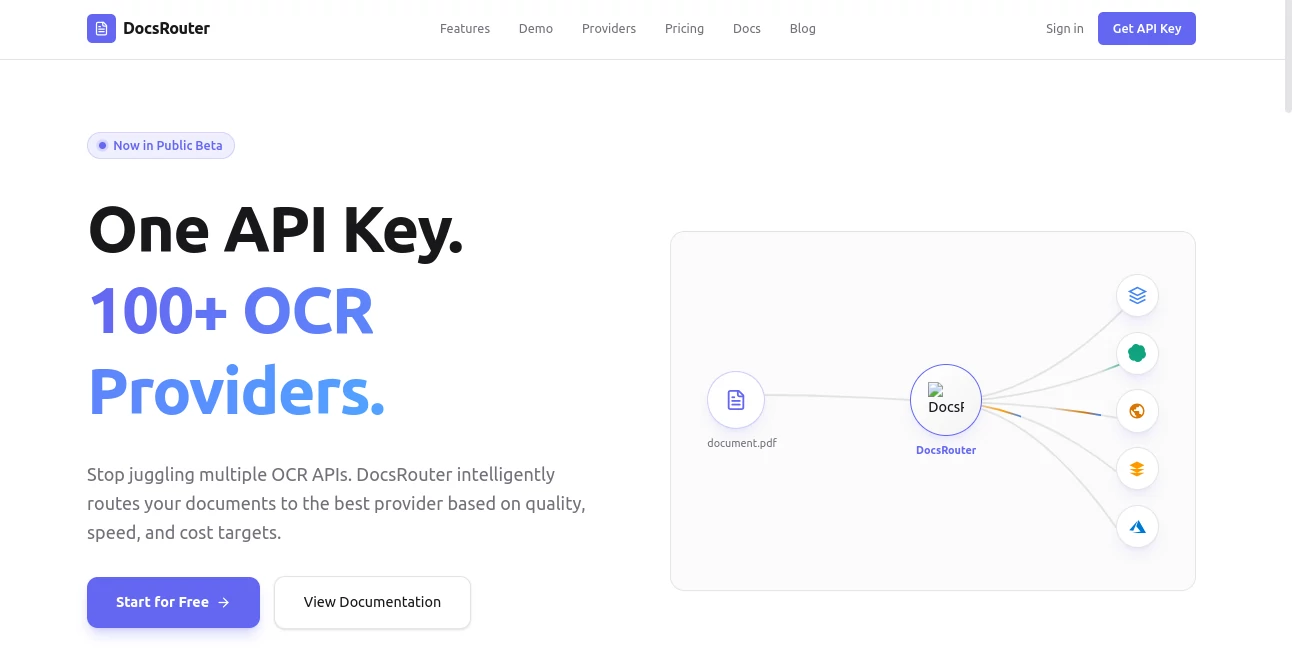
What is DocsRouter?
Imagine juggling a dozen different keys just to pull text from a simple invoice—sounds exhausting, right? This platform sweeps that mess away, handing you one clean key to unlock over a hundred vision models, from heavy hitters like Gemini and Claude to GPT variants, all tuned for spotting and extracting data with uncanny smarts. I've tinkered with similar setups before, but nothing quite matches how it lets you focus on building cool stuff while it quietly picks the best engine for the job, whether you're chasing pinpoint accuracy or lightning speed.
Introduction
Developers know the pain: stitching together APIs from various providers, wrestling mismatched formats, and watching bills creep up as you test what works best for tricky docs. This gateway flips the script, wrapping everything in a single, consistent endpoint that's OpenAI-friendly for easy swaps. Start with a free credit bump, drop in your document URL, pick a strategy like 'quality' or 'cost', and get back clean text, tables, even usage stats—all without rewriting code when you switch models. It's the kind of behind-the-scenes wizardry that frees you to innovate, especially with benchmarks showing top performers crushing real-world extraction tasks.
Key Features
User Interface
No flashy dashboard overload here—just straightforward docs with code snippets that copy-paste ready, plus a playground feel in the examples where you drag sliders to compare raw docs against extracted magic. Integration boils down to a few lines of fetch, headers and body that feel familiar if you've touched any vision API before. It's refreshingly uncluttered, the sort of setup that had me running my first test extraction in under five minutes, grinning at how painless it all felt.
Accuracy & Performance
Routing smarts shine when it picks providers with sky-high ELO scores for your needs, delivering confidence in the high 90s and processing times that dip under two seconds for typical files. Token counts, costs down to pennies, and detailed breakdowns come back every call, so you know exactly what you're getting. In my quick spins with sample invoices, it nailed tables and fine print without a hiccup, far outperforming single-provider runs I'd tried elsewhere.
Capabilities
Send a PDF URL, specify your priority—quality for tough layouts, speed for bulk scans, or cost for everyday runs—and it handles the rest, pulling structured text and tables via the strongest multimodal brains out there. Upcoming failover means even smoother rides, but already it's a powerhouse for turning messy scans into usable data, compatible as a drop-in for existing setups.
Security & Privacy
With compliance badges in tow and a pay-for-what-you-use model, your calls stay straightforward and accountable, no hidden data hoarding. It's built for devs who need reliable, no-surprises access, keeping things professional and buttoned-up so you can integrate without second-guessing.
Use Cases
Picture automating invoice intake for a small business: feed URLs from emails, extract totals and dates flawlessly, pipe into accounting without manual typing. Or a research team batch-processing scanned reports, optimizing for cost on straightforward pages and quality on handwritten notes. App builders embed it for user-uploaded forms, switching models seamlessly as needs evolve—all while keeping code lean and bills predictable.
Pros and Cons
Pros:
- One-key simplicity that saves hours on integration headaches.
- Smart picks among top models for results that punch above single providers.
- Transparent usage stats—costs, times, tokens—right in every response.
- Free starter credit to prove it works before committing cash.
Cons:
- Still rolling out extras like full failover, so plan for that soon.
- Best for URL-based docs; local files need a quick host first.
Pricing Plans
Kick off with $2 in free credits—no card asked—to run real tests and feel the power firsthand. Then it's pure pay-as-you-go, pennies per extraction that scale with volume, no tiers locking features away. It's the flexible kind of billing that fits side projects or growing apps alike, only charging for what you actually process.
How to Use DocsRouter
Grab your API key after a quick sign-up, then craft a POST to the endpoint with your bearer token, document URL, and strategy pick. Response hands back the extracted text plus handy metrics—log the text, stash the usage if you're tracking spends. Swap 'quality' for 'speed' mid-project with one line change, or test providers indirectly through routing. I threw in a scanned receipt URL, got back perfect line items in seconds, and was hooked on how little fuss it took.
Comparison with Similar Tools
Standalone vision APIs lock you in with their quirks and pricing swings, while broader gateways might skim on specialized routing—this one zeroes in on document smarts, blending the best models without forcing you to manage the mess. It's lighter on overhead than rolling your own multi-provider logic, yet sharper for OCR-specific wins, making it the savvy choice for devs who want top extraction without the tangle.
Conclusion
If you're knee-deep in document data and tired of the provider juggling act, this platform feels like the answer you've been waiting for—reliable, clever, and genuinely helpful in cutting through the noise. It lets you build bolder, ship faster, and worry less about the backend grind. Give the free credits a spin; chances are, you'll wonder how you managed without that one-key wonder before.
Frequently Asked Questions (FAQ)
What models can I tap into?
Over a hundred vision powerhouses, including Gemini flashes, GPT variants, and Claude standouts, all benchmarked for real doc prowess.
How do I control costs?
Pick 'cost' strategy for lean runs, or monitor the per-call breakdowns to fine-tune.
Works with my existing code?
Drop-in compatible with common vision formats—just swap the endpoint and key.
What about tricky handwritten stuff?
Route to quality-focused models that handle scripts and scrawls with impressive grace.
Any limits on free starts?
$2 credit covers plenty of tests, enough to validate for your workflow risk-free.
AI API Design , AI Developer Tools , AI Document Extraction , AI Documents Assistant .
These classifications represent its core capabilities and areas of application. For related tools, explore the linked categories above.
DocsRouter details
This tool is no longer available on submitaitools.org; find alternatives on Alternative to DocsRouter.
Pricing
- Free
Apps
- Web Tools
Categories

DocsRouter Alternatives Product

cznull

Blackbox AI

DevUtilX

markdown to …

Ryne AI

Kimi K2.5

Scillus

GPTLocalhost

Website Clon…