🧠 AI Quiz
Think you really understand Artificial Intelligence?
Test yourself and see how well you know the world of AI.
Answer AI-related questions, compete with other users, and prove that
you’re among the best when it comes to AI knowledge.
Reach the top of our leaderboard.

















GlobalMind

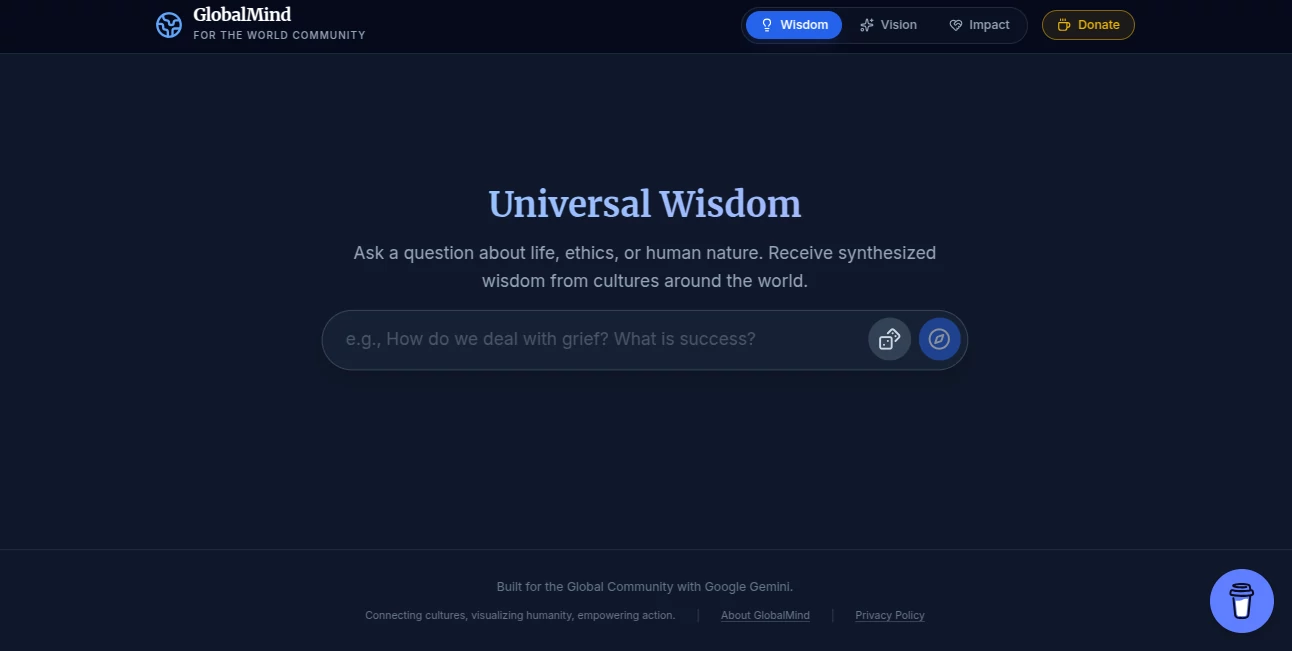
What is GlobalMind?
Ever wondered if the world's collective mood could nudge the fabric of reality, even in tiny ways? This long-running project dives deep into that fascinating idea, using a worldwide web of random number generators to spot subtle shifts during big global moments. It's not just data—it's a window into how shared emotions might ripple through everything, and browsing the live graphs feels like peeking behind the curtain of human connection. I've spent late nights scrolling through event archives, marveling at patterns that line up with tragedies or celebrations, and it always leaves me with that quiet sense of awe.
Introduction
Born out of Princeton's pioneering work on mind-matter interactions, this initiative has been quietly collecting evidence since the late '90s, building a network of "eggs"—those unassuming devices scattered across continents that churn out truly random bits. The core question is simple yet profound: do moments when millions focus together—grief over a loss, joy at a milestone—create measurable blips in what should be pure chance? Over decades, the archive has grown rich with examples, from quiet meditations to worldwide shocks, offering anyone curious a chance to explore raw data and interpretations. It's a blend of hard science and open wonder, inviting skeptics and believers alike to dig in and draw their own lines between the dots.
Key Features
User Interface
The site keeps things straightforward, with a menu that unfolds like an old research notebook—links to live displays, event baskets, and thoughtful essays all in one glance. Graphs load crisp, letting you zoom through years or hover on spikes, while the egg map pins locations that feel alive with possibility. It's not flashy, but that's the charm; it puts the focus squarely on the numbers and stories, making a deep dive feel inviting rather than overwhelming.
Accuracy & Performance
With rigs running nonstop for years, the data streams in reliable and vast, calibrated to catch even faint deviations that stack up over events. Analyses hold to rigorous stats, showing trends that nudge beyond chance in ways that spark endless debate. One evening, I pulled up the feed during a major news break and watched the variance wiggle in real time—it was eerie how it echoed the collective hush falling over feeds everywhere.
Capabilities
Beyond live tracking, you can sift through formal event results, replay daily videos of network behavior, or pore over hypothesis registries that lay out the method plain. The realtime display pulses with current variance, while archives let you compare custom periods or specific happenings. It's a treasure trove for anyone pondering coherence, with tools to visualize how focused attention might gently sway the random.
Security & Privacy
As a pure research hub, it collects no personal details—just anonymous streams from hosted nodes, shared openly for transparency. Data flows clean and public, fostering trust in an arena where questions of influence matter most. You browse freely, download plots, or link findings without a whisper of tracking, keeping the experience pure and open.
Use Cases
Researchers cross-reference spikes with world headlines, building cases for subtle interconnections that challenge old views. Meditation groups time sessions to the network, watching for coherence bumps that affirm their practice. Curious minds mark personal milestones, like global holidays, and check the graphs for that extra layer of meaning. Even educators pull examples for classes on stats or consciousness, sparking discussions that bridge science and the intangible.
Pros and Cons
Pros:
- Decades of meticulous data, freely open for anyone to explore or analyze.
- Live feeds and visuals that make abstract ideas tangible and gripping.
- Balanced views blending rigorous tests with thoughtful interpretations.
- Community ties that welcome contributions and dialogue.
Cons:
- Older design might feel dated to newcomers used to slick apps.
- Findings spark debate, with no slam-dunk proofs yet.
Pricing Plans
It's all open access—no fees, no gates, just a donation nudge for those moved to support the ongoing hosts and servers. Pure public science at its best, sustained by curiosity and small contributions that keep the eggs humming worldwide.
How to Use Global Mind
Start at the home view for the big-picture graph, then wander the menu to data displays or event lists. Pick a moment that resonated globally, pull its basket, and trace the variance curve against timelines. Dive deeper with realtime for the now, or archives for historical hunts—simple clicks reveal layers that reward patient poking.
Comparison with Similar Tools
While newer apps chase personal mindfulness metrics, this one stands apart with its global scale and physical anchors, gathering impartial streams over flashy self-reports. It trades quick insights for enduring depth, outlasting trends with a commitment to open inquiry that few match.
Conclusion
This project whispers a bold possibility—that we're more linked than we know, in ways science is only beginning to map. Browsing its halls feels like joining a quiet conversation spanning years and borders, one that's as humbling as it is hopeful. Whether you're skeptical or searching, it offers a rare space to wonder aloud, backed by data that invites you to see the world a little less separate.
Frequently Asked Questions (FAQ)
What are the 'eggs'?
Physical devices hosting random generators, dotted worldwide to catch broad shifts.
How significant are the findings?
Cumulative deviations nudge beyond chance, fueling ongoing study and discussion.
Can I contribute?
Host an egg or donate—details in the community sections.
Is it proven science?
Rigorous but exploratory, with results that intrigue and invite further probes.
What's the realtime display show?
Live network variance, updating as collective focus ebbs and flows.
These classifications represent its core capabilities and areas of application. For related tools, explore the linked categories above.
GlobalMind details
This tool is no longer available on submitaitools.org; find alternatives on Alternative to GlobalMind.
Pricing
- Free
Apps
- Web Tools
Categories

GlobalMind Alternatives Product

PromptZerk

Hunty Zombie…

RankPeak

AI Podcast I…

LocalRAG!

Website Traf…

Hugging Face

Rank++

grow a garde…