🧠 AI Quiz
Think you really understand Artificial Intelligence?
Test yourself and see how well you know the world of AI.
Answer AI-related questions, compete with other users, and prove that
you’re among the best when it comes to AI knowledge.
Reach the top of our leaderboard.

















Grok Imagine 2.0
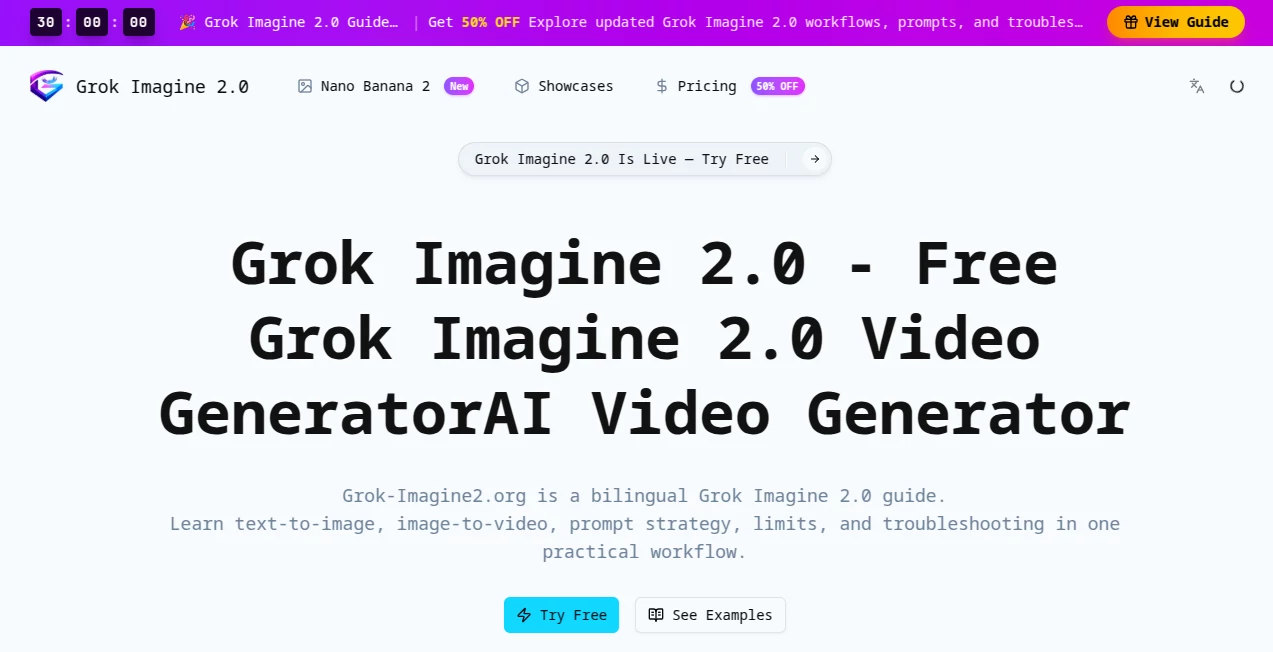
What is Grok Imagine 2.0?
There’s a special kind of excitement when you describe a scene in plain words and moments later a short video plays that actually feels alive—lighting shifts naturally, motion has weight, and the atmosphere carries through every frame. This tool captures that feeling remarkably well, turning simple text prompts or reference images into cinematic clips that often surprise even seasoned creators. I’ve watched people generate everything from dreamy product reveals to emotional short stories and share them with genuine pride because the output looks directed, not generated. It’s the kind of experience that makes you want to keep experimenting, not because the tech is flashy, but because it finally feels like a real creative collaborator.
Introduction
Creating video has always been time-consuming and expensive. Most AI tools still fall short—jerky motion, inconsistent characters, or lighting that doesn’t quite match the mood. This platform quietly raises the bar by combining strong text-to-video and image-to-video capabilities with a focus on cinematic quality and temporal consistency. Whether you start with a detailed prompt or upload a reference image, it builds short sequences that respect storytelling basics: smooth transitions, believable physics, and emotional tone. For indie creators, marketers, and hobbyists who want to see their ideas move without a full production team, it’s a genuine shortcut that delivers watchable, shareable results fast. The best part? It keeps improving, and the early results already feel like a meaningful step forward.
Key Features
User Interface
The workspace is clean and inviting. A generous prompt area lets you describe your vision in natural language, with optional image upload for stronger visual grounding. Simple controls for aspect ratio, duration, and style sit nearby without clutter. Previews load quickly so you can iterate without losing momentum. It never feels like you’re fighting the tool—everything is designed to keep the creative flow alive rather than slowing you down with unnecessary steps.
Accuracy & Performance
Character consistency across frames is one of its strongest points—faces, outfits, and expressions hold steady even with camera movement or changing light. Motion feels natural rather than robotic, and the model handles complex prompts with multiple subjects better than many alternatives. Generation times are reasonable for the quality delivered, often finishing short clips in under a minute. The results hold up well on closer inspection, with fewer of the common AI artifacts that break immersion.
Capabilities
It supports text-to-video, image-to-video, and hybrid workflows where you combine prompts with reference images for precise control. You can create multi-shot sequences with natural transitions, experiment with different cinematic styles, and generate clips suitable for social media, storytelling, or concept testing. The output quality is high enough for sharing directly or using as a starting point for further editing. It’s versatile enough for quick social clips or more ambitious narrative experiments.
Security & Privacy
Your prompts and uploaded images are handled responsibly, with no unnecessary long-term storage or use for training beyond the immediate generation. The platform prioritizes user control, so you can create with confidence knowing your ideas stay private unless you choose to share the final output. For creators working on personal or client projects, that thoughtful approach makes a real difference.
Use Cases
A small brand turns a single product photo into an elegant lifestyle clip that feels like a real ad. An indie musician creates a visualizer that matches the song’s mood instead of generic stock footage. A short-form creator builds consistent character-driven Reels without daily filming sessions. A filmmaker quickly mocks up emotional beats to test tone before committing to full production. The common thread is speed combined with quality—getting something watchable and emotionally resonant without weeks of work.
Pros and Cons
Pros:
- Strong character and style consistency that keeps scenes believable.
- Cinematic motion and lighting that feel thoughtfully directed.
- Hybrid image + text guidance gives precise creative control.
- Fast enough generations to support real creative iteration.
Cons:
- Clip lengths remain modest, though multi-shot workflows help build longer stories.
- Very abstract or contradictory prompts can occasionally lead to unexpected results.
- Higher resolutions and unlimited use require paid access.
Pricing Plans
A generous free tier lets you explore and create without upfront commitment—perfect for testing ideas and seeing the quality firsthand. Paid plans unlock higher resolutions, longer clips, faster processing, and more generous daily limits. Pricing feels balanced for the creative leap it provides; many users find that one paid month easily covers what they used to spend on stock footage or freelance editors for similar short content.
How to Use Grok Imagine 2
Start with a clear, vivid prompt describing the scene and mood you want. Optionally upload a reference image to guide style, characters, or composition. Choose your preferred aspect ratio (vertical for social, horizontal for wider storytelling) and approximate length. Hit generate and watch the preview appear. If the result isn’t quite right, tweak the wording or reference strength and try again—iteration is quick and rewarding. Once satisfied, download the clip and use it as-is or bring it into your editor for final touches. The whole process encourages experimentation, so you can refine several versions in one sitting.
Comparison with Similar Tools
Many AI video generators still struggle with consistency or produce motion that feels artificial. This one stands out for its attention to cinematic flow and character stability, often delivering clips that feel closer to human-directed work. The hybrid guidance mode in particular gives creators more director-like control than pure text-to-video tools typically allow, while keeping the process approachable for those who don’t want to wrestle with complex settings.
Conclusion
Video creation has always been one of the most demanding creative mediums—expensive in time, skill, or both. Tools like this quietly lower the barrier, letting more people turn ideas into moving stories without a full production team. It doesn’t replace taste or vision; it amplifies them. When the distance between “I have an idea” and “here’s a watchable clip” shrinks to minutes, something fundamental shifts for creators. If you think in scenes and moments, this is worth exploring—it might just become your new favorite creative companion.
Frequently Asked Questions (FAQ)
How long can generated clips be?
Typically 5–10 seconds per generation; longer narratives are possible by creating and combining multiple shots.
Do I need a reference image?
No—text-only works well—but adding one significantly improves consistency in characters and style.
What resolutions are available?
Up to 1080p on paid plans; free tier offers good preview quality.
Can I use the outputs commercially?
Yes—paid plans include full commercial rights.
Is there a watermark on free generations?
Free clips usually carry a small watermark; paid generations remove it completely.
AI Animated Video , AI Image to Video , AI Video Generator , AI Text to Video .
These classifications represent its core capabilities and areas of application. For related tools, explore the linked categories above.
Grok Imagine 2.0 details
Pricing
- Free
Apps
- Web Tools
Categories

Grok Imagine 2.0 Alternatives Product

Kling 3 AI

AI Animate I…

Seedance 2.0
ds video

Seedance 2.0…

MuseCraft.AI

AiSora

ai seedance …

seedance 3.0