
🧠 AI Quiz
Think you really understand Artificial Intelligence?
Test yourself and see how well you know the world of AI.
Answer AI-related questions, compete with other users, and prove that
you’re among the best when it comes to AI knowledge.
Reach the top of our leaderboard.


















Heartopia Guide

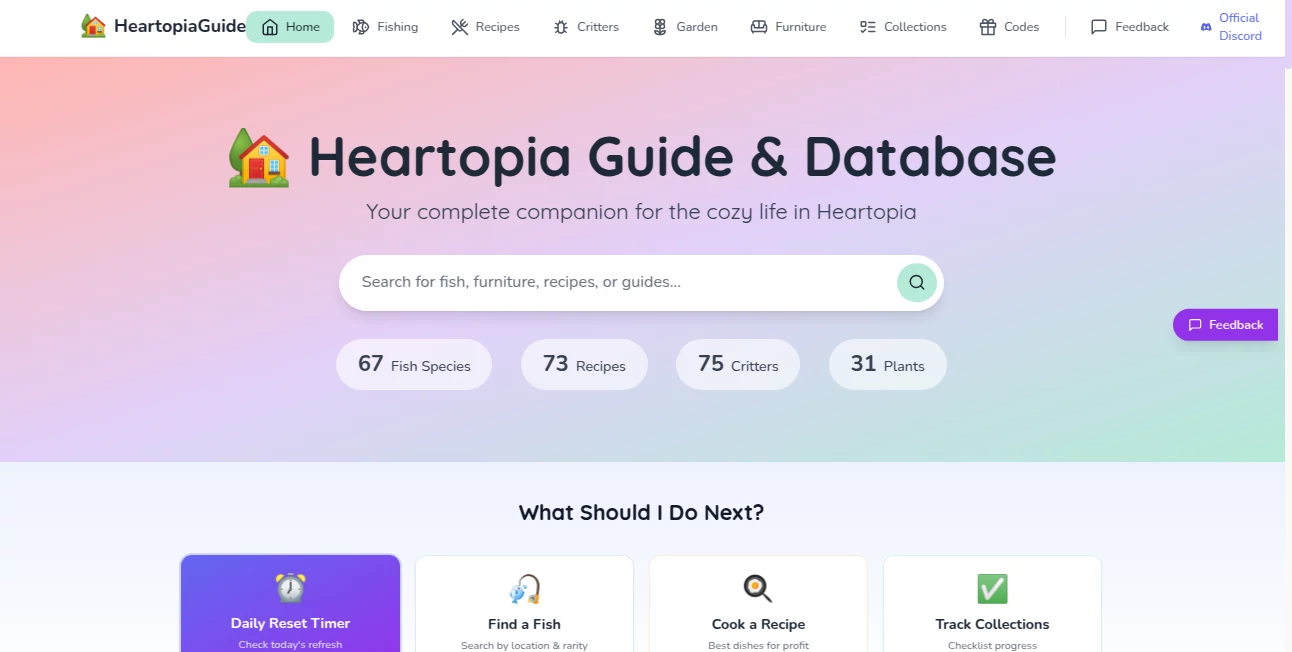
What is Heartopia Guide?
Sometimes the scariest thing about heart health isn’t the symptoms—it’s the silence between doctor visits when you’re left wondering if that flutter was nothing… or something. This tool steps into that quiet space with gentle, informed guidance that feels like a friend who actually knows what they’re talking about. You describe how you feel, answer a few targeted questions, and it gives you clear, compassionate insight—when to relax, when to monitor, when to call someone. I’ve heard from people who used it during anxious nights and felt calmer just having a reasoned voice on their side. It doesn’t replace doctors; it helps you show up to appointments better prepared and less afraid.
Introduction
Heart symptoms can be confusing—chest tightness one day, skipped beats the next—and Google makes it worse. This platform was built by people who’ve been on both sides of that worry: patients who felt lost and clinicians who saw how fear delays care. It combines smart symptom analysis with plain-language explanations and gentle risk guidance so users feel heard and directed instead of panicked. The interface is calm, the language kind, and the advice always circles back to “talk to your doctor” when it should. For anyone living with heart concerns—or loving someone who is—it’s become a steady companion that turns uncertainty into manageable next steps.
Key Features
User Interface
The experience is intentionally soothing: soft colors, large readable text, a simple chat-like flow where you describe symptoms in your own words. It asks follow-up questions naturally (“Does it happen after meals?” “Any shortness of breath?”) without feeling like an interrogation. Results appear in clear sections—Possible Explanations, When to Worry, Suggested Actions—with big, friendly buttons to save the summary or share with your doctor. It never rushes you; it feels like it’s sitting with you, not judging.
Accuracy & Performance
It draws from up-to-date cardiology guidelines and real clinical patterns, not generic WebMD lists. Responses are surprisingly nuanced—differentiating benign palpitations from warning signs, recognizing red-flag combinations, and always erring on the side of caution. Processing is instant, so you’re never left hanging. Users often say the advice matched what their cardiologist later told them, which builds real confidence in the tool.
Capabilities
Symptom checker for common cardiac concerns (chest pain, palpitations, fatigue, dizziness, shortness of breath), personalized risk guidance based on age/sex/history, clear triage advice (“monitor at home,” “see GP soon,” “go to ER now”), symptom journal with trend tracking, doctor-report generator (summarizes your input in medical-friendly language), and multilingual support. It’s not diagnostic—it’s directional, always pointing toward professional care when needed.
Security & Privacy
Everything you share stays encrypted end-to-end. No mandatory account for basic use, no selling of health data, no training models on user inputs. If you do create a profile for tracking, your journal stays private and exportable only by you. In a space where health information feels especially sensitive, that clean, respectful approach matters deeply.
Use Cases
A 45-year-old with occasional chest tightness uses it late at night, gets reassurance it’s likely reflux but advice to track and mention at his next checkup—he sleeps better. A woman in her 60s notices irregular beats after coffee; the tool helps her describe the pattern clearly to her GP, leading to faster diagnosis. A young athlete feels skipped beats during workouts; it guides him to log episodes and discuss with a sports cardiologist. Families use it when elderly relatives report vague symptoms—helping everyone stay calm and organized until the doctor visit. Wherever heart worry shows up, it offers clarity and calm.
Pros and Cons
Pros:
- Calm, compassionate tone that reduces panic instead of adding to it.
- Accurate triage that aligns with real clinical thinking.
- Doctor-report feature saves time and improves appointment quality.
- Completely private—no forced accounts or data harvesting.
- Free access to core guidance makes it available when people need it most.
Cons:
- Not a substitute for emergency care—always says so clearly, but some users still need reminding.
- Advanced tracking and history features require a paid plan.
- Very rare or complex symptoms may get broad guidance rather than specific (which is intentional and safe).
Pricing Plans
Core symptom checking and basic guidance are free forever—no card needed. Premium unlocks unlimited history tracking, advanced trend analysis, priority support, and ad-free experience. Pricing is modest—less than a single co-pay for many—and focused on giving ongoing value to people living with chronic heart concerns or frequent questions.
How to Use Heartopia Guide
Start typing or speaking your symptoms in the main box (“I’ve had chest pressure for two days, worse when walking”). Answer follow-up questions as they appear. Read the summary—Possible Causes, Urgency Level, Next Steps. Save or export the report if you want to bring it to your doctor. Create a free account if you’d like to track patterns over time. That’s it—quick, private, and designed to leave you calmer and clearer than when you started.
Comparison with Similar Tools
Generic symptom checkers often feel cold and alarmist, throwing worst-case scenarios without nuance. This one prioritizes calm, accurate triage and always centers professional care. Where others push ads or data collection, it stays private and focused. It’s less about diagnosing and more about helping you prepare for the doctor visit—which is exactly what most people need when hearts are involved.
Conclusion
Heart worries don’t wait for office hours. Having a kind, knowledgeable voice available 24/7—something that listens carefully, explains clearly, and tells you what to do next—can take the edge off those anxious moments. This tool doesn’t pretend to be a doctor; it simply helps you show up to your doctor better informed, less afraid, and more in control. In matters of the heart, that kind of quiet support is invaluable.
Frequently Asked Questions (FAQ)
Is this a replacement for seeing a doctor?
No—it explicitly tells you when to seek care and never gives a final diagnosis.
How accurate is the guidance?
It follows current cardiology guidelines and is reviewed by clinicians, but always defers to professional evaluation.
Do I need an account?
No—basic use is completely anonymous. Accounts are optional for tracking.
Can I share results with my doctor?
Yes—built-in report generator creates a clean, printable summary.
What if my symptoms are urgent?
It clearly flags emergencies and directs you to call 911 or equivalent immediately.
AI Life Assistant , AI Healthcare .
These classifications represent its core capabilities and areas of application. For related tools, explore the linked categories above.
Heartopia Guide details
This tool is no longer available on submitaitools.org; find alternatives on Alternative to Heartopia Guide.
Pricing
- Free
Apps
- Web Tools
Categories

Heartopia Guide Alternatives Product

AI Dream Ana…

YouCam AI & …

Rizzwords

Dating photos

core level

Greetings Is…

AiZolo

What The Food

We Are Charl…