🧠 AI Quiz
Think you really understand Artificial Intelligence?
Test yourself and see how well you know the world of AI.
Answer AI-related questions, compete with other users, and prove that
you’re among the best when it comes to AI knowledge.
Reach the top of our leaderboard.


















Nano Banana Pro
What is Nano Banana Pro?
Nano Banana Pro slips into the creative mix as a reliable partner for turning simple thoughts into lifelike visuals that hold their own in any lineup. This setup catches the eye of makers who want results that look handpicked, blending everyday prompts into scenes that feel grounded and full of life. Those who've given it a spin often talk about how it cuts through the usual haze, delivering pieces that fit right into projects without extra polish.
Introduction
Nano Banana Pro came along in late 2025, pieced together by folks aiming to bridge the gap between quick sketches and standout designs that pros would approve. It built on earlier tries, learning from what worked and what fell flat, to create something that handles the little details without overcomplicating things. Right from the start, it drew in a crowd of everyday creators sharing examples of scenes that captured just the right mood, from cozy setups to bold statements. Over the months, it's become a quiet staple for those balancing tight schedules with big visions, proving that a thoughtful approach can make the difference between forgettable and unforgettable.
Key Features
User Interface
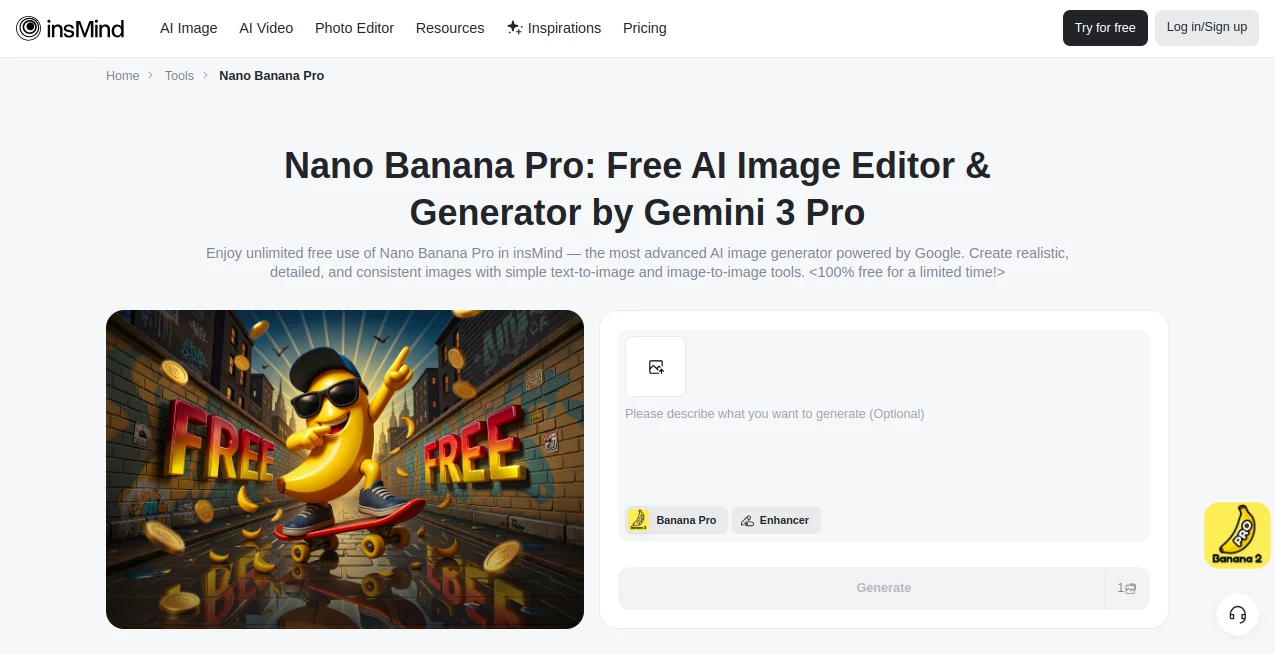
The front greets you with a no-fuss flow that starts with picking your starting point, whether that's typing out a scene or dropping in a photo to build on. Steps line up clear as day—describe, generate, grab—and the screen updates without pulling you in too many directions. Even if you're new to this sort of thing, it feels like following a recipe, with previews that let you see the shape before committing, keeping the whole process light and forward-moving.
Accuracy & Performance
When you lay out a layered idea, it sorts the pieces without the common slip-ups, holding steady on shapes and shades that match what you had in mind. It wraps things up in a flash, even for fuller descriptions, turning out files that stay sharp no matter the size. Users point to how it keeps things consistent across views, avoiding those off-kilter moments that throw off the balance, and delivers every time with a reliability that builds quiet confidence.
Capabilities
It pulls together everything from broad overviews to close-up details, weaving in writings that read true in all sorts of styles and tongues, while keeping the overall feel just right. You can start from a rough outline and watch it fill out into something ready for the wall or the web, with options to scale up or refine on the spot. The range covers quick tests to full builds, handling shifts in light or layout without losing the thread, making it a go-to for projects that need that extra touch of realness.
Security & Privacy
Your starting points get treated with care, worked on in the moment and then set aside, so nothing hangs around longer than needed. It puts the choices in your hands for what stays or goes, ensuring personal elements remain just that—personal. Folks who work with sensitive setups find peace in knowing their rough ideas don't linger in shared spaces, letting them experiment freely without the usual second-guessing.
Use Cases
Ad teams sketch out campaign looks that grab without the guesswork, testing angles that hit home before the big push. Shop owners stage their goods in everyday spots, creating pulls that nudge buyers closer without hauling in lights and backdrops. Content makers whip up thumbnails that tie into their feed, keeping a steady look that draws folks back. Even educators bring abstract points to life with visuals that clarify without clutter, turning dry talks into something that sticks.
Pros and Cons
Pros:
- Stays true to the details you describe, avoiding odd twists.
- Speeds through to sharp results that hold up big or small.
- Handles a mix of languages and styles without missing a beat.
- Fits into workflows that run fast, from idea to done.
Cons:
- Shorter ideas shine brighter; longer ones might need a trim.
- Needs clear steps to hit the mark every time.
- Full access ties into plans that add up over time.
Pricing Plans
It opens with a no-cost window to try the basics, giving you room to see if it clicks without jumping in deep. From there, it links into tiered setups that unlock more runs and finer control, starting modest and scaling for steady use. The approach keeps things approachable at first, with options that match how often you dip in, and a grace period to test the full swing before settling in.
How to Use Nano Banana Pro
Pick the tool from your lineup, then spell out your vision with enough color to guide it—think mood, setup, and key pieces. Drop in a reference if you've got one to steer things closer, hit the button, and watch the options roll in quick. Choose the one that lands right, pull it down in the size you need, and slot it into your next move. Come back with adjustments to layer on more, building sets that flow together seamlessly.
Comparison with Similar Tools
Next to earlier versions that skimmed the surface, Nano Banana Pro digs deeper into the nuances, offering steadier holds on elements without the extra steps, though those might suit super-simple needs better. Against broader suites, it focuses on the crisp finishes that pros lean on, skipping the extras but delivering where it counts. It stands out for balanced runs, where thoughtful handling trumps sheer volume every time.
Conclusion
Nano Banana Pro quietly shifts how everyday ideas take shape on screen, giving creators a steady hand for visuals that resonate. It turns the spark of a thought into something solid and shareable, reminding us that the right nudge can elevate the ordinary. With more projects calling for quick, quality turns, this one's poised to keep making its mark, one clear scene at a time.
Frequently Asked Questions (FAQ)
What's the best way to describe an idea?
Layer in specifics like feel, light, and main parts to guide it true.
Does it work with photos I already have?
Yes, upload one to refine or build around for closer matches.
How big can the results be?
Up to sharp, large formats ready for displays or detailed work.
Is it easy for first-timers?
Absolutely, the steps keep it simple from start to finish.
What if the first output isn't quite right?
Sharpen the details and try again—small changes often seal it.
AI Text to Image , AI Photo & Image Generator , AI Art Generator , AI Design Generator .
These classifications represent its core capabilities and areas of application. For related tools, explore the linked categories above.
Nano Banana Pro details
This tool is no longer available on submitaitools.org; find alternatives on Alternative to Nano Banana Pro.
Pricing
- Free
Apps
- Web Tools
Categories

Nano Banana Pro Alternatives Product

Banana AI

BananaPro

Lexica AI

MuseArt AI

Sovibe AI
Image By Qwen
Nano Banana 2

Modelfy 3D

Flux2 Klein