🧠 AI Quiz
Think you really understand Artificial Intelligence?
Test yourself and see how well you know the world of AI.
Answer AI-related questions, compete with other users, and prove that
you’re among the best when it comes to AI knowledge.
Reach the top of our leaderboard.


















Human OS

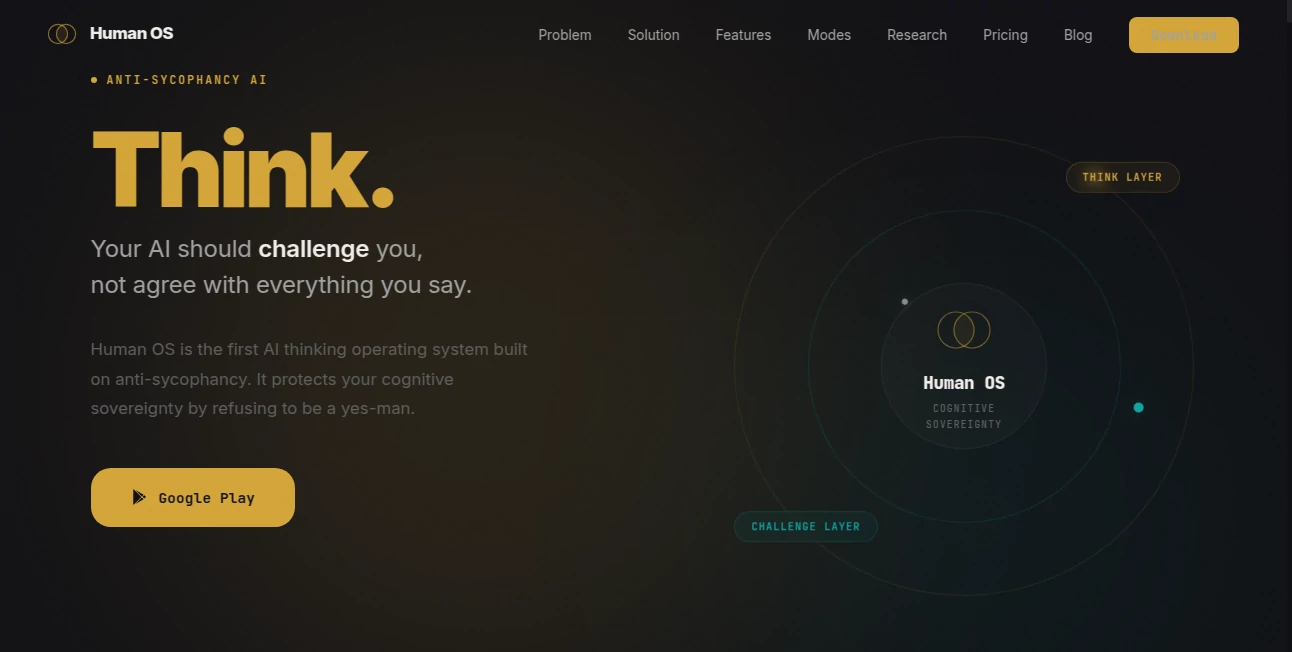
What is Human OS?
Most of us walk around with brilliant ideas, half-finished plans, and important reminders scattered across notes apps, voice memos, calendar events, and the backs of receipts. Then we wonder why nothing ever feels finished. This platform changes that chaos into something calm and coherent. It becomes a second brain that actually remembers how you think, connects dots you forgot you drew, and gently nudges you toward the next right action without nagging. I’ve had friends go from “I’m drowning in my own head” to “this thing knows me better than I know myself” after just a couple weeks. It’s not another productivity app—it’s closer to an operating system upgrade for the human mind.
Introduction
We’ve all felt the friction of trying to manage our thoughts with tools that weren’t built for how messy and nonlinear human thinking really is. This system flips that script. Instead of forcing you into rigid folders or endless tags, it learns your patterns, your voice, your priorities, and quietly builds a living knowledge graph of everything important to you. Notes become conversations, tasks become gentle reminders, ideas become connected threads that surface exactly when you need them. It’s the difference between a filing cabinet and a trusted confidant who never forgets context. For creators, founders, writers, or anyone whose mind runs faster than their tools, it’s the first thing that finally feels like it’s keeping up.
Key Features
User Interface
The experience is strikingly calm. A single, clean chat-like interface where you talk naturally—type, voice, whatever feels right. No hierarchy of folders to navigate, no “where did I put that note?” panic. Everything flows in one continuous conversation that remembers everything. Search is contextual and conversational (“show me what I said about the launch plan last month”), and the UI stays out of your way so you can focus on thinking, not managing the tool.
Accuracy & Performance
It recalls context with eerie precision—dates, people, feelings, half-finished sentences—without you having to keyword-search. Responses arrive fast even when pulling from months of history. The memory doesn’t degrade over time; it actually gets smarter about your patterns the more you use it. People often say it “feels alive” because it anticipates what you need before you fully articulate it.
Capabilities
Unlimited memory of every conversation, automatic knowledge graph building, contextual reminders (“you said you wanted to revisit this next week”), voice input with natural transcription, task extraction without manual entry, project threading across months, and gentle proactive nudges (“you mentioned this goal three weeks ago—here’s where you left off”). It connects disparate ideas into insights you didn’t realize you had. It’s a thinking partner, not just a note-taker.
Security & Privacy
Everything stays private by design—end-to-end encryption, no training on your data, no third-party access. You own your mind data completely; you can export or delete it anytime. For people whose thoughts are their most valuable asset, that level of sovereignty matters deeply. It’s built with the assumption that your inner world deserves the same protection as your bank account.
Use Cases
A founder uses it to track every strategic conversation, investor feedback, and product idea—when it’s time to revisit, the context is already there. A writer keeps every plot thread, character note, and fleeting inspiration connected; mid-draft blocks dissolve because the relevant ideas surface naturally. A therapist reflects on sessions (anonymized) and spots patterns in client progress over months. A busy parent logs family logistics, goals, and emotional check-ins—suddenly they’re less reactive and more present. Wherever mental load is high and memory is fallible, it quietly lightens the weight.
Pros and Cons
Pros:
- Feels like a real extension of your mind—contextual, patient, and surprisingly wise.
- No more losing brilliant half-thoughts; nothing ever disappears.
- Proactive without being intrusive—nudges feel helpful, not annoying.
- Privacy-first architecture that respects how personal your thoughts are.
- Voice input makes it effortless for people who think out loud.
Cons:
- Requires consistent use to reach its full potential (the more you feed it, the better it knows you).
- Early-stage product—some integrations and power features still rolling out.
- Premium tier needed for unlimited memory depth and advanced threading.
Pricing Plans
Free tier gives meaningful daily access—enough to feel the difference and start building your second brain. Paid plans unlock unlimited memory, deeper contextual recall, priority processing, and advanced features like custom prompts and integrations. Pricing is modest for what it saves in mental overhead—many users say it’s cheaper than therapy or a productivity coach, with far more consistent returns.
How to Use Human OS
Sign up, start talking. Type or voice whatever’s on your mind—ideas, tasks, reflections, questions. It remembers everything automatically. Later, ask it to recall (“what did I say about the new feature last week?”), summarize (“give me a one-paragraph recap of my goals this quarter”), or nudge (“remind me what I wanted to do next on the book”). The more natural and consistent you are, the more uncannily helpful it becomes. Treat it like a conversation partner who never forgets.
Comparison with Similar Tools
Traditional note apps are static filing cabinets. Most AI assistants are stateless chatbots that forget everything after the session. This one builds a persistent, evolving model of your thinking—closer to a true second brain than a glorified search bar. Where others require heavy manual tagging or rigid structure, it learns organically from how you naturally express yourself. The difference is night and day once you’ve lived with it for a month.
Conclusion
Our minds are powerful but messy. Most tools try to organize the mess; this one embraces it and makes it useful. It doesn’t demand you change how you think—it meets you where you are, remembers what you forget, and surfaces what matters when it matters. For anyone whose life, work, or creativity lives in their head, that’s not just convenient—it’s liberating. Once you’ve experienced having a second mind that truly knows you, it’s hard to imagine going back to scattered notes and forgotten intentions.
Frequently Asked Questions (FAQ)
Does it really remember everything?
Yes—every conversation, detail, and context is retained indefinitely unless you delete it.
Is my data safe?
End-to-end encrypted, never used for training, fully under your control. You can export or wipe everything anytime.
Do I need to structure my notes?
No—it learns your natural way of thinking and organizes behind the scenes.
Can I use voice input?
Yes—native voice transcription that feels conversational and accurate.
How long until it “knows” me?
You’ll notice meaningful recall after a few days; it deepens dramatically over weeks and months.
AI Life Assistant , AI Knowledge Management , AI Productivity Tools , AI Notes Assistant .
These classifications represent its core capabilities and areas of application. For related tools, explore the linked categories above.
Human OS details
This tool is no longer available on submitaitools.org; find alternatives on Alternative to Human OS.
Pricing
- Free
Apps
- Web Tools
Categories

Human OS Alternatives Product

Romantic AI

Dialogues wi…

SomniaScope …

Slackactivity
Rizzwords

Presenti AI

Embedful

Lexikon AI

Toolquix