🧠 AI Quiz
Think you really understand Artificial Intelligence?
Test yourself and see how well you know the world of AI.
Answer AI-related questions, compete with other users, and prove that
you’re among the best when it comes to AI knowledge.
Reach the top of our leaderboard.


















Nano Banana Pro
Reasoning-First 4K Studio for Creators
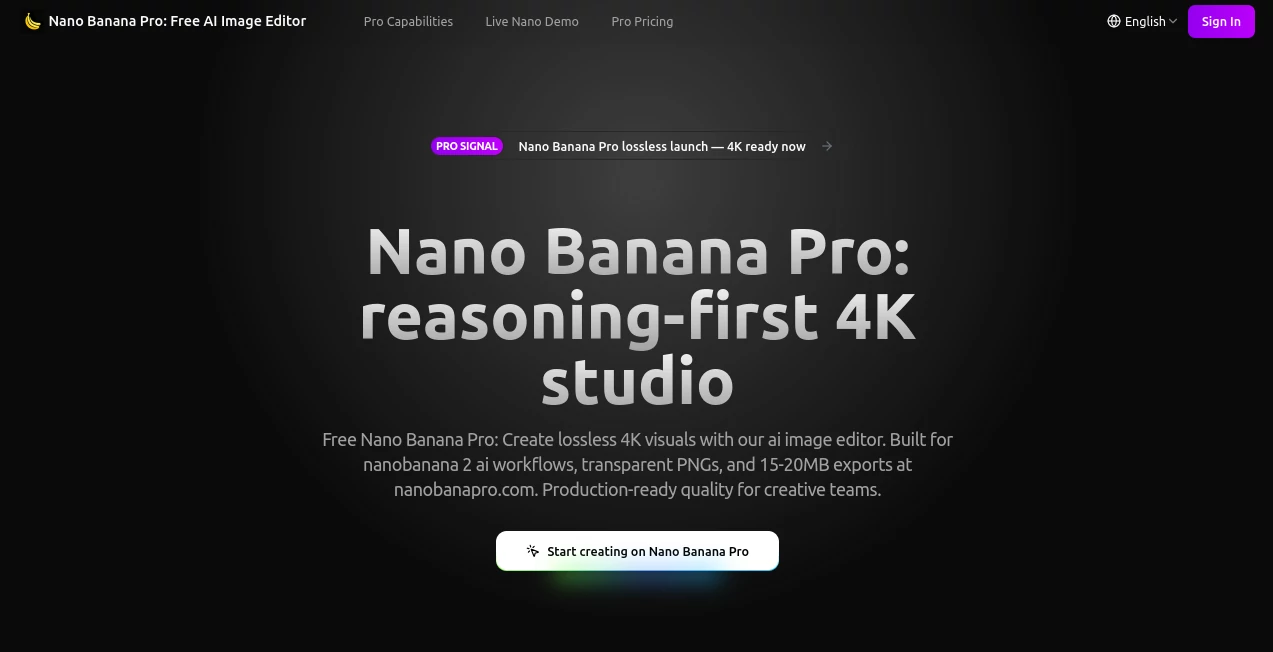
What is Nano Banana Pro?
Nano Banana Pro slips into the workflow of busy teams like a trusted collaborator, turning rough ideas into crystal-clear 4K visuals that hold up under scrutiny. This platform wraps smart planning around every edit, ensuring outputs feel deliberate and polished, whether you're staging products or sketching campaigns. Creators who've woven it into their routines often mention how it cuts the chaos, delivering files that print sharp or screen bright without the usual back-and-forth fixes.
Introduction
Nano Banana Pro took shape from the grind of folks knee-deep in visual production, who knew the sting of outputs that looked great on screen but fell flat in the real world. It landed as a quiet revolution, blending clever diagnostics with hands-off automation to keep things moving without losing the human touch. Word spread through agency chats and studio Slack channels, with stories of sessions that wrapped in half the time, thanks to previews that nailed the vibe from the first pass. What started as a toolkit for consistent branding has grown into a full-fledged partner, handling everything from quick mocks to multi-scene boards, all while keeping the creative spark front and center.
Key Features
User Interface
The dashboard opens with a straightforward upload bay that pulls in your starting image, paired with a generous prompt field that counts characters as you type, nudging you toward details that matter. Sliders for angles and lights adjust on the fly, with a live viewer that rotates your work like a digital turntable. Tabs for batch runs or team notes fold out neatly, and the whole thing scales down for tablet tweaks without losing a beat, feeling more like a shared sketchpad than a stiff software.
Accuracy & Performance
It spots the subtle shifts in light or pose that trip up lesser setups, locking in details like text curves or shadow plays with a precision that surprises even picky pros. Jobs hum along in under ten seconds most days, stacking layers without a stutter, and the self-checks catch wonky bits before they ship. Users point to how it holds steady across batches, churning out variants that match the original intent without drifting into odd territory.
Capabilities
From swapping scenes on a product shot to rebuilding labels in multiple tongues, it layers in smarts that keep elements in sync, like tracking a character's tilt through a sequence. You can upload anchors to guide the flow, export layered files for further fiddles, or run diagnostics that flag fixes on the spot. The real draw is how it orchestrates the whole dance, from initial plan to final polish, making complex builds feel like stacking blocks rather than solving puzzles.
Security & Privacy
Your files stay in your corner, tagged invisibly for proof of origin but never fed back into the system without a nod. Logs track the steps for your eyes only, with controls that let you gatekeep shares or wipe histories clean. It's the sort of careful handling that lets teams toss in sensitive mocks without a flinch, knowing the trail leads back to them alone.
Use Cases
Retail teams refresh catalog shots by remixing backgrounds and tags, prepping seasonal drops that look cohesive across shelves. Ad squads build storyboards that carry moods from frame to frame, exporting packs ready for client nods. Designers iterate UI panels with spot-on text placement, testing swaps without redrawing from scratch. Even educators turn notes into clear diagrams, blending charts and calls for lessons that click visually.
Pros and Cons
Pros:
- Wraps jobs in under ten seconds, keeping the pace brisk for tight turns.
- Holds true to prompts with built-in checks that smooth rough edges.
- Teams up seamlessly for shared tweaks and version trails.
- Spits out files that shine in print or pixel, no quality drop-offs.
Cons:
- Starts with an image upload, so pure-from-scratch ideas need a seed.
- Credit caps might pinch during heavy runs without an upgrade.
- Geared more for group flows, which can feel bulky for lone wolves.
Pricing Plans
The entry point runs about nine-fifty a month on an annual bill, packing in fifteen hundred credits for steady starters, along with watermark-free exports and batch basics. Bump to nineteen-fifty for seven thousand five hundred credits and fuller team ties, or go all-in at forty-nine-fifty with thirty thousand credits, API hooks, and hands-on help. Each step builds on the last, with yearly saves that ease the math, and a free taste to test the waters before diving.
How to Use Nano Banana Pro
Drop your base image into the slot, then sketch your vision in the prompt box—think lights, moods, and must-haves for the sharpest hit. Let it plan and preview, tweaking angles or crops with the sliders until it sings. Run a batch if you're stacking variants, invite the crew for notes, and pull down the finals in layered packs. Check the logs for what clicked, then loop back with refinements to keep the chain tight.
Comparison with Similar Tools
Where some editors lean on quick fixes that fade under focus, Nano Banana Pro layers in that planning depth for outputs that last, though those might win for one-off whims. Against broader suites, it sharpens on the production polish without the extra clutter, saving steps for teams but perhaps skipping the wild-card fun. It stands out for those chasing repeatable results, blending speed with smarts in a way that feels tailored to the task.
Conclusion
Nano Banana Pro turns the tangle of visual work into a smoother ride, arming creators with a setup that thinks ahead so they don't have to. It bridges the gap from fleeting concept to finished frame, proving that a bit of foresight can elevate everyday edits into standout stories. As teams keep pushing for faster, sharper work, this one's poised to stay in the mix, quietly powering the visuals that catch eyes and hold them.
Frequently Asked Questions (FAQ)
What's the secret to spot-on results?
Pack your prompts with specifics on style, light, and layout—it tunes in tighter that way.
How quick does a full run take?
Most wrap in ten seconds or less, leaving room for rounds without the rush.
Can I keep my files all mine?
Absolutely—they stay yours, tagged for proof but never reused or shared.
Works for group projects?
Built for it, with notes and versions that keep everyone on the same page.
What if something's off in the output?
The self-fix loop spots and smooths most glitches, or tweak and retry for perfection.
Photo & Image Editor , AI Photo Enhancer , AI Image to Image , AI Design Generator .
These classifications represent its core capabilities and areas of application. For related tools, explore the linked categories above.
Nano Banana Pro details
This tool is no longer available on submitaitools.org; find alternatives on Alternative to Nano Banana Pro.
Pricing
- Free
Apps
- Web Tools
Categories

Nano Banana Pro Alternatives Product
Caricature G…

Remove Water…
MuseCraft.AI

Consistent C…

Retro Image …
QR Menu Gene…

Reztune

KOOX AI
PostPlus AI