🧠 AI Quiz
Think you really understand Artificial Intelligence?
Test yourself and see how well you know the world of AI.
Answer AI-related questions, compete with other users, and prove that
you’re among the best when it comes to AI knowledge.
Reach the top of our leaderboard.


















privatclaw

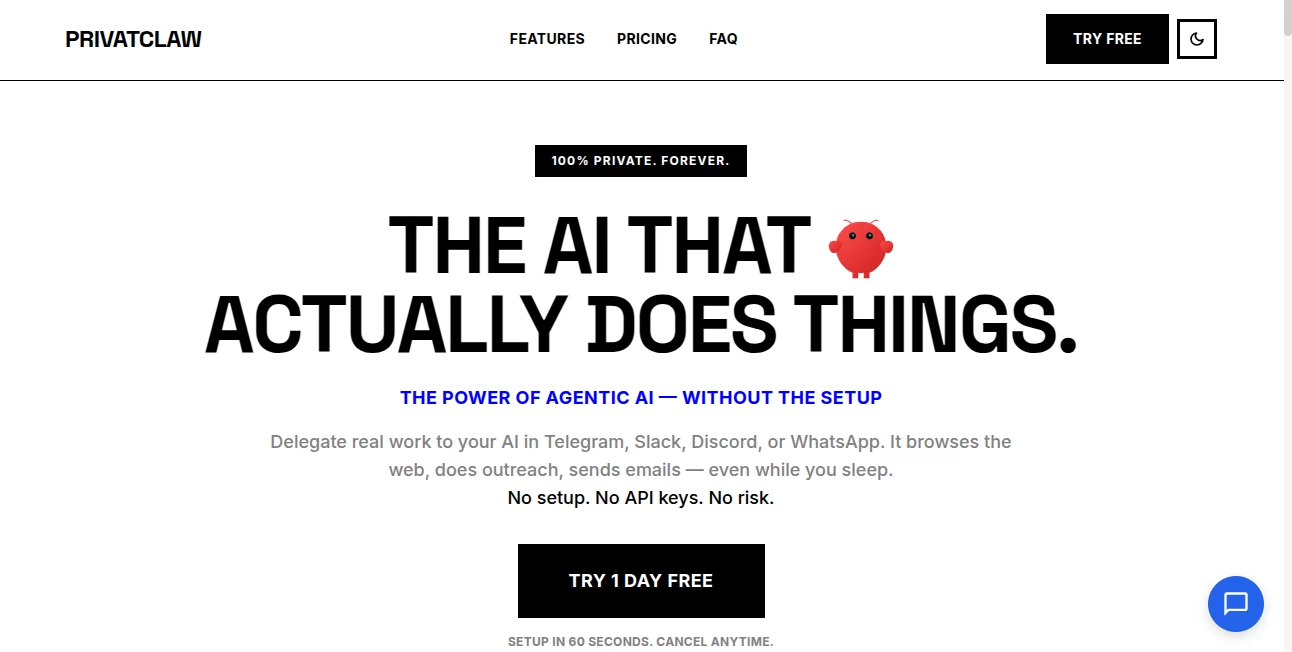
What is privatclaw?
There’s something reassuring about asking a legal question at 2 a.m. and getting a clear, thoughtful answer without wondering who else might read it. This tool gives exactly that: private, no-log conversations with an AI that understands contracts, employment issues, leases, small claims, and more—without ever storing or sharing what you say. I’ve had friends quietly test it on real situations (NDAs, landlord disputes, freelance agreements) and come away impressed by how balanced and human the explanations felt. It’s not trying to replace lawyers; it’s giving people a safe first step so they walk into consultations already informed and less anxious.
Introduction
Legal questions hit most of us at inconvenient times—late nights, weekends, moments of stress—and the usual options are either expensive consultations or risky free forums. This platform fills the gap with a completely private AI legal assistant that never logs prompts, never trains on your data, and never shares conversations. You can ask about anything from reviewing a rental agreement to understanding severance terms, and get plain-language answers backed by solid reasoning. It’s become a quiet favorite for freelancers, small business owners, tenants, employees, and anyone who wants clarity without exposure. The privacy promise isn’t marketing fluff; it’s baked into the architecture, which is why people trust it with sensitive situations they wouldn’t type into a regular chatbot.
Key Features
User Interface
The chat feels familiar yet reassuringly minimal—no distracting sidebars, no upsell banners, just your conversation window and a clear input box. You type naturally (“My landlord wants me to sign this addendum—what should I watch for?”), and answers arrive quickly with numbered breakdowns, plain English explanations, and occasional “consider talking to a lawyer” flags when needed. It’s designed so you stay focused on your question, not on navigating features. That simplicity builds confidence fast.
Accuracy & Performance
Responses draw from up-to-date legal knowledge across common jurisdictions (US federal + many states, with growing coverage elsewhere), and the tone stays balanced—never overconfident, never dismissive. It cites general principles clearly and flags jurisdiction-specific nuances. Speed is excellent (near-instant replies even on longer questions), and the model rarely hallucinates on core legal concepts. Users appreciate how it explains “why” behind advice, making the reasoning transparent and trustworthy.
Capabilities
Contract review summaries, employment rights explanations, lease/rental analysis, NDA walkthroughs, small claims guidance, basic business formation questions, consumer rights, privacy policy breakdowns, and plain-language translations of legalese. It handles multi-turn conversations well—ask follow-ups, clarify facts, explore scenarios—and always keeps context private. It’s not a replacement for legal advice but an exceptional starting point that helps users ask better questions when they do speak to a professional.
Security & Privacy
Zero logging of prompts or responses, end-to-end encryption in transit, no training on user data, no third-party sharing. Conversations are ephemeral—once you close the tab, they’re gone from the server. For people dealing with employment disputes, family matters, or business negotiations, that level of confidentiality is non-negotiable, and here it’s the default. It’s the rare AI tool where privacy isn’t an afterthought—it’s the foundation.
Use Cases
A freelancer receives a new client contract at midnight and gets a clear summary of risky clauses before replying. A tenant facing an unexpected eviction notice understands their rights and next steps without exposing personal details online. A startup founder reviews a co-founder agreement and spots unbalanced terms early. An employee navigating a performance improvement plan gets plain-English explanations of what’s standard vs what’s concerning. In each case, the tool provides calm clarity at the exact moment it’s needed most.
Pros and Cons
Pros:
- Absolute privacy—no logs, no training, no leaks.
- Clear, balanced, human-sounding explanations that respect legal nuance.
- Fast, conversational flow that handles follow-ups naturally.
- No account needed—use it once and walk away.
- Coverage of real everyday legal questions (not just theory).
Cons:
- Not a substitute for licensed legal advice (it says so upfront).
- Depth can vary on highly jurisdiction-specific or niche topics.
- Free tier has daily limits; heavier users need a plan.
Pricing Plans
Free tier offers generous daily usage—enough for occasional questions or one-off reviews. Paid plans remove limits, unlock priority responses, longer conversation memory, and export options (PDF summaries). Pricing stays affordable—many users say it’s less than one coffee-shop consultation per month but provides 24/7 peace of mind. Flexible enough for casual users and professionals alike.
How to Use PrivatClaw
Open the chat, type your question naturally (“I signed a non-compete—how long can it last in California?” or “Review this clause from my lease”). Attach documents or screenshots if needed. Read the response, ask follow-ups (“What if I refuse to sign?”), and keep the conversation going until you feel clear. Copy the key points or export a summary (paid feature). Close the tab when done—nothing is saved. It’s private by design, so use it freely for anything sensitive.
Comparison with Similar Tools
Many legal AIs log conversations, train on user data, or require accounts—big red flags for private matters. This one eliminates those risks entirely while still delivering accurate, nuanced answers. Where others feel generic or overly cautious, the tone here is helpful and direct without overstepping into “advice.” It’s the privacy-first choice that doesn’t sacrifice usefulness.
Conclusion
Legal uncertainty is stressful enough without worrying who’s reading your questions. This platform removes that extra layer of anxiety, giving clear, private, trustworthy answers whenever you need them. It doesn’t pretend to be a lawyer—it simply helps you walk into any legal conversation better prepared, calmer, and more informed. In a world that often feels opaque, that kind of clarity is rare and genuinely valuable.
Frequently Asked Questions (FAQ)
Is my conversation really private?
Yes—no logs, no storage, no training. Once you close the tab, it’s gone from the server.
Can it give legal advice?
No—it provides general information and explanations, not personalized legal advice. Always consult a licensed attorney for your specific situation.
What jurisdictions does it cover?
Strongest on US federal + many states; growing coverage for other countries. It flags when something is jurisdiction-specific.
Do I need an account?
No—use it anonymously. Accounts are optional for saving conversations or higher usage.
How good is it at reviewing contracts?
Excellent for spotting common red flags, explaining clauses in plain language, and suggesting questions to ask your lawyer. Not a substitute for professional review.
AI Life Assistant , AI Legal Assistant .
These classifications represent its core capabilities and areas of application. For related tools, explore the linked categories above.
privatclaw details
This tool is no longer available on submitaitools.org; find alternatives on Alternative to privatclaw.
Pricing
- Free
Apps
- Web Tools
Categories

privatclaw Alternatives Product

Face Symmetr…

lovetype16

Manus

Lexikon AI

Romantic AI

Pinpoint Ans…

What The Food

core level

YouMind