
🧠 AI Quiz
Think you really understand Artificial Intelligence?
Test yourself and see how well you know the world of AI.
Answer AI-related questions, compete with other users, and prove that
you’re among the best when it comes to AI knowledge.
Reach the top of our leaderboard.


















QuickPick
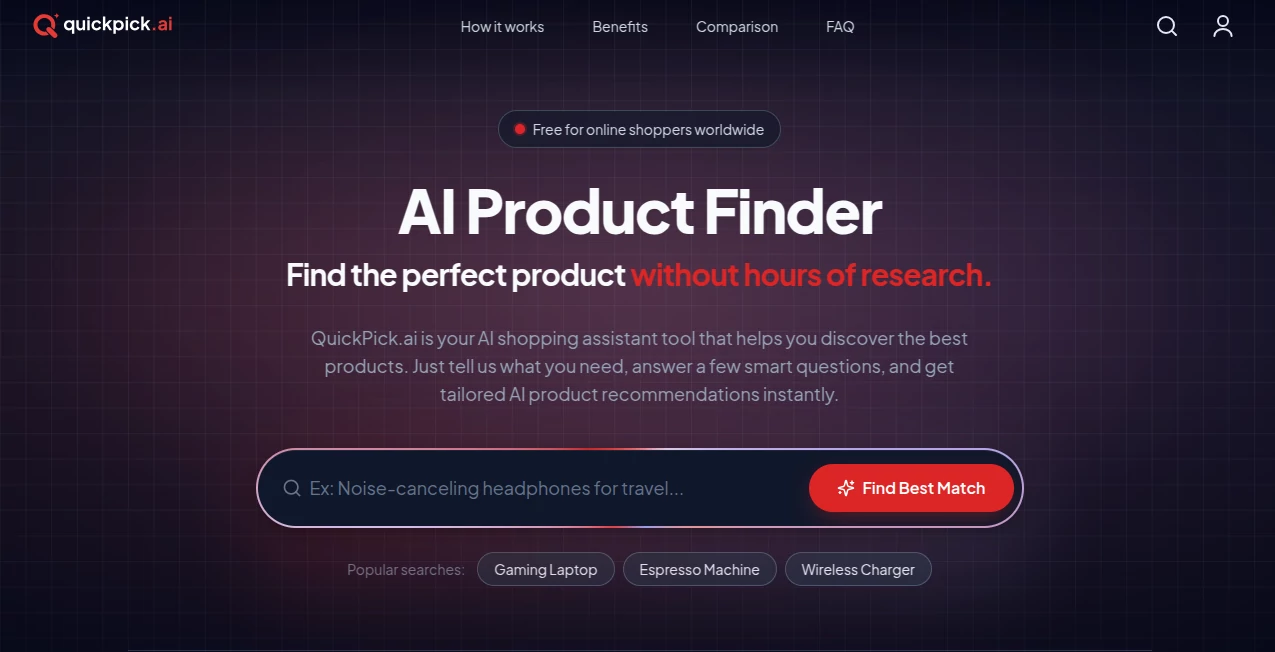
What is QuickPick?
Shopping online can feel exhausting. You open twenty tabs, read conflicting reviews, compare specs until your eyes hurt, and still wonder if you’re making the right choice. This tool cuts through all that noise. You tell it what you need in plain language, answer a few smart follow-up questions, and it surfaces thoughtful, personalized recommendations from across the web. No more decision paralysis—just clear options that actually match what you’re looking for. I’ve used it for everything from finding a new laptop to choosing the right coffee maker, and each time it saved me hours while pointing me toward products I probably wouldn’t have discovered on my own.
Introduction
Most shopping assistants either throw generic best-seller lists at you or force you to filter through endless dropdowns. QuickPick takes a more human approach: it chats with you like a knowledgeable friend who knows the market well. The conversation is short but insightful, and the final recommendations feel genuinely tailored rather than algorithmically generic. It’s become my go-to when I need something specific but don’t have time to become an expert on that category. For busy people who value both quality and time, it’s one of those rare tools that quietly makes life smoother.
Key Features
User Interface
The experience is delightfully simple. You start with a casual description of what you’re looking for (“a reliable noise-cancelling headset under $150 for video calls”), and the AI gently asks clarifying questions one at a time. No overwhelming forms or endless filters—just a clean chat-like flow that feels natural. Results appear with clear comparisons, pros/cons highlights, and direct purchase links. The whole process stays focused and respectful of your attention.
Accuracy & Performance
What stands out is how well it understands nuance. It doesn’t just match keywords; it grasps intent and priorities. Ask for something “good for beginners but not too basic” and it actually delivers options that make sense. Recommendations update quickly when you refine your answers, and the suggestions consistently land in the right ballpark across categories—from tech and home goods to fashion and tools. The speed is impressive too; you go from vague need to solid shortlist in under a minute.
Capabilities
It handles a wide range of shopping needs with smart follow-up questions that narrow things down effectively. You get balanced recommendations with transparent reasoning, price range awareness, and direct links to multiple retailers. Whether you’re hunting for a specific budget, feature set, or use case, it adapts and delivers relevant choices without flooding you with options. The tool also improves over time as it learns from user interactions, making future recommendations even sharper.
Security & Privacy
Your shopping conversations stay private. There’s no aggressive data collection or creepy personalized ads following you around after use. You don’t even need to create an account to get great recommendations, which keeps things light and trustworthy. For anyone cautious about sharing preferences online, this respectful approach feels refreshing.
Use Cases
A new parent looking for the right baby stroller gets tailored suggestions based on lifestyle, budget, and storage needs instead of drowning in review sites. A remote worker searching for the best monitor setup receives options that balance quality, price, and desk space. Someone upgrading their home office gets thoughtful recommendations that consider ergonomics and compatibility. Even gift shopping becomes easier—describe the person and occasion, and it surfaces ideas that feel personal rather than generic.
Pros and Cons
Pros:
- Conversational approach feels natural and actually helpful.
- Recommendations are focused and relevant instead of overwhelming.
- Saves significant time compared to traditional product research.
- Works across many categories without losing accuracy.
- Completely free to use with no hidden paywalls for core features.
Cons:
- Still growing its database, so some very niche products may have fewer options.
- Relies on good prompting for the best results (though the AI guides you well).
Pricing Plans
The core experience is completely free for all users. There are no paywalls blocking good recommendations, which makes it stand out in a world full of freemium shopping tools. Future premium features may add deeper personalization or priority support, but the essential magic—smart, conversational product discovery—is available to everyone right now without spending a cent.
How to Use QuickPick
Go to the main page and type what you’re looking for in your own words. Answer the follow-up questions as they appear (they’re quick and relevant). Review the shortlist of recommendations with their key pros, cons, and pricing. Click through to any product you like or ask the AI for more details or alternatives. The whole process usually takes less than two minutes and leaves you with confident choices instead of decision fatigue.
Comparison with Similar Tools
Traditional search engines and shopping sites overwhelm you with options and require manual filtering. Other AI shopping tools often feel generic or push sponsored products. QuickPick stands apart with its focused conversation style and genuinely helpful curation. It’s less about showing you everything and more about showing you what actually fits—saving time while improving decision quality in a way that feels refreshingly human.
Conclusion
Shopping shouldn’t be stressful or time-consuming. This tool brings clarity and confidence back to the process by acting as a smart, patient shopping companion. Whether you’re making big purchases or everyday decisions, it helps you find products that truly match your needs without the usual hassle. In a world full of choices, having a reliable guide that understands what you really want is surprisingly valuable. Give it a try next time you need something new—you might be pleasantly surprised at how much easier (and better) your shopping becomes.
Frequently Asked Questions (FAQ)
Is QuickPick really free?
Yes—core recommendations are completely free with no hidden fees or paywalls.
How accurate are the recommendations?
Very accurate when you give clear details. The more specific you are, the better the matches.
Does it work for all product categories?
It covers a wide range including tech, home, fashion, kitchen, and more, with new categories added regularly.
Do I need to create an account?
No account is required to get excellent recommendations right away.
Can it help with gift ideas?
Absolutely—describe the person and occasion and it will suggest thoughtful options.
These classifications represent its core capabilities and areas of application. For related tools, explore the linked categories above.

QuickPick Alternatives Product

core level

MatchMyType

Face Symmetr…

Middle Name …

Greek Numero…

Judgement Ta…

Myjourney

Meet in the …

Manus
