
🧠 AI Quiz
Think you really understand Artificial Intelligence?
Test yourself and see how well you know the world of AI.
Answer AI-related questions, compete with other users, and prove that
you’re among the best when it comes to AI knowledge.
Reach the top of our leaderboard.


















ScopePilot

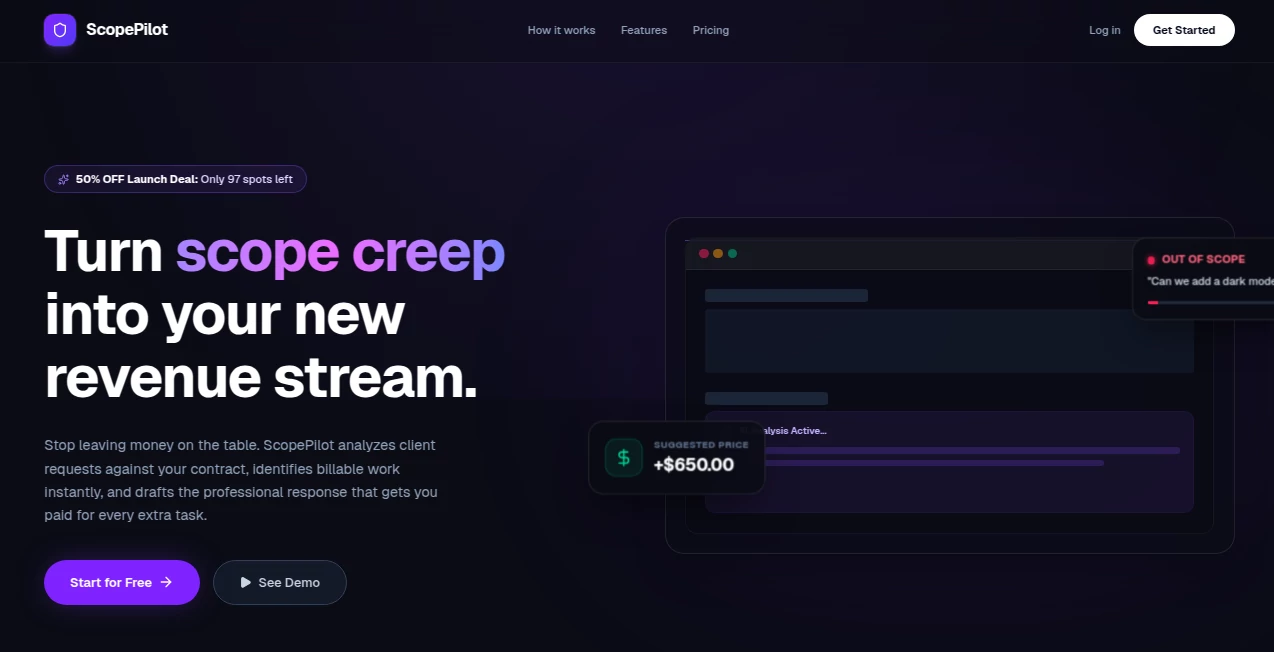
What is ScopePilot?
Building a product roadmap that actually makes sense is one of those tasks that sounds simple until you’re knee-deep in stakeholder notes, feature requests, and conflicting priorities. This tool quietly takes that mess and turns it into something clear, visual, and surprisingly thoughtful. You feed it your raw ideas, customer feedback, or even a messy Notion page, and it spits out a structured scope doc, prioritized backlog, and timeline that feels like it was written by someone who really understands your product. I’ve seen PMs go from “I have no idea where to start” to “this actually looks shippable” in under an hour. It’s the kind of help that makes you wonder how you ever did it without it.
Introduction
Most product teams waste weeks aligning on what to build next. Endless meetings, scattered docs, Jira tickets nobody reads. This platform cuts through all of it. Paste your vision doc, customer interviews, competitor analysis, or even a voice memo transcript, and it organizes everything into a coherent product scope, feature breakdown, success metrics, and phased roadmap. It’s become a favorite among startup PMs and mid-size product leads who need to move fast without sacrificing clarity. The AI doesn’t just summarize—it thinks like a seasoned product person: spotting dependencies, calling out risks, suggesting trade-offs. That level of insight, delivered in minutes, is what makes teams actually use it instead of treating it like another nice-to-have toy.
Key Features
User Interface
The workspace is calm and focused. Drop your input (text, PDF, audio transcript, Notion link), choose output format (scope doc, roadmap, PRD, OKRs), and watch structured sections appear one by one. Drag to reorder, edit inline, add comments—everything feels like a living document rather than a static export. Export to Google Docs, Notion, or PDF with one click. It’s designed so you spend time refining strategy, not fighting formatting.
Accuracy & Performance
It reads between the lines remarkably well—pulls out implied priorities from vague stakeholder language, flags potential scope creep, and suggests realistic sequencing based on dependencies and effort. Output is fast (usually 30–90 seconds), even for long inputs. The suggestions feel grounded in real product thinking, not generic templates. Teams who’ve compared before-and-after versions often say it caught risks or opportunities they completely missed.
Capabilities
Transforms raw notes into structured scope documents, builds phased roadmaps with timelines and milestones, generates OKRs tied to business goals, creates PRDs with user stories and acceptance criteria, identifies dependencies and risks, suggests prioritization frameworks (RICE, MoSCoW, etc.), and supports collaborative editing for team feedback. It works with text, audio transcripts, PDFs, Notion pages, and even Figma links (extracting context). Outputs are always editable and exportable in multiple formats.
Security & Privacy
Inputs are processed ephemerally—nothing stored long-term unless you explicitly save the output. Enterprise plans offer private instances, SOC 2 compliance, and data residency options. For startups handling sensitive roadmaps or customer data, that clean boundary provides real peace of mind.
Use Cases
A startup founder pastes messy customer interview notes and gets a clear MVP scope doc ready for the next investor meeting. A product manager turns a rambling stakeholder workshop transcript into a prioritized Q3 roadmap that finally gets engineering buy-in. A mid-size SaaS team imports their Notion brain-dump and emerges with a structured PRD plus OKRs that align sales, marketing, and dev. A freelance product consultant uses it to deliver polished scope docs to clients in hours instead of days. Wherever alignment is slow and documentation is painful, it quietly accelerates progress.
Pros and Cons
Pros:
- Turns chaos (notes, transcripts, brain-dumps) into structured, professional docs fast.
- Suggestions feel like they come from an experienced PM, not a generic template.
- Collaborative editing and export options make it team-ready out of the box.
- Handles multiple input types—text, audio, PDF, Notion—without friction.
- Free tier is generous enough to test real workflows.
Cons:
- Very early-stage or highly ambiguous inputs may need a quick human pass to refine.
- Advanced enterprise features (private instances, custom templates) are higher-tier.
- Best when you already have some raw material—doesn’t invent strategy from nothing.
Pricing Plans
Free plan covers basic scope docs and roadmaps with a generous monthly limit—perfect for solo founders or small teams testing the waters. Paid plans unlock unlimited generations, collaborative workspaces, premium templates, API access, and priority support. Enterprise tiers add private instances, SSO, and custom integrations. Pricing feels fair for the time saved—many teams say it pays for itself after one good planning cycle.
How to Use ScopePilot
Sign up (free tier starts immediately), paste or upload your raw input—meeting notes, customer feedback, Notion page, audio transcript, etc. Choose output type (scope doc, roadmap, PRD, OKRs). Hit generate and watch structured sections appear. Edit inline, add comments, reorder items. Export to Google Docs, Notion, PDF, or share a live link for team feedback. Iterate by adding new context and regenerating. The cycle is fast enough to refine multiple versions in one session.
Comparison with Similar Tools
Most AI writing tools produce generic docs or summaries; this one thinks like a product person—spotting dependencies, suggesting trade-offs, aligning to goals. Where others require heavy prompting, it understands product context out of the box. It’s less about raw text generation and more about turning scattered ideas into shippable plans—faster and more reliably than manual facilitation or template-heavy alternatives.
Conclusion
Good product planning shouldn’t take weeks of meetings and revisions. This tool compresses that process into something fast, clear, and surprisingly intelligent—giving teams back time to build instead of argue. When your roadmap suddenly feels realistic, your PRD actually reads like a plan, and your team nods in agreement instead of pushing back, you realize how much friction it quietly removes. For anyone shipping software, that’s not just helpful—it’s essential.
Frequently Asked Questions (FAQ)
How much input do I need to start?
Even a short bullet list or voice memo works; more context gives richer outputs.
Can multiple people collaborate?
Yes—paid plans include shared workspaces with real-time editing and comments.
Does it integrate with my tools?
Exports to Google Docs, Notion, PDF; API available on higher plans for custom flows.
Is it secure for sensitive roadmaps?
Yes—ephemeral processing, enterprise-grade encryption, private instances available.
Can I use it for non-software products?
Absolutely—works for hardware, content, service launches, anything with scope and roadmap needs.
AI Workflow Management , AI Project Management , AI Productivity Tools , AI Research Tool .
These classifications represent its core capabilities and areas of application. For related tools, explore the linked categories above.
ScopePilot details
This tool is no longer available on submitaitools.org; find alternatives on Alternative to ScopePilot.
Pricing
- Free
Apps
- Web Tools
Categories

ScopePilot Alternatives Product

4ga Boards

Jujutsu Zero…

Miro

GenPPT AI

Skywork Supe…

David One

VisualGPT

Robux Tax Ca…

Overlap
