
🧠 AI Quiz
Think you really understand Artificial Intelligence?
Test yourself and see how well you know the world of AI.
Answer AI-related questions, compete with other users, and prove that
you’re among the best when it comes to AI knowledge.
Reach the top of our leaderboard.


















Cramd

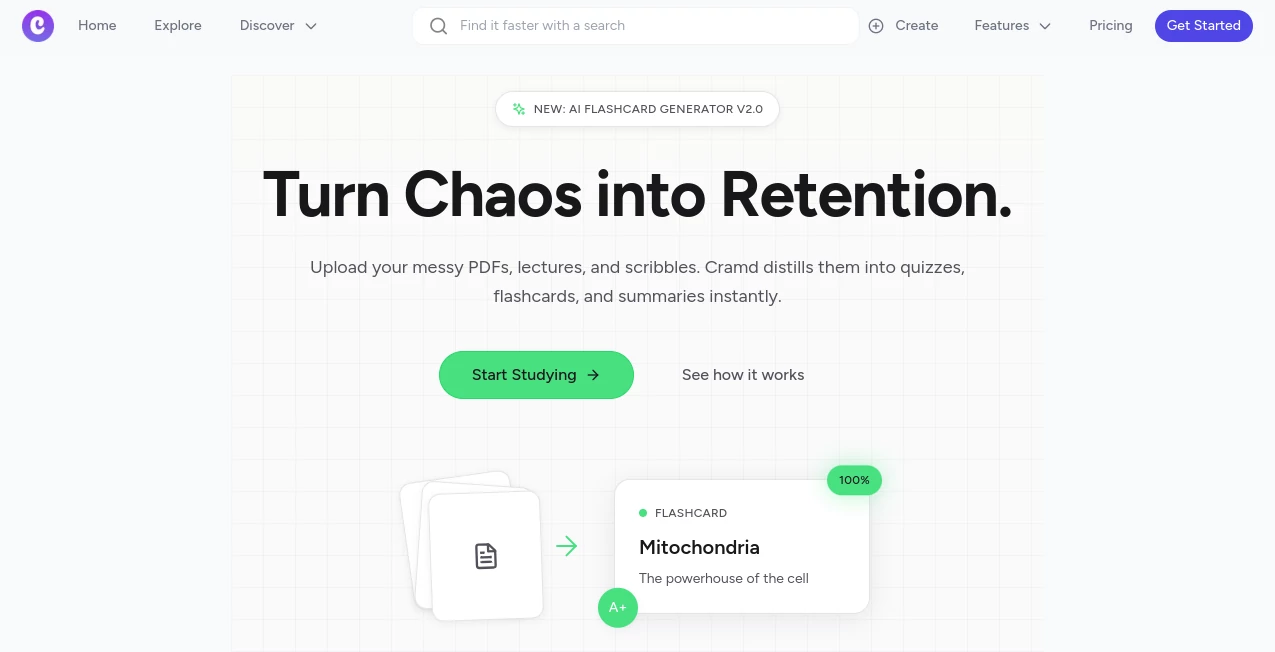
What is Cramd?
Ever stare at a pile of notes, slides, and scribbled pages wondering how you'll ever make sense of it all before exam day? This platform swoops in like a lifesaver, gobbling up your messy materials and spitting out sharp flashcards, quizzes, and summaries that stick in your brain longer. I tried it during a frantic prep for a certification—uploaded a stack of PDFs and voice memos from lectures, and suddenly I had a personalized deck that felt tailor-made. It's the kind of tool that turns dread into "I've got this," especially when time's short and stakes are high.
Introduction
Built on solid science like spaced repetition and active recall, this app takes whatever you've got—handwritten scrawls, dense textbooks, even YouTube lectures—and transforms them into bite-sized, interactive study tools. No more hours wasted formatting cards manually; the AI digs into your uploads, pulls out key concepts, and builds adaptive sessions that evolve with your progress. Students from med school to law rave about cutting study time in half while boosting grades, and it's easy to see why: it handles multiple languages, imports from anywhere, and keeps you motivated with streaks and insights. Founded with that athlete's discipline in mind, it's all about smarter, not harder, learning that fits real life.
Key Features
User Interface
From the moment you land, it's straightforward bliss—drag files in or paste text, watch the progress bar as it converts, then dive into clean, flippable cards with progress trackers right there. The dashboard shows your streaks, mastered sets, and upcoming reviews without overwhelming clutter. A friend studying psychology told me it felt intuitive from the first upload, like the app just gets how busy students think—no steep climbs, just smooth sailing to your next session.
Accuracy & Performance
The AI shines at picking apart complex content, turning rambling lecture notes into precise questions that hit the core ideas, with spaced reviews that reinforce just when you're about to forget. It processes batches quickly, even voice memos or long videos, and adapts quizzes on the fly based on your hits and misses. In practice, it rarely flubs the context, delivering decks that feel spot-on and helping retention climb noticeably after a few rounds.
Capabilities
Beyond basic cards, it crafts full quizzes, mind maps, and Socratic chats that probe deeper understanding, plus YouTube integration that pulls transcripts into study mode. Import from Quizlet or anywhere, link materials for cross-referenced questions, and track analytics that reveal your patterns. It's versatile for sciences, languages, history—whatever you're tackling—with gamification like leaderboards to keep the fire lit.
Security & Privacy
Your uploads stay handled securely, focused on processing without unnecessary lingering, giving peace of mind for sensitive notes or exam preps. It's designed with learners in mind, keeping data private and under your control, so you can focus on mastering material rather than worrying about leaks.
Use Cases
Pre-med students upload pathophysiology slides and voice recordings, emerging with decks that nail pharmacology details for finals. Law hopefuls paste case notes for adaptive quizzes that mimic bar exams. Engineers turn YouTube tutorials into flashcards for quick reviews on the go. Even lifelong learners tackling history or psychology find it transforms dense reads into engaging sessions, building habits that last beyond the test.
Pros and Cons
Pros:
- Handles real mess—handwritten, audio, videos—turning chaos into gold effortlessly.
- Adaptive sessions that genuinely boost retention, backed by science that works.
- Imports and cross-links materials for deeper connections you might miss.
- Motivates with streaks and analytics that make progress feel rewarding.
Cons:
- Premium unlocks the full adaptive depth, so free users taste but crave more.
- Best with clear inputs; super sloppy handwriting might need a scan tweak.
Pricing Plans
Jump in free to generate basics and feel the magic on your own materials—no barriers for trying. Basic keeps it affordable for core features, while Premium steps up with unlimited imports, advanced analytics, and priority processing. Monthly or yearly options fit your rhythm, with savings on annual that make going all-in a no-brainer for serious studiers.
How to Use Cramd
Sign up quick, then drag your PDFs, notes, or link a YouTube vid—watch it analyze and build your deck. Flip through cards, tackle quizzes, and let spaced reviews guide your sessions. Link related uploads for richer questions, track streaks daily, and chat with the AI for clarifications. Start small with one chapter, build sets over time, and soon your whole semester's organized and mastered.
Comparison with Similar Tools
While classic flashcard apps require manual entry that drags on forever, this one automates the heavy lift from diverse sources, adding adaptive intelligence and cross-material links that others lack. It's less rigid than pure repetition drills, blending techniques like Feynman or Pomodoro for varied styles, and the YouTube mode alone sets it apart for visual learners chasing efficiency without extra apps.
Conclusion
This platform doesn't just help you study—it reshapes how you learn, turning overwhelming piles into confident mastery with tools that adapt and motivate. For anyone juggling exams, certifications, or curiosity, it's a quiet revolution in retention that pays off big. Give your notes a spin through it; you'll wonder how you managed the chaos before.
Frequently Asked Questions (FAQ)
What formats can I upload?
PDFs, images of handwritten notes, slides, voice memos, text pastes, even YouTube links—it's remarkably flexible.
How does the AI improve studying?
By generating targeted cards and quizzes, then spacing reviews to lock in long-term memory.
Is there a free version?
Yes, solid for starters, with premium unlocking fuller adaptive features.
Can it handle multiple subjects?
From biology to history, it adapts across fields with ease.
What's spaced repetition like here?
Intelligent scheduling that reviews just in time, boosting retention without burnout.
AI Homework Helper , AI Knowledge Base , AI Quizzes , AI Education Assistant .
These classifications represent its core capabilities and areas of application. For related tools, explore the linked categories above.
Cramd details
This tool is no longer available on submitaitools.org; find alternatives on Alternative to Cramd.
Pricing
- Free
Apps
- Web Tools
Categories

Cramd Alternatives Product
GameClick.io

HelloDay.ai
Ryne AI

ChatGPT

优秀PTE
Sourcetable

Document Chat

ModelsLab

Casper Pract…