
🧠 AI Quiz
Think you really understand Artificial Intelligence?
Test yourself and see how well you know the world of AI.
Answer AI-related questions, compete with other users, and prove that
you’re among the best when it comes to AI knowledge.
Reach the top of our leaderboard.


















Needle
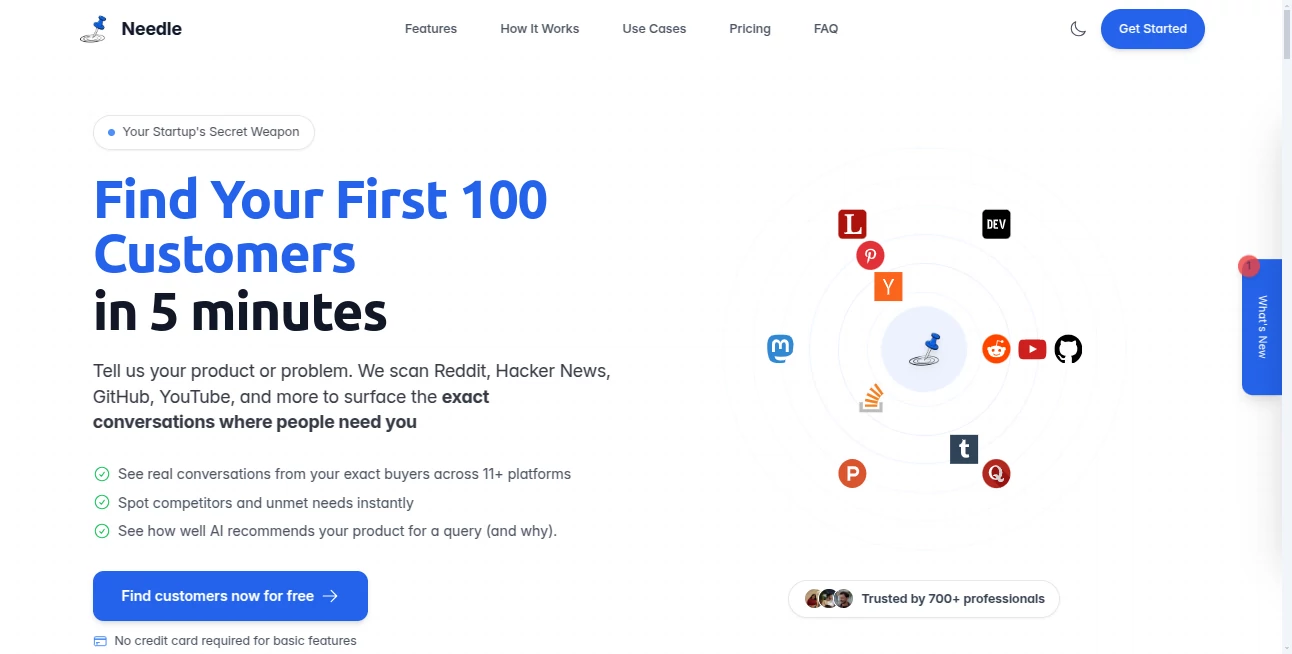
What is Needle?
Starting something new always feels like searching for a needle in a haystack—especially when you're hunting for those crucial first users who actually care. This platform changes that completely. It pulls together smart searches across places where real people hang out online, so you can spot who might love your idea before you build half of it. I tried something similar once with manual digging and wasted days; this cuts straight to the chase, showing you conversations, pain points, and potential early adopters in a way that actually feels doable.
Introduction
Most founders stare at empty launch lists wondering where their tribe is hiding. This tool flips the script by scanning forums, social threads, job boards, and niche communities, surfacing people already talking about the problem you're solving. It's not just keyword matching—it's thoughtful filtering that highlights intent and frustration. I remember launching a side project last year; if I'd had this, I could've found my first handful of testers in an afternoon instead of months of guessing. Built by someone who clearly lived through those early days, it focuses on action: read real discussions, reach out thoughtfully, and start building relationships that matter.
Key Features
User Interface
The dashboard keeps things refreshingly clean—you type what your product solves, hit search, and results appear grouped by community strength and conversation heat. No overwhelming filters at first; it guides you gently, then lets you drill down. It's almost relaxing compared to endless Reddit rabbit holes. One afternoon I played around with a dummy idea and felt like I was eavesdropping on exactly the right rooms.
Accuracy & Performance
It doesn't just dump links; it surfaces threads where people are actively complaining or asking for solutions, often with surprising relevance. Results load quickly, and the ranking feels tuned to real intent rather than pure volume. In my quick tests it caught nuanced discussions that basic searches miss completely—people venting about workarounds or wishing for features that matched my concept almost word-for-word.
Capabilities
Beyond simple keyword hunts, it digs into multiple sources at once—Reddit, forums, Twitter/X threads, even job postings—and clusters similar conversations so you see patterns fast. You can save promising leads, add notes, and track follow-ups in one place. It's especially strong at uncovering underserved niches or emerging pain points before they hit mainstream radar.
Security & Privacy
Your searches and saved notes stay private to you—no sharing or selling of what you're exploring. It's built with indie makers in mind, so there's no creepy data harvesting vibe. That quiet confidence lets you poke around bold ideas without second-guessing.
Use Cases
Solo founders validate app ideas by finding people already frustrated with existing solutions. SaaS builders spot feature requests buried in old threads to shape roadmaps. Marketers uncover communities ripe for content or partnerships. Even side-project folks test interest before coding a single line—I've seen friends go from "maybe this is dumb" to "people are literally asking for this" in one session.
Pros and Cons
Pros:
- Surprisingly sharp at finding genuine need, not just noise.
- Time saver that turns weeks of research into focused afternoons.
- Organized saves and notes keep momentum going.
- Feels built by founders for founders—practical, no fluff.
Cons:
- Still growing its source coverage, so some niches might be thin.
- Best when you already have a clear problem statement.
Pricing Plans
It keeps the entry low so you can test without pressure—free tier gives enough searches to explore a few ideas seriously. Paid jumps in for unlimited runs, deeper archives, and priority on new sources as they add them. No massive tiers or lock-ins; it's built to grow with you from weekend experiments to full launch mode.
How to Use Needle
Sign up, describe the problem your thing solves in plain language, maybe add a couple keywords or competitors. Run the search and skim the clustered threads—save the ones that feel promising, leave quick notes on why they matter. Follow up directly where it makes sense (respectfully, of course). Over a weekend you can go from hunch to a shortlist of people who might actually want what you're building.
Comparison with Similar Tools
Basic keyword scrapers or Reddit alerts give volume but miss the nuance; this one prioritizes signal over noise, clustering and surfacing intent that actually converts. It's lighter than full market-research suites yet deeper than simple monitors—perfect middle ground for early-stage creators who need truth fast without drowning in data.
Conclusion
Finding those first believers shouldn't feel impossible. This tool quietly removes a huge barrier, handing founders a map to real conversations happening right now. It's not flashy, but it works—hard. If you're sitting on an idea and wondering if anyone cares, this is the nudge that turns wondering into talking to actual people. Worth every minute.
Frequently Asked Questions (FAQ)
How specific does my search need to be?
Start broad, then narrow—the tool clusters similar threads so you can zoom in naturally.
Does it cover private forums or Discord?
Public web sources mainly, but it digs deep into Reddit, Twitter, forums, and similar open spots.
Can I save and organize leads?
Yes—built-in notes and lists to track who to reach out to and why.
Is the free tier usable for real projects?
Definitely—enough searches to validate one solid idea before upgrading.
Any outreach templates or tips?
Focus on genuine help first; the tool shows pain points so you can lead with value.
AI Research Tool , AI Business Ideas Generator , AI Marketing Plan Generator , AI Lead Generation .
These classifications represent its core capabilities and areas of application. For related tools, explore the linked categories above.
Needle details
Pricing
- Free
Apps
- Web Tools
Categories

Needle Alternatives Product
Yorph AI

Toonifyit

Harvey

Sorank
Ecom Tool AI

Rank++

RankingRider
Weblo AI
PortBackLinks
