
🧠 AI Quiz
Think you really understand Artificial Intelligence?
Test yourself and see how well you know the world of AI.
Answer AI-related questions, compete with other users, and prove that
you’re among the best when it comes to AI knowledge.
Reach the top of our leaderboard.


















Wan 2.6

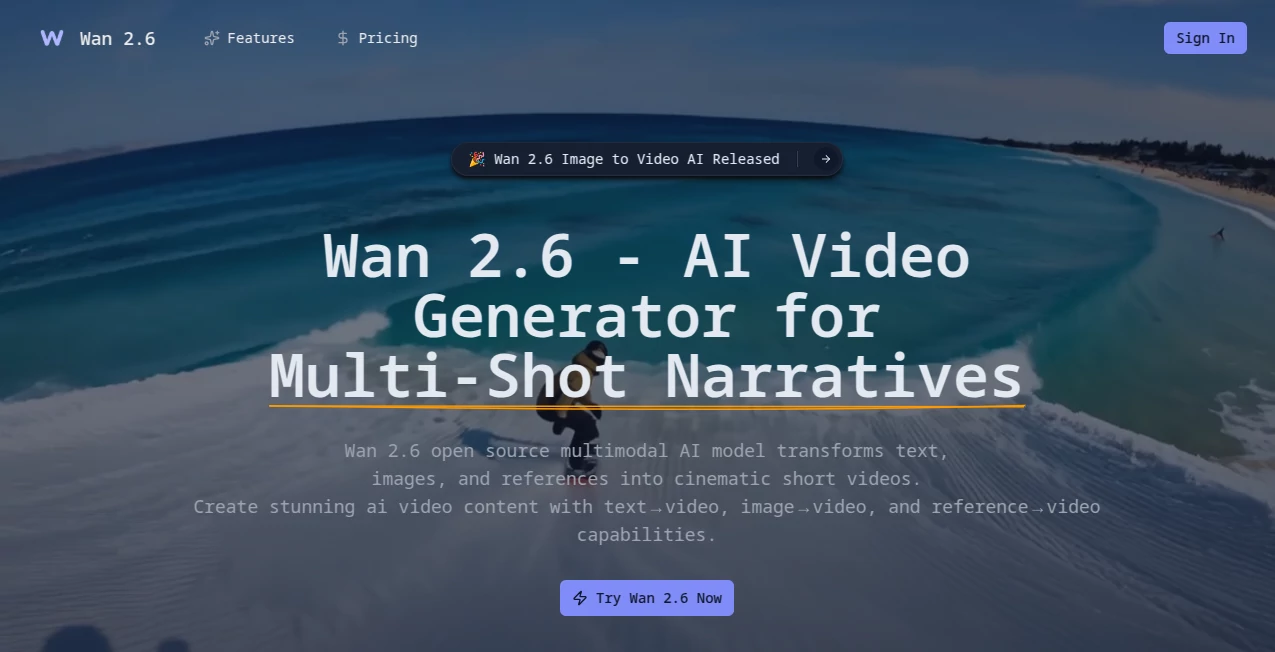
What is Wan 2.6?
Ever had a wild story idea bubbling up, only to hit a wall because turning it into a video felt like climbing Everest? This gem changes all that, letting you punch in text, drop an image, or reference a clip, and out comes a slick multi-shot video with characters that stay true from scene to scene. I tried it with a quick prompt about a quirky coffee shop adventure, and the result had natural flows, spot-on lip movements, and that pro polish you'd expect from a seasoned editor—without any of the usual restrictions holding you back.
Introduction
When it comes to crafting short videos that pop, this platform stands out by blending text, images, and references into coherent narratives that feel alive and engaging. It's open-source at its core, giving you the reins to tweak and integrate as you see fit, while delivering extended durations and seamless transitions that rival high-end productions. What really won me over was hearing from a buddy in marketing who used it to prototype ad spots—saving days of back-and-forth with teams, and landing on concepts that boosted engagement right away. It's built for those moments when inspiration strikes, offering a no-barriers path to cinematic shorts that look and sound fantastic.
Key Features
User Interface
The layout hits that sweet spot of simple yet powerful—start with your prompt, add an image or reference if you want, and watch the generation unfold without unnecessary steps. Options for customizing style or flow are right there, intuitive enough that even on a phone, it feels smooth. One time, I adjusted a scene mid-process, and the preview updated instantly, making iterations a breeze rather than a battle.
Accuracy & Performance
It excels at keeping details sharp across multiple shots, with movements that sync naturally and characters who don't mysteriously change outfits halfway through. Generations wrap up quickly, even for complex setups, producing clips that hold up on replay without glitches. A friend shared how it handled a detailed prompt with dual characters interacting flawlessly, something that tripped up other tools she'd tried.
Capabilities
From animating still photos into dynamic sequences to weaving text into multi-scene stories with perfect audio alignment, it covers the bases for short-form content. Reference mode lets you guide the style precisely, while open-source flexibility means you can dive deeper if needed. It's ideal for creating extended narratives that maintain visual coherence, turning basic inputs into videos ready for sharing or professional use.
Security & Privacy
With a focus on open-source transparency, your creations stay under your control, processed without hidden filters or unwanted data grabs. It's the kind of setup that lets you experiment freely, knowing the platform prioritizes your privacy in every generation.
Use Cases
Social media mavens craft eye-catching posts by animating product shots into mini-stories that drive clicks. Advertisers prototype campaigns with consistent branding across scenes, testing ideas before big spends. Animators use reference clips to build prototypes for larger projects, saving time on initial concepts. Even casual users turn family photos into fun, narrative clips that surprise and delight at gatherings.
Pros and Cons
Pros:
- Character and style consistency that makes videos feel professionally directed.
- Open-source edge for customization without limits.
- Multi-shot breakdowns that handle complex stories effortlessly.
- Lip-sync and transitions so natural, they elevate simple prompts.
Cons:
- Best for short-form—longer epics might need chaining generations.
- Relies on clear inputs for peak results; vague ones can wander.
Pricing Plans
It keeps things accessible with a credit system that starts generous for testing, then scales affordably for more volume. Whether you're dipping in occasionally or cranking out content daily, the tiers fit without overcomplicating—pay for what you use, and enjoy the freedom of no filters holding back your vision.
How to Use Wan26
Begin with a solid prompt describing your scenes, add an image or video reference for guidance, and select your desired style. Hit generate, preview the multi-shot output, and if needed, refine with small tweaks. Export the final clip— I once created a product teaser this way, syncing it to a beat, and it looked ready for prime time in under an hour.
Comparison with Similar Tools
While some generators stick to single shots or add unwanted restrictions, this one offers unrestricted multi-shot freedom with superior consistency. It's more flexible than locked-down alternatives, delivering open-source perks that let you own the process, making it a standout for serious creators.
Conclusion
This tool redefines video creation by putting cinematic power in your hands, free from barriers, and with results that genuinely impress. It's the spark for storytellers everywhere, blending ease with excellence to make your ideas move in ways that captivate. Give it a spin; you might just find your next favorite way to bring visions to life.
Frequently Asked Questions (FAQ)
How does reference mode work?
Upload a clip or image, and it guides the generation for consistent styles or characters.
Can I create longer videos?
Yes, with multi-shot extensions that maintain flow across scenes.
Is lip-sync automatic?
It handles natural mouth movements synced to audio seamlessly.
What about open-source benefits?
Full flexibility to customize and integrate into your own setups.
Any filters on content?
None—create freely without restrictions.
AI Animated Video , AI Image to Video , AI Video Generator , AI Text to Video .
These classifications represent its core capabilities and areas of application. For related tools, explore the linked categories above.
Wan 2.6 details
This tool is no longer available on submitaitools.org; find alternatives on Alternative to Wan 2.6.
Pricing
- Free
Apps
- Web Tools
Categories

Wan 2.6 Alternatives Product

Kling Motion

Seedance 2.0

AI Baby Dance

Wan AI

KOOX AI

Seedance 3.0…

Seedance 2.0…

Veo 3.2

Veo