
🧠 AI Quiz
Think you really understand Artificial Intelligence?
Test yourself and see how well you know the world of AI.
Answer AI-related questions, compete with other users, and prove that
you’re among the best when it comes to AI knowledge.
Reach the top of our leaderboard.

















Best Nano Banana Prompt

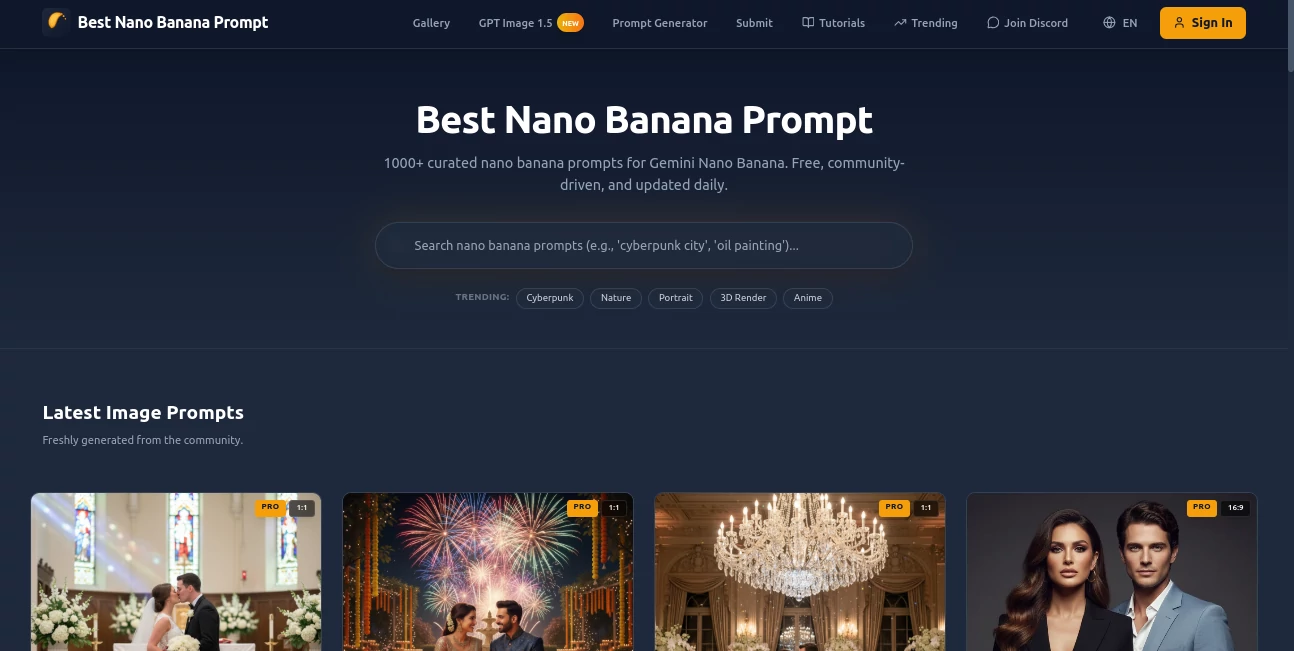
What is Best Nano Banana Prompt?
Imagine having a pocket guide that turns vague ideas into razor-sharp prompts every single time—no more staring at a blinking cursor wondering why the AI isn’t getting it. That’s exactly what this little gem does: it hands you battle-tested prompt structures that consistently pull out the best from any model. I’ve been using it for weeks now, and it’s saved me countless hours of trial and error. One evening I was trying to get a moody cyberpunk scene just right; a single copy-paste from the guide and suddenly the output matched my vision perfectly. It’s not hype—it’s the real deal for anyone who’s tired of mediocre results.
Introduction
Good prompts are the difference between garbage and gold, and this guide knows that better than most. It’s packed with real-world examples, breakdowns of why certain structures work, and quick-reference templates for every common task you throw at an AI. Whether you’re writing fiction, crafting marketing copy, or debugging code, there’s a pattern here that just clicks. What I love most is how practical it is—zero fluff, just actionable advice from someone who clearly spends way too much time talking to language models. It’s become my go-to resource; I open it almost daily.
Key Features
User Interface
The layout is dead simple: a clean, fast-loading page with sections clearly labeled and examples right next to explanations. No ads, no pop-ups, no distractions—just the good stuff. You can scroll through templates or jump straight to the section you need. On mobile it still feels great, which matters when I’m brainstorming on the couch at 2 a.m.
Accuracy & Performance
The prompts in here are refined to a level I rarely see elsewhere. They’re not just “good enough”—they’re engineered to squeeze maximum quality out of current models. I’ve tested many of them side-by-side with generic inputs and the difference is night and day. Speed-wise, the page loads instantly, even on slower connections, so you’re never left waiting when inspiration strikes.
Capabilities
Covers everything from storytelling and character development to SEO copy, technical writing, and even prompt chaining techniques. There are templates for multi-step reasoning, role-playing, few-shot examples, and more. It also includes tips on adapting prompts across different models, which is gold when you switch between Grok, Claude, or ChatGPT. Honestly, it feels like having a senior prompt engineer sitting next to you.
Security & Privacy
It’s just a static webpage—no logins, no data collection, no tracking scripts. You can use it in incognito mode without a second thought. In an era where everything wants your email, this privacy-first approach is refreshing and trustworthy.
Use Cases
Content creators use it to generate consistent blog post outlines or social media threads that actually sound human. Developers lean on it for debugging prompts and code generation instructions. Novelists swear by the character and plot development templates. Even students use it to craft better research summaries or essay structures. Last week I used one of the marketing templates for a client pitch and the response was noticeably sharper than my usual attempts.
Pros and Cons
Pros:
- Extremely focused and practical—no filler content.
- Templates work across multiple models with minor tweaks.
- Completely free and ad-free.
- Regularly updated with new patterns as models evolve.
Cons:
- Very niche; if you’re not actively prompting AIs daily, you might not use it much.
- No interactive playground to test prompts right on the page.
Pricing Plans
It’s 100% free. No tiers, no upsells, no premium version. Just open the page and start copying templates. In a world full of subscription fatigue, that alone makes it feel generous and trustworthy.
How to Use Best Nano Banana Prompt
Open the page, find the section that matches your task (storytelling, copywriting, analysis, etc.), copy the template, and paste it into your AI of choice. Replace the placeholders with your specific details—names, tone, length, etc. Run it, then tweak one variable at a time if the output isn’t perfect. I usually start with the “Role + Task + Format + Examples” structure and iterate from there. After a few uses, you’ll start memorizing the best patterns.
Comparison with Similar Tools
Most prompt libraries are bloated with outdated examples or buried in long blog posts. This one is laser-focused, updated frequently, and ruthlessly concise. Unlike interactive prompt builders that charge monthly, this is free and doesn’t require an account. It’s the difference between a cluttered toolbox and a perfectly organized set of precision tools—you don’t need every gadget, just the ones that work.
Conclusion
If you talk to AI models daily and care about getting better results with less effort, this guide is borderline essential. It’s not flashy, it’s not trying to sell you anything—it just quietly delivers value. After using it for a while, going back to random prompting feels almost lazy. Highly recommended for anyone serious about getting the most out of AI.
Frequently Asked Questions (FAQ)
Is this guide still relevant in 2025?
Yes—the core prompt engineering principles haven’t changed much, and the templates are kept fresh for newer models.
Do I need to credit the source?
Not required, but appreciated if you share the link when recommending it to others.
Can I use these prompts commercially?
Absolutely—use them however you like; there are no restrictions.
Does it work with all AI models?
Best results with frontier models (Grok, Claude, GPT, Gemini), but the structures help even older models perform better.
Will there be a paid version?
Currently no plans—it's staying free as long as possible.
AI Creative Writing , AI Content Generator , Prompt , AI Writing Assistants .
These classifications represent its core capabilities and areas of application. For related tools, explore the linked categories above.
Best Nano Banana Prompt details
This tool is no longer available on submitaitools.org; find alternatives on Alternative to Best Nano Banana Prompt.
Pricing
- Free
Apps
- Web Tools
Categories

Best Nano Banana Prompt Alternatives Product

Banana Promp…
promptcat
Slogan Gener…

Sudowrite Mu…
Noir Prompt

PostingCat

PromptFix

The StoryGra…
LinkedIn Spe…