
🧠 AI Quiz
Think you really understand Artificial Intelligence?
Test yourself and see how well you know the world of AI.
Answer AI-related questions, compete with other users, and prove that
you’re among the best when it comes to AI knowledge.
Reach the top of our leaderboard.


















Dograh

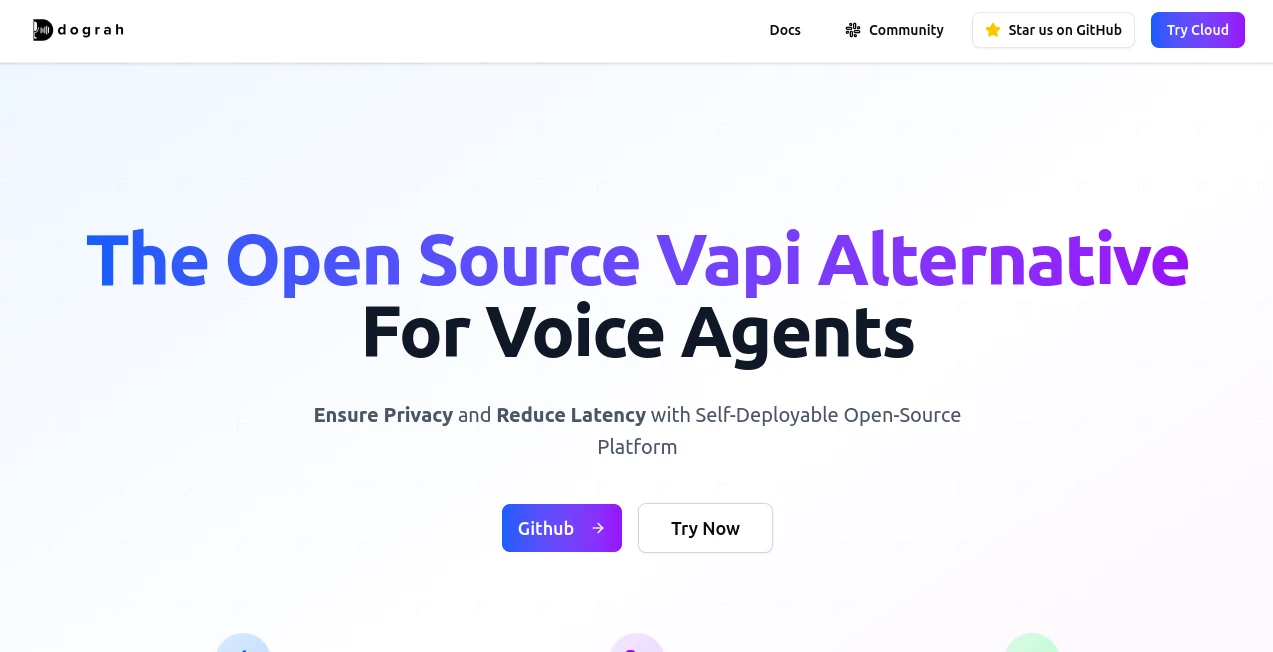
What is Dograh?
Imagine spinning up a tireless phone assistant that chats like a pro, handles calls round the clock, and never drops the ball on leads—all without tying yourself to pricey, locked-down services. That's the quiet revolution this platform delivers, putting powerful voice AI in reach for teams big and small, with full control and zero hidden agendas. I've watched friends in small shops flip their customer game overnight, turning missed calls into steady conversations that feel genuinely human. It's the kind of tool that doesn't just automate; it empowers, keeping your data yours and your options wide open.
Introduction
In a world where voice tech often means vendor handcuffs and soaring bills, this open-source gem cuts loose, letting you craft smart voice agents from scratch or templates in minutes. Founded on the belief that voice AI should be free and flexible—like Wikipedia did for knowledge—it hands back the reins with self-hosting, no black boxes, and code you can tweak to your heart's content. Thousands of builders have jumped in, sharing wins like slashing support costs or scaling lead gen without the lock-in dread. What hooks me is that independence vibe: deploy fast, adapt freely, and rest easy knowing every workflow, model, and integration stays under your roof.
Key Features
User Interface
Drag-and-drop simplicity rules here, with a visual builder that lays out conversation flows like sketching on a whiteboard—templates kick things off, real-time previews let you test mid-build, and everything snaps together without a line of code. It's forgiving for newcomers yet deep enough for tweaks, turning what could be a coding slog into a playful puzzle. One evening, I mocked up a basic inquiry handler just to poke around, and ended up with a live demo chatting back flawlessly— that's the intuitive pull that keeps sessions flowing.
Accuracy & Performance
Advanced natural language smarts shine through, grasping context and intent with a natural ease that dodges those awkward robot moments, while low-latency setups keep chats snappy and engaging. Analytics pour in real-time, spotlighting wins and weak spots so you refine on the fly. Teams rave about the reliability—handling accents, switching tongues seamlessly, and routing tough nuts to humans without a hitch—making interactions feel less scripted and more like talking to someone who gets it.
Capabilities
Build agents that juggle inbound or outbound calls, customize voices to match your brand's tone, support over thirty languages, and dig insights from every exchange to sharpen your edge. Intelligent handoffs, multi-agent logic to curb mishaps, and seamless ties to telephony or CRMs round it out, scaling from solo experiments to full-fledged operations. The open nature means you layer in whatever fits, from custom tools to automated tests, crafting agents that evolve with your needs rather than boxing you in.
Security & Privacy
Self-hosting puts privacy front and center—no third-party peeks, full ownership of data flows, and compliance nods to GDPR or HIPAA without the usual compromises. Every bit is transparent, auditable, and yours to guard, fostering that rare trust in voice tech where your conversations stay confidential. It's a breath of relief for anyone wary of cloud black boxes, letting you focus on the chats rather than the risks.
Use Cases
Small businesses set up lead qualifiers that screen calls 24/7, turning voicemails into booked demos while owners sleep. Support crews blend AI frontlines with human backups for seamless escalations, cutting wait times and boosting satisfaction. Marketers run outbound campaigns that converse naturally, gathering opts and insights without the cold-call cringe. Even non-profits field donor queries in multiple tongues, stretching slim resources further with agents that never tire.
Pros and Cons
Pros:
- Total freedom with open code—no fees, no lock-ins, endless tweaks.
- Lightning setups that go live in minutes, perfect for quick wins.
- Privacy and control that proprietary options just can't match.
- Community-driven growth, with features that solve real pains fast.
Cons:
- Self-hosting demands a bit of setup savvy, though guides ease the way.
- Telephony costs still apply from providers, separate from the core.
Pricing Plans
Core access is wide open and free forever—no cards needed, just dive in and build as much as you like. Underlying costs like telephony minutes come from your chosen providers, keeping things transparent and scalable. For heavy users, the open model means savings stack up quick compared to metered rivals, with community support filling any gaps. It's pricing that prioritizes access over barriers, letting ideas flourish without the budget bite.
How to Use Dograh
Grab the repo or spin up locally, dashboard greets you at the ready—pick inbound or outbound, name your agent, sketch the use case in a sentence, and watch it assemble. Test via web call, tweak flows with drags, integrate telephony, and deploy. I started with a simple lead screener: described the goal, previewed the chat, and had it fielding mock calls in under ten minutes. Scale by layering logic or handing to humans, monitoring analytics to hone the edge.
Comparison with Similar Tools
Proprietary players like Vapi or Synthflow pack polish but pile on fees and limits, where this open approach strips the barriers for true customization and cost control. No-code rivals often hide logic in boxes, but here everything's inspectable and improvable. It stands out for builders craving independence—faster deploys, deeper privacy, and community momentum that outpaces closed ecosystems, making it the thoughtful choice for long-haul voice plays.
Conclusion
This platform isn't chasing trends; it's reshaping them, democratizing voice AI with openness that inspires trust and tinkering alike. It turns clunky customer touchpoints into fluid, insightful exchanges, all while keeping power in your hands. If you're ready to ditch the dependencies and embrace voice agents that truly serve your vision, this is the launchpad worth leaping to—bold, accessible, and built for the builders.
Frequently Asked Questions (FAQ)
Do I need coding skills?
Not at all—the drag-and-drop builder handles the heavy bits, though code peeks are there if you want them.
How many languages does it support?
Over thirty, with accent adaptation that keeps chats natural across borders.
Can it integrate with my tools?
Seamlessly—CRMs, telephony, APIs, whatever fits your stack.
What about complex queries?
Smart routing hands them to humans, blending best of both worlds.
Is it really free?
Core yes—open source through and through, just provider costs for calls.
AI No-Code & Low-Code , AI Developer Tools , AI Voice Assistants , AI Workflow Management .
These classifications represent its core capabilities and areas of application. For related tools, explore the linked categories above.
Dograh details
This tool is no longer available on submitaitools.org; find alternatives on Alternative to Dograh.
Pricing
- Free
Apps
- Web Tools
Categories

Dograh Alternatives Product

Jujutsu Zero…

Lovable APP
MyToolster W…

Miro

OhNoCode

Screenshot t…

Xvibe

Website Clon…

Ultralytics
