














Elispeak
What is Elispeak?
Let’s be honest for a second. Practicing English speaking on your own is awkward. Talking to yourself feels strange. Language exchange apps come with the pressure of judging and being judged. And most AI tools? They treat every conversation like it's your first time meeting them. You log in, and it's always "What do you want to practice today?" — even after you spent twenty minutes yesterday stressing about your TOEFL fluency.
That frustration is exactly what led to something different. You know that feeling when a teacher walks into class and says, "Last week you struggled with the past perfect, let's pick up from there"? It makes you feel seen. It makes you want to show up. Now imagine that feeling, but available at two in the morning when you can't sleep, or during your lunch break, or right before a big job interview. That's the whole idea here — not just another chatbot, but a speaking coach with a genuine memory of who you are and what you're working toward.
Key Features
Most voice tools focus entirely on getting the technology right — clear transcription, low latency, natural voices. And sure, those things matter. But what really separates an okay experience from a life-changing one is whether the tool actually pays attention to your progress over weeks and months, not just minutes.
User Interface
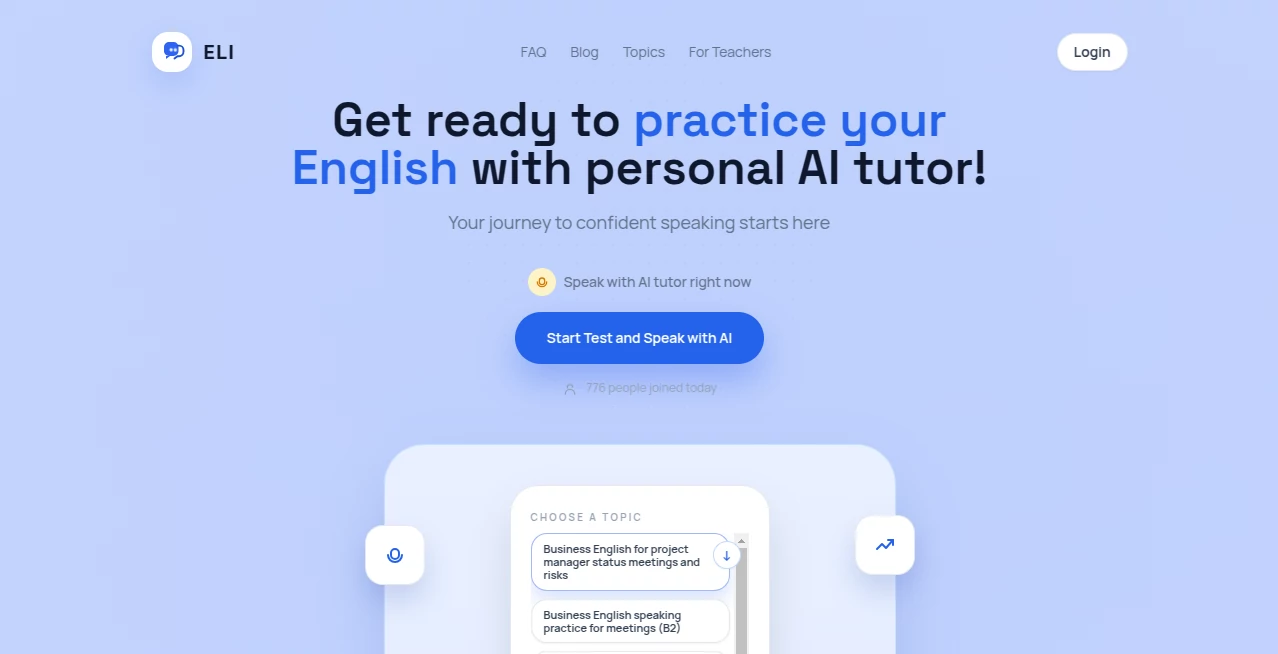
You don't need a manual to figure this out. Open it up, and within seconds you'll see conversation cards tailored specifically to you — not a generic list of random topics. If you've been practicing job interview questions, that's what sits at the top. If you mentioned wanting to sound more confident in team meetings last Tuesday, the coach brings that back up. The interface is clean, almost minimal, because the complexity happens behind the scenes. There's no clutter, no overwhelming dashboard. Just a clear path toward whatever speaking goal you've set.
And the voice interaction feels startlingly natural. We're not talking about that robotic, clearly-synthesized sound that makes you cringe. The responses carry the right pacing, natural pauses, even the occasional filler word that makes conversation feel human instead of manufactured. You almost forget you're talking to code.
Accuracy & Performance
Here's where things get technically interesting, though you'd never notice it as a user. The feedback arrives fast — not in that "I guess it's thinking" way, but genuinely quick, usually around one to two seconds after you stop speaking. That speed matters more than most people realize. When you're practicing pronunciation or trying to nail a specific phrase, a delay of four seconds completely breaks your rhythm. You start second-guessing yourself. Was it bad? Did the system crash? By the time the feedback arrives, you've already lost confidence.
Because the platform processes streaming audio instead of waiting for you to finish entire sentences, it can start analyzing your pace, filler words, and pronunciation as you go. The scoring aligns with actual exam rubrics too — TOEFL, IELTS, CELPIP. A perfect answer that runs thirty-eight seconds isn't actually perfect for TOEFL (you need forty-five). The coach understands those nuances because it was built around them, not as an afterthought.
Capabilities
The range of what you can practice is genuinely wide. Need to prepare for a specific speaking exam? There are dedicated modes for each major test. Want to sound less stiff during standup meetings? There are scenarios for workplace communication. Interview prep? Absolutely. The system can simulate everything from casual small talk to high-pressure presentations.
What makes it work is the user profile layer. After every session, the tool quietly updates a structured record of your goals, weaknesses (like struggling with "th" sounds or conditional tenses), strengths, and even preferences for correction style. Some people want immediate feedback mid-sentence. Others prefer to finish their thought first. The coach adapts. It also remembers open loops — things you said you wanted to come back to. So if you mentioned feeling nervous about a green card interview, that topic resurfaces naturally without you having to remind it. That small touch changes everything about how the tool feels.
Security & Privacy
A lot of language tools store entire conversation transcripts. This one doesn't. Instead of keeping raw recordings or full text histories, the system extracts only what's necessary — a compact, structured summary of your progress and preferences. Your actual words disappear after the scoring pipeline finishes. The profile itself is bounded: specific goal types, enum-based weakness tags, capped arrays of recent topics. Nothing sits around as free-form prose waiting to leak into someone else's training data.
If you're practicing sensitive topics like job interviews for a current employer or discussing personal matters, that privacy boundary matters. You're not handing over transcripts of your most vulnerable speaking moments. You're sharing just enough for the coach to improve, and nothing more.
Use Cases
Imagine you're a software engineer from Brazil who communicates well in writing but freezes during English standup meetings. You know the technical answers. Your brain just refuses to retrieve vocabulary when ten people are listening. Practicing alone feels useless because there's no pressure. Practicing with friends feels embarrassing. With this tool, you can simulate the exact scenario repeatedly — the slightly hurried pacing, the need to summarize concisely, the pressure to sound competent without rambling. After a week of daily practice, that knot in your stomach starts loosening.
Or consider the university applicant prepping for the IELTS speaking section. You've memorized templates and strategies, but actual fluency isn't about memorization. It's about staying calm when the clock is ticking and the topic is unexpected. The exam modes mirror real rubrics and timing windows, so when test day arrives, the structure feels familiar. You've already practiced handling the stress of a forty-five-second response window dozens of times.
Then there's the professional aiming for a promotion that requires presenting in English. You stumble over certain sounds, get tangled in complex sentences, and feel your accent working against you. The coach identifies specific pronunciation patterns that need work — not generic advice like "practice more" but concrete awareness that you consistently misplace stress in three-syllable words. That specificity turns vague anxiety into actionable practice.
Pros and Cons
What Works Well
The continuity from session to session. This isn't a tool that forgets you every time you close the tab. It builds genuine context. The feedback latency is impressively low, which keeps you in a conversational flow state rather than waiting awkwardly. And the pricing is reasonable for what you get — particularly with the discount codes floating around for early users. The exam rubrics are implemented with real care, not just a generic prompt stuffed into a system message. Also, the voice quality? Surprisingly natural across multiple tutor personas.
Where It Could Improve
If you're a complete beginner, the experience might feel slightly intimidating at first. The tool assumes you're ready to speak, not just learn vocabulary. Some advanced pronunciation feedback could be more detailed for learners who want phonetic precision rather than just "good enough." And while the mobile experience works, doing extended practice sessions on a phone screen isn't quite as comfortable as a computer with a proper microphone. Also, the variety of tutor voices, while good, isn't endless — you'll eventually want more accent options if you practice for hundreds of hours.
Pricing Plans
A free tier exists, which is rare for a tool with this level of sophistication. You can kick the tires, run through some basic scenarios, and see whether the interaction style works for your learning preferences before spending anything. Paid plans unlock more exam modes, additional tutor personas, and extended session lengths. The code ELISPEAK50 currently takes fifty percent off any plan — no complicated minimums or restricted tiers. That brings the monthly cost down to something most learners can justify as cheaper than a single coffee shop outing per week. Compared to live tutoring at thirty to sixty dollars per hour, the value proposition is frankly ridiculous in the best possible way.
How to Use Eli
Getting started takes about two minutes. You land on the site, choose whether to log in or explore the free tier, and immediately go through a short onboarding flow. The questions are deliberately low-friction — multiple choice about your primary goal (exam prep, work communication, general fluency), your current comfort level, and your preferred tone for feedback. That's it. No essay questions about your life story.
Once onboard, you'll see a handful of conversation topics ranked specifically for you. Pick one that feels relevant. Click the microphone button (grant permission when the browser asks), and just start talking. The system listens, transcribes in real time, and provides feedback after you finish each response. You can repeat scenarios as many times as you want, with the coach remembering past attempts and commenting on improvement. After a few sessions, you'll notice the opening lines shifting — referencing things you mentioned last week, checking in on goals with approaching deadlines, adjusting tone to match your preferences. That's when it clicks: this isn't a static tool. It's a coach that shows up knowing who you are.
Comparison with Similar Tools
Most English practice apps fall into three categories. First, the flashcard-and-lesson apps — great for vocabulary, terrible for actual speaking. Second, language exchange platforms — wonderful community but zero consistency, with partners ghosting and skill levels mismatched. Third, generic AI chatbots — they'll chat about anything but don't actually coach your pronunciation, fluency, or exam readiness.
Where this tool stands apart is the focused coaching with persistent memory. Talk to ChatGPT Voice Mode, and it answers questions brilliantly but doesn't track your progress. It won't notice that you've struggled with the same pronunciation error for three weeks. The meeting-focused AI assistants (like offerings from Krisp or Speechify) serve different needs entirely — they're built for transcription and summaries, not language learning. And tools like On-Device AI prioritize privacy and local processing but lack the specialized exam rubrics and coaching feedback loop.
On the pure language learning side, you'll find competitors trying to do similar things, but most lack the continuity layer. They treat every session as a fresh start because storing and updating user profiles is genuinely hard engineering. This tool invested heavily in that user-profile architecture — the diff-based updates, the bounded schemas, the post-session enrichment runs. That investment shows up in how the coach opens conversations. You're not talking to amnesia. You're talking to something that feels like it actually listens.
Conclusion
Speaking a new language confidently is one of those skills that feels impossible until it suddenly doesn't. The breakthrough usually comes from hours of low-stakes practice — making mistakes where nobody's judging, repeating phrases until they stop feeling foreign, building the muscle memory of fluent speech. That's exactly what this tool provides. It's not magic. It's not replacing the depth of a great human teacher. But for daily practice, for exam preparation, for the confidence to open your mouth in a meeting without your heart racing? It genuinely works.
The memory feature isn't a gimmick. It's the reason people stick with practice after the initial excitement fades. When your coach remembers that you wanted to sound warmer in client calls, or that you're terrified of the IELTS Part 2 long turn, or that you prefer direct correction without sugar-coating — that changes the relationship. You're not performing for an algorithm. You're practicing with a partner who pays attention.
Frequently Asked Questions (FAQ)
Do I need to be at an intermediate level to start, or can beginners use this?
Beginners can absolutely use it, though you'll get more value if you can already form basic sentences. Complete novices might feel overwhelmed initially. The tool works best once you have some vocabulary to work with and need to build confidence actually speaking.
Is my conversation data stored or used for training?
Full transcripts aren't retained beyond the immediate scoring pipeline. The system extracts only structured, anonymized profile data. Your actual words disappear.
Which English accents does the coach understand and respond with?
The system handles multiple major accents (American, British, Australian) on both recognition and response sides. The tutor voices lean toward standard American or British depending on which persona you select.
Can I practice with the tool on my phone during a commute?
Yes, though extended sessions work better with a decent microphone in a quieter environment. The mobile experience exists, but pronunciation feedback improves when the audio input is clean.
How accurate is the pronunciation scoring compared to a human teacher?
It's impressively consistent for what it measures — phoneme accuracy, stress patterns, pacing, filler word frequency. A human teacher catches nuance the AI misses. But for daily practice between sessions with a real instructor, the feedback is detailed enough to drive genuine improvement.
What happens if I stop using it for two weeks and come back?
The profile remains intact, though recent topics decay in relevance. The coach won't reference very old conversations unless they were marked as open loops or persistent goals. You won't have to reintroduce yourself completely, but expect some recency bias toward what you practiced most recently before the break.