
🧠 AI Quiz
Think you really understand Artificial Intelligence?
Test yourself and see how well you know the world of AI.
Answer AI-related questions, compete with other users, and prove that
you’re among the best when it comes to AI knowledge.
Reach the top of our leaderboard.


















EvoLink.AI

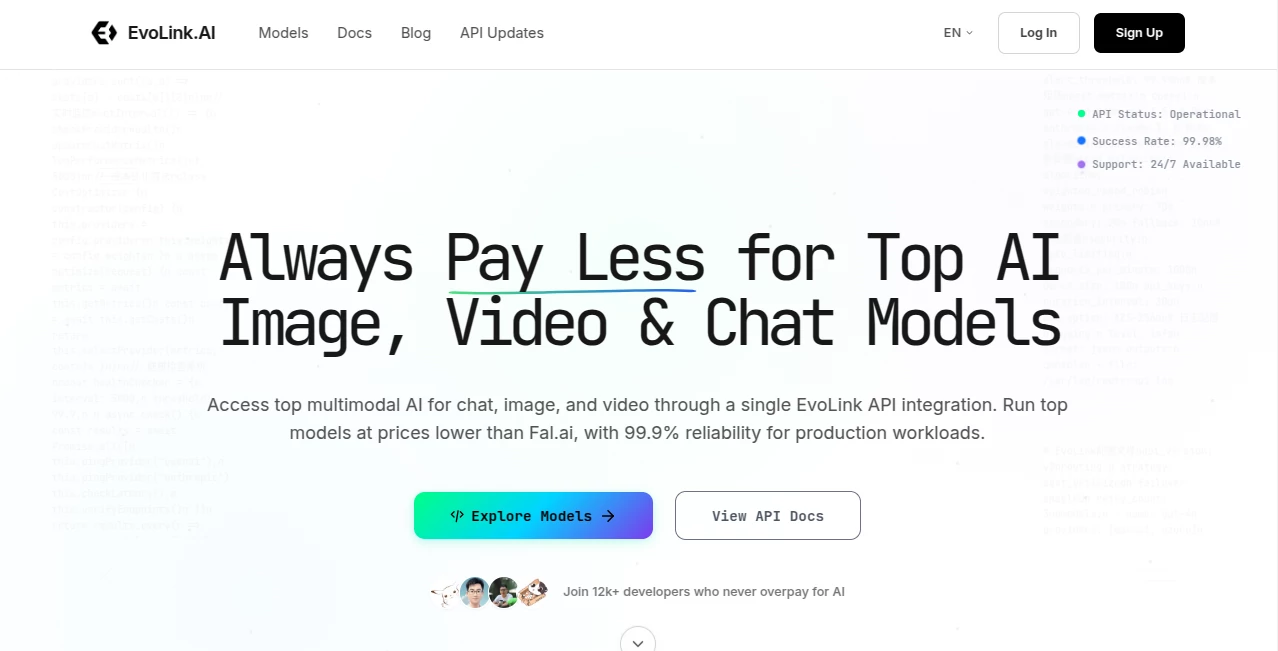
What is EvoLink.AI?
Building apps with cutting-edge AI used to mean juggling multiple accounts, watching costs spiral, and praying for uptime when a provider hiccuped. This gateway changes all that, bundling access to dozens of leading models through one clean endpoint, while smartly steering requests to the best deals and backups. I've switched a side project over, and the savings showed up immediately—plus no more midnight alerts about rate limits. It's the kind of behind-the-scenes hero that lets developers focus on creating rather than managing vendors.
Introduction
At a time when every app seems to need chat smarts, stunning images, or slick videos, hooking into the best models shouldn't feel like herding cats. This platform steps in with a unified doorway to over forty top-tier options from giants like OpenAI, Anthropic, Google, and beyond, handling everything from conversational flows to multimodal magic. What started as a fix for fragmented integrations has grown into a reliable lifeline for production builds, complete with real-time pricing hunts that trim bills noticeably and automatic switches when things go sideways. Users often mention how it turned messy multi-provider setups into a single, predictable line in their code—freeing up time for the fun parts of building.
Key Features
User Interface
The dashboard keeps things wonderfully straightforward: generate keys in a click, monitor calls and spends in one glance, and dive into logs without digging through menus. Examples for calls sit ready to copy, and switching models feels as easy as tweaking a parameter. It's the sort of no-fuss space that fits right into a busy dev day, whether checking savings on a phone or queuing batches from a desk.
Accuracy & Performance
Routing adds barely a whisper of delay—under 50ms usually—while failover keeps things humming at near-perfect uptime, dodging the downtime dramas of single sources. Costs drop thanks to constant price scans, often landing 20-70% lower, and throughput scales without the usual caps hitting hard. In real runs, it handles spikes smoothly, delivering consistent responses that match direct calls but with that extra buffer of reliability.
Capabilities
Chat with heavyweights like GPT-4 or Claude, generate photorealistic images via Flux or Nano Banana, craft cinematic videos through Veo or Sora variants—all via one familiar format compatible with popular SDKs. Switch providers mid-project without rewriting code, tap into emerging gems as they're added, and lean on unified analytics for spotting trends in usage or spends.
Security & Privacy
Acting purely as a pass-through, it never hangs onto prompts or outputs, wrapping everything in strong encryption and backing it with solid certifications like SOC 2 and GDPR compliance. One key means fewer risks scattered around, and enterprise tiers add custom controls for peace in sensitive setups.
Use Cases
App builders weave multimodal features—like text-to-video demos or image edits—without vendor lock-in headaches. Startups scale chatbots or assistants affordably, routing around limits for steady service. Agencies prototype creative tools fast, testing models side-by-side to pick winners. Even solo devs experiment boldly, enjoying production-grade stability on hobby budgets.
Pros and Cons
Pros:
- Noticeable savings that add up quick on heavier loads.
- Rock-solid uptime with smart backups built in.
- Hassle-free swaps between models and providers.
- Clear, unified view of everything from costs to calls.
Cons:
- A small routing fee on top, though often offset by deeper discounts.
- Relies on underlying providers for core model quirks.
Pricing Plans
Pay strictly for what flows through—no minimums or surprises—with free starter credits to kick things off card-free. Usage bills at market-best rates plus a modest routing cut, scaling naturally as you grow. Enterprise paths bring tailored deals, higher guarantees, and dedicated help for bigger teams.
How to Use EvoLink
Grab an account in seconds, snag your key from the dash, plug it into your familiar SDK or raw calls, and point requests at the unified endpoint—tweak the model tag to hop providers. Monitor spends live, set alerts if needed, and let the routing handle the rest. Migration often boils down to swapping base URLs, unlocking the full roster without rewriting logic.
Comparison with Similar Tools
Direct provider ties mean full price and single-point risks, while broader aggregators might lag on freshness or add heavier overheads. This one strikes a sweet balance—aggressive on savings, light on latency, and proactive with additions—making it the practical pick for folks who want robustness without the bloat.
Conclusion
In the rush to infuse apps with smarter layers, this gateway stands out as the steady hand guiding the way—cheaper, tougher, and simpler all at once. It turns the tangle of AI integrations into a straight path forward, letting builders chase ideas instead of invoices. If you're weaving models into your work, this is the quiet upgrade that makes everything click better.
Frequently Asked Questions (FAQ)
How much can I really save?
Often 20-70%, depending on models and timing—real-time hunts snag the best rates available.
What about downtime?
Automatic switches keep things at 99.9% or better, routing around issues seamlessly.
Easy to switch from direct providers?
Mostly a URL and key swap—SDKs play nice right away.
New models get added often?
Yes, the library grows steadily with fresh standouts.
Data handled safely?
Pass-through only, encrypted, and compliant—no storage of your content.
AI API Design , AI Developer Tools .
These classifications represent its core capabilities and areas of application. For related tools, explore the linked categories above.
EvoLink.AI details
This tool is no longer available on submitaitools.org; find alternatives on Alternative to EvoLink.AI.
Pricing
- Free
Apps
- Web Tools
Categories

EvoLink.AI Alternatives Product

Devplan

Workik

Toonifyit

Geekflare AI

CodeSpy AI

Defapi

Lovable APP

Vurge

Jujutsu Zero…