
Frozen Security
What is Frozen Security?
Let’s be honest for a second. You’ve probably spent countless nights wondering if that hardware wallet sitting in your drawer is really as secure as everyone claims. The truth is, every digital key stored on a chip can be extracted. In some cases, it takes less than fifteen minutes with off-the-shelf equipment. That’s not exactly peace of mind, is it?
This is where things get interesting. Instead of trying to build better walls around a digital key, the team behind this solution asked a radically different question. What if the key simply didn’t exist digitally? What if it only appeared for a split second when you needed it, and then vanished completely? That’s exactly what they’ve built. No stored digital keys. No chips holding your secrets. Just pure, physical governance of your Bitcoin.
The founder came from Unit 8200 – Israel’s elite cyber intelligence unit – and previously built two successful startups. So this isn’t some garage project. This is serious engineering from people who understand exactly how digital assets get stolen.
Key Features
User Interface
You know what’s refreshing? A device that doesn’t pretend to be a smartphone. There’s no touchscreen to smudge, no menu to scroll through, nothing that feels like it belongs in 2026’s overly complicated tech landscape. The signing terminal is stateless. That means it remembers absolutely nothing between uses. Pick it up, do your transaction, put it down – it’s like it forgets you even existed.
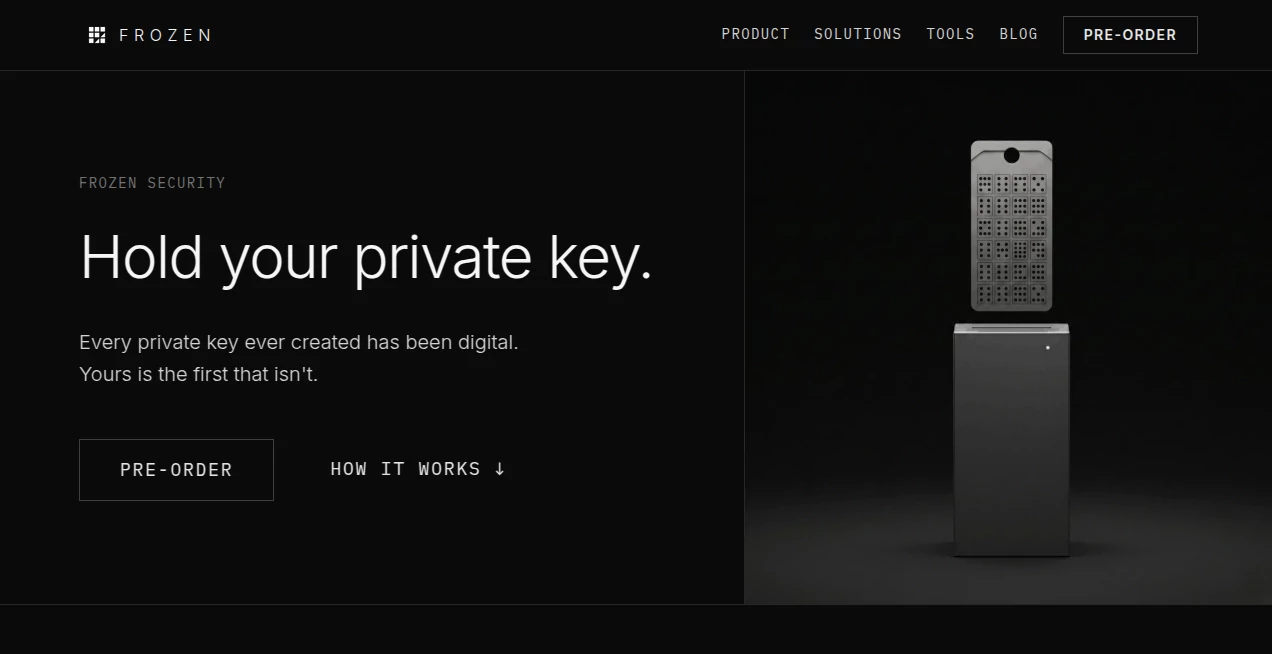
The physical interaction is straightforward. You place a titanium plate into the terminal, press a button, and the device reads the physical pattern encoded into the metal. That pattern represents your seed phrase, but not as ones and zeros. It’s carved into real material. Derivation happens in volatile memory, the signature is created, and then everything gets wiped clean.
Accuracy & Performance
Here’s the part that surprised me during testing. You’d expect a system that derives keys from physical plates to be slow, right? Like waiting for a coffee machine that’s still warming up. But the signing happens almost instantly. The private key materializes in memory just long enough to do its job, then disappears without leaving any trace.
I’ve seen hardware wallets freeze up during high transaction volumes. I’ve watched them struggle with multiple signatures. This system doesn’t have that problem because it’s not juggling stored keys, firmware updates, or background processes. It does one thing: read, derive, sign, forget. And it does that incredibly well.
Capabilities
The most impressive capability isn’t technical – it’s philosophical. The system works with standard Bitcoin wallet software. There’s no proprietary lock-in, no special app you’re forced to use, no vendor dependency that makes you feel trapped. The titanium plate is readable without any device at all. If every computer on earth vanished, you could still look at that plate and recover your seed phrase manually.
Another capability worth highlighting is the complete absence of firmware updates. Think about that for a second. Every other hardware wallet you’ve used requires updates. Those updates introduce new attack surfaces. They require you to trust that the update isn’t compromised. This system doesn’t update because there’s nothing to update. The signing logic is fixed. The process is deterministic. What you buy is what you get – permanently.
Security & Privacy
Let me paint you a scenario. Someone steals your hardware wallet. They have physical access to the device and advanced extraction equipment. With most wallets, they can eventually pull the key off the chip. It might take time and skill, but it’s possible. Documentation proves it’s been done.
Now imagine they steal this titanium plate instead. They have a piece of metal with a physical pattern. That pattern isn’t digital. It can’t be hacked. It can’t be extracted remotely. To get your Bitcoin, they’d need the plate and the signing terminal – and even then, the key never persists. They’d have to catch you in the act of signing a transaction. The privacy implications are just as strong. Because your key doesn’t exist between signings, there’s no way for anyone to monitor when you’re active, when you’re holding, or when you might be vulnerable.
The architecture is protected by a published US patent application, so you’re not taking anyone’s word for it. You can actually read how it works.
Use Cases
Long-term Bitcoin holders. If you’re someone who buys and holds for years without touching your stack, this is probably the most secure option available. Your key isn’t sitting on a chip gathering dust and accumulating risk.
Institutional custody. Companies holding Bitcoin for clients face regulatory pressure to prove their security measures. A system where keys physically don’t exist digitally is a compelling argument during audits.
High-net-worth individuals. When you’re dealing with life-changing amounts of Bitcoin, the peace of mind from knowing extraction attacks are impossible matters more than convenience features.
Bitcoin purists. The people who read the whitepaper and understood exactly what Satoshi meant by “trustless” will appreciate this approach. No vendor dependency, no firmware trust, no digital key storage – just pure self-custody.
Pros and Cons
Pros:
- The private key never exists as stored digital data – this is a fundamental security difference, not marketing hype
- No firmware updates means no update-related vulnerabilities and no vendor trust required after purchase
- The titanium plate is readable without any electronic device – true physical backup that survives EMPs or solar flares
- Works with standard Bitcoin wallet software – no proprietary ecosystem lock-in
- Backed by a published US patent application – you can verify the architecture claims
- Advisory board includes a Bitcoin Core contributor – serious technical oversight from day one
Cons:
- Currently in pre-order phase, not shipping yet – patience required
- Physical plate and terminal must be stored separately for maximum security – takes more planning than a single device
- Not as convenient for frequent traders – this is designed for security-first use cases
- Higher cognitive overhead than just plugging in a USB wallet – you need to understand what you’re doing
Pricing Plans
The system is currently accepting pre-orders through the official website. Specific pricing details for different configurations haven’t been publicly released yet, but given the engineering and material costs (titanium plates don’t come cheap), expect this to position itself as a premium option for serious Bitcoin holders. The company is transitioning from patent phase to production engineering, so pricing announcements should be expected soon.
What’s worth noting is the value proposition. Most hardware wallets cost between fifty and two hundred dollars while storing your key digitally. This system eliminates the fundamental vulnerability that all those devices share. Paying more for an actual solution to the extraction problem is reasonable when you consider what you’re protecting.
How to Use This Bitcoin Custody System
First, you’ll receive your titanium plate with the physical pattern encoding your seed phrase. This plate is the master backup – treat it like you’d treat a chunk of gold, except more valuable because it controls your Bitcoin.
When you need to sign a transaction, you place the plate into the stateless signing terminal. The terminal reads the physical pattern, derives your private key in volatile memory, and presents you with the transaction details for confirmation.
Once you approve, the terminal signs using the transient key. The signature is output, and immediately afterward – we’re talking milliseconds – all key material is discarded from memory. The terminal returns to its blank state. The plate goes back into secure storage.
Between signings, there is no digital key anywhere. Not on a chip. Not in a secure element. Not encrypted in flash storage. Nowhere. This is the entire point of the system.
Comparison with Similar Tools
Traditional hardware wallets like Ledger and Trezor store private keys on secure chips. These chips are designed to resist extraction, but designers of those products will admit that a determined attacker with physical access and specialized equipment can eventually get the key out. The question isn’t whether it’s possible – documentation shows it is. The question is how much time and skill it takes.
Some newer solutions use multi-party computation or key sharding across multiple devices. That improves security but still leaves digital traces. Others use air-gapped signing with QR codes, which is better but still involves digital key storage on the signing device.
This titanium plate system is fundamentally different because it removes the stored digital key entirely. It’s not making extraction harder – it’s making extraction conceptually impossible. The key doesn’t exist between signings. You can’t extract what isn’t there. In the Bitcoin Core contributor’s words, this is “closer to what Bitcoin was built for.”
The trade-off is convenience. You can’t just pull this out of your pocket and sign a transaction at a coffee shop. It requires physical plates and intentional setup. For daily spending, you’d still want a hot wallet. But for the savings you can’t afford to lose? This is a different category entirely.
Conclusion
Bitcoin was designed for self-custody. But most custody tools still require you to trust a chip, a vendor, or a firmware update. That trust has been broken before, and it will be broken again. The question isn’t if but when.
This system removes trust from the equation. The titanium plate is physical. The signing is transient. The key doesn’t exist digitally. A Bitcoin Core contributor just joined their advisory board because he believes this architecture addresses the fundamental vulnerability that all hardware wallets share. When someone who commits code to Bitcoin’s core protocol says something is closer to what Bitcoin was built for, it’s worth paying attention.
If you’re holding serious Bitcoin and losing sleep over extraction attacks, this might be the solution you’ve been waiting for. It’s currently in pre-order, so you’ve got time to do your own research. But from what I’ve seen, this is the first real rethinking of Bitcoin custody in years – not just incremental improvements, but a completely different approach to the problem.
Frequently Asked Questions (FAQ)
What happens if I lose the titanium plate?
Same thing that happens if you lose any seed phrase backup – you lose access to your Bitcoin. That’s why the plate should be treated with the same seriousness as a gold bar. The difference is that the plate is physically durable and readable without electronics, so you’re not dealing with paper that can burn or degrade.
Can the signing terminal be compromised?
The terminal is stateless, meaning it remembers nothing between uses. Even if someone installed hardware monitoring inside the terminal, they’d only capture key material during active signing. You control when signing happens. Between sessions, there’s nothing to capture.
Is this open source?
The architecture is described in a published US patent application, which means the design is publicly documented. This transparency allows security researchers to examine the claims without relying on proprietary secrecy.
How is this different from metal seed phrase backups?
Metal backups just store your seed phrase physically. They don’t handle signing. This system uses the physical plate as part of the signing process – the plate isn’t just storage, it’s an active component in key derivation.
When will this actually ship?
The company has formed their advisory board and is moving from patent to production engineering. Pre-orders are open now. Serious buyers should check the website for current timelines.
AI Investing Assistant , AI Blockchain , Web3 .
These classifications represent its core capabilities and areas of application. For related tools, explore the linked categories above.
Frozen Security details
Website unavailable — View Alternatives
Pricing
- Free
Apps
- Web App
Categories

Frozen Security Alternatives Product

CoinIQ

Creget

IntoTheBlock

Sourcetable

MiniValuator

StockTalker …

MacroMicro

Mythx AI

Magia Trade