
🧠 AI Quiz
Think you really understand Artificial Intelligence?
Test yourself and see how well you know the world of AI.
Answer AI-related questions, compete with other users, and prove that
you’re among the best when it comes to AI knowledge.
Reach the top of our leaderboard.


















Kael

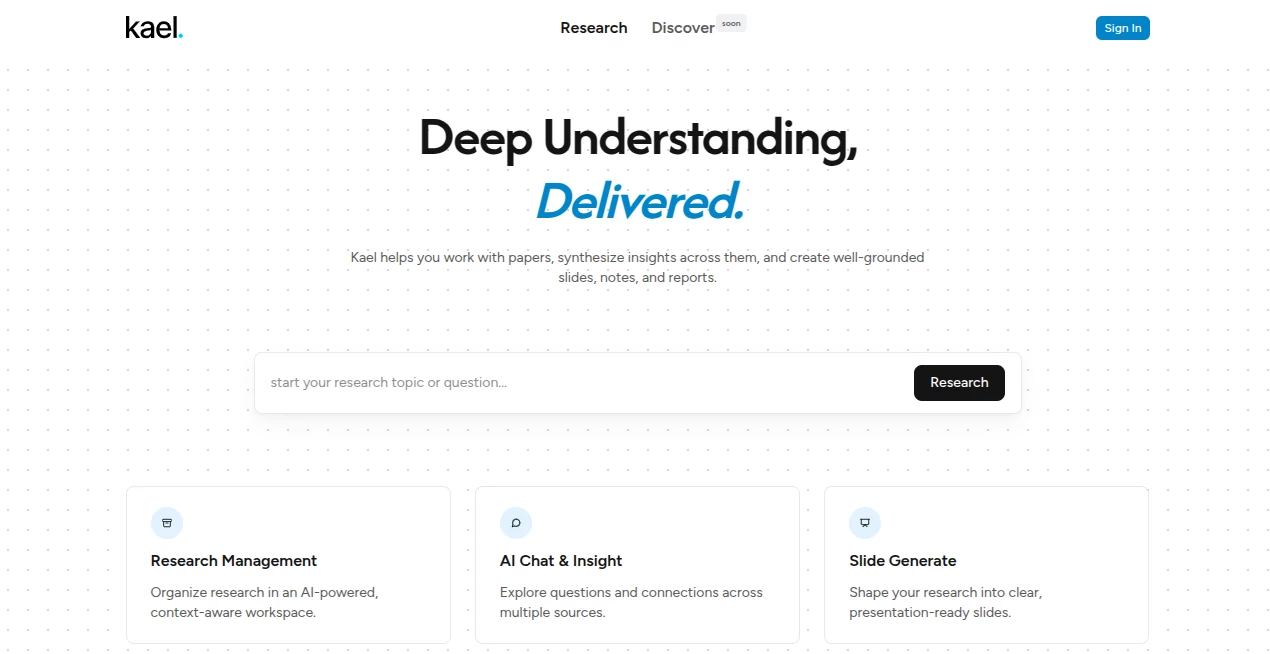
What is Kael?
There's a quiet thrill in feeding a stack of dense papers into a tool and watching it pull out connections you might have missed after hours of reading. This assistant does just that, turning research chaos into clear insights with a conversational ease that feels like chatting with a sharp colleague. I've spent evenings wrestling PDFs alone, but now it's like having a reliable partner who synthesizes across documents and drafts grounded outputs—slides that impress, notes that stick, reports that flow. It's the kind of help that makes deep work feel lighter.
Introduction
Built for anyone buried in academic or professional reading, this platform shines at handling papers—uploading them, querying details, and bridging ideas across multiple sources. The real charm lies in how it goes beyond surface skims, delivering responses rooted in your materials while streaming thoughts in real time. Early users, from grad students to analysts, share how it cut their synthesis time in half, spotting patterns or contradictions that sparked better work. It's not about replacing thinking; it's about amplifying it, making complex topics approachable and turning raw info into something structured and useful.
Key Features
User Interface
The chat window feels familiar yet focused, with easy file drags for papers and a streaming response that builds ideas line by line—no waiting for full loads. Tool calls happen behind the scenes when needed, keeping the conversation natural. It's clean, responsive, and forgiving for long sessions, like a notebook that thinks along with you.
Accuracy & Performance
Responses draw directly from uploaded content, staying faithful to sources with context that spans documents, avoiding the hallucinations that plague general chats. Streaming keeps things snappy, even on hefty files, and the depth shines in follow-ups that build on prior points. In my trials with overlapping studies, it nailed nuances without drifting, delivering reliable groundwork every time.
Capabilities
Upload PDFs or docs, ask across them for comparisons or summaries, then generate slides, notes, or reports that cite properly and stay grounded. Real-time interaction means refining on the fly, with tool integration for extra pulls when useful. It's tailored for research flows, turning scattered papers into cohesive outputs that save the heavy lifting for your original thoughts.
Security & Privacy
Files process in session only, with no long-term storage unless chosen, keeping your work contained and confidential. It's a thoughtful setup for sensitive materials, giving peace of mind during deep dives.
Use Cases
Students compile lit reviews, pulling threads from dozens of papers into outlines that structure theses smoothly. Researchers compare findings across studies, spotting gaps for new angles without manual cross-referencing marathons. Professionals draft reports from internal docs, ensuring claims stay backed and presentations hit the mark. Even teams collaborate indirectly, sharing synthesized notes that align everyone faster.
Pros and Cons
Pros:
- Stays tightly grounded in your uploads, building trust for critical work.
- Cross-document synthesis that uncovers links you'd otherwise miss.
- Streaming responses keep the momentum alive during long explorations.
- Direct paths to slides or reports that feel professional from the start.
Cons:
- Best with clear, text-heavy files—scanned images might need prep.
- Depth depends on upload quality and quantity for broadest insights.
Pricing Plans
Access opens wide with options that fit casual or committed use, starting free for basics and scaling affordably for heavier research loads—fair and flexible without surprises.
How to Use Kael
Drop your papers into the chat, ask about specifics or connections, and watch insights stream back. Follow up to refine, then request formatted outputs like slides with key points cited. Build conversations around your library, exporting as needed—simple loops that turn sessions into productive habits.
Comparison with Similar Tools
General chatbots wander off-topic without anchors, but this one clings to your sources for relevance that matters in research. Where others skim singles, it bridges multiples thoughtfully, offering a focused edge for paper-heavy tasks without the noise.
Conclusion
For anyone navigating stacks of reading, this assistant brings clarity and speed that transform overwhelming into manageable. It's a thoughtful companion for deeper thinking, delivering understanding that's earned, not guessed. Give it your toughest pile, and see how it elevates the work you do next.
Frequently Asked Questions (FAQ)
What file types work best?
PDFs and text docs fly through, especially searchable ones for full extraction.
How many papers at once?
Handle several comfortably, synthesizing across for broader views.
Outputs stay cited?
Yes, grounded in sources to keep everything traceable and solid.
Real-time feel?
Streaming responses build naturally, like live brainstorming.
Beyond papers?
Tuned for research docs, but adaptable for similar dense materials.
AI Documents Assistant , AI Productivity Tools , AI Research Tool , AI Notes Assistant .
These classifications represent its core capabilities and areas of application. For related tools, explore the linked categories above.
Kael details
This tool is no longer available on submitaitools.org; find alternatives on Alternative to Kael.
Pricing
- Free
Apps
- Web Tools
Categories

Kael Alternatives Product

PromptZerk

Certificate …

Ryne AI

UPDF AI

Flow Veo 3

Grok 4

Productivity…

Serplux

Sorank
