
🧠 AI Quiz
Think you really understand Artificial Intelligence?
Test yourself and see how well you know the world of AI.
Answer AI-related questions, compete with other users, and prove that
you’re among the best when it comes to AI knowledge.
Reach the top of our leaderboard.


















Payment Hunter

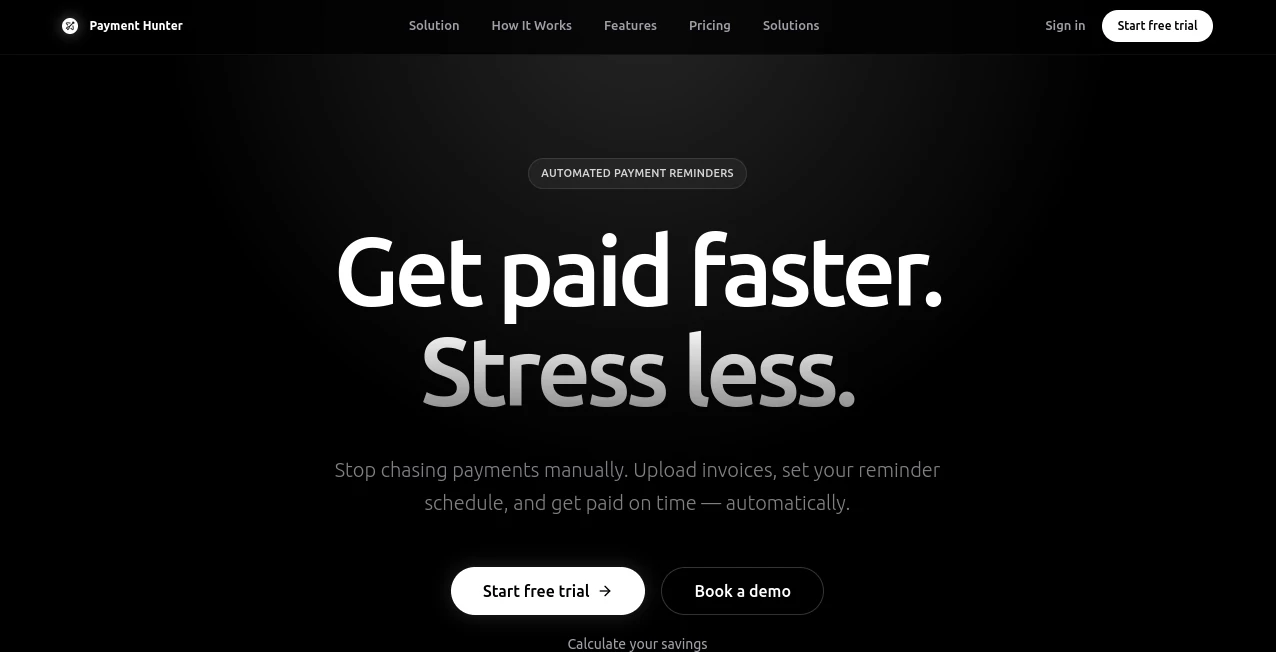
What is Payment Hunter?
Ever had that nagging feeling you’re owed money but can’t quite remember where or how much? A refund that never came through, an unused subscription credit, a cashback offer you forgot about, or even an old insurance overpayment. Most people shrug it off—too much hassle, too little payoff. This tool quietly changes that equation. You connect your email and bank accounts (securely, of course), and it scans years of transactions in minutes, surfacing money you didn’t even know was waiting. I’ve watched friends go from “I think I might be owed something” to “I just got $347 back” in a single afternoon. It’s not magic; it’s just thorough, persistent, and surprisingly gentle on your time and privacy.
Introduction
Money quietly slips away all the time—refunds get lost in email threads, loyalty points expire unnoticed, duplicate charges hide in statements, overpayments sit forgotten with old providers. Chasing them manually is exhausting: searching inboxes, logging into ten different accounts, calling support lines that never pick up. This platform does the legwork for you. Connect once, let it scan, and it finds recoverable funds across subscriptions, refunds, cashback, warranties, and more. It’s become a small ritual for people who hate financial loose ends—run a scan every few months, collect what’s yours, move on. The best part? It only gets paid when you do. No upfront fees, no risk if it finds nothing.
Key Features
User Interface
The dashboard is calm and uncluttered. Connect your Gmail/Outlook and primary bank in under a minute—no endless permissions screens. It shows a clean overview: total found, categorized by type (refunds, subscriptions, cashback), with one-click claim buttons for each item. Progress bars during scans keep you informed without overwhelming. Everything feels designed by someone who’s actually tried to hunt refunds themselves—simple, fast, no fluff.
Accuracy & Performance
It’s impressively thorough. Scans go back years, catch partial matches (“Amazon refund – pending”), and flag even small amounts most people overlook ($8.99 unused credit, $12 cashback from last year). False positives are rare—everything shown has a clear path to claim. Scans usually finish in 5–15 minutes depending on email volume. The recovery success rate hovers high because it doesn’t just flag; it provides direct links, templates, and next steps so you actually get the money back.
Capabilities
Automatic scanning of email and bank transactions for refunds, unused subscriptions, cashback offers, loyalty points, warranty claims, overpayments, and forgotten gift card balances. One-click claim assistance with pre-filled emails/templates, progress tracking on open recoveries, recurring scan reminders, and a clean dashboard showing recovered vs pending amounts. It works across major banks, email providers, and retailers without needing individual logins for each merchant.
Security & Privacy
Bank connections use read-only Plaid integration—no money can be moved, only transaction data is accessed. Email scanning is done with revocable OAuth access—nothing is stored permanently. All data is encrypted in transit and at rest. No selling of personal info. You can disconnect and delete everything with one click at any time. For people protective of financial data, the read-only, no-storage approach feels genuinely trustworthy.
Use Cases
A freelancer discovers $280 in unclaimed PayPal refunds from client overpayments two years ago. A family finds $150 in unused Amazon gift card balances sitting in old emails. A student recovers $45 in forgotten cashback from credit card offers. A small business owner uncovers $1,200 in duplicate SaaS subscription charges across multiple cards. It’s especially powerful for people who’ve switched jobs, moved countries, or just accumulated years of digital receipts without ever chasing loose ends.
Pros and Cons
Pros:
- Finds money you genuinely forgot about—often $100–$1,000+ for regular users.
- No upfront cost—only pays when you recover funds.
- Read-only access means zero risk to your accounts.
- One-time connect scans years of data in minutes.
- Claim assistance makes actually getting the money back painless.
Cons:
- Requires connecting email and bank (comfort level varies).
- Some very old or obscure refunds may still need manual follow-up.
- Success depends on what’s actually recoverable (not everything can be clawed back).
Pricing Plans
No subscription, no monthly fee. It runs on a simple success-based model: free scan, and it takes a modest percentage (typically 20–35%) only of money it helps you recover. No recovery = no charge. That alignment feels fair—everyone wins when you get paid, and there’s zero downside if it finds nothing. Many users say the cut is well worth the hassle-free cash they’d never have chased themselves.
How to Use Payment Hunter
Sign up with email (takes 30 seconds). Connect your primary Gmail/Outlook and bank via secure Plaid link (read-only). Let it scan—watch progress in real time. Once finished, browse found items by category (refunds, subscriptions, cashback, etc.). Click “Claim” on anything you want—it pre-fills emails or gives direct links/instructions. Track open claims in the dashboard. Run a fresh scan every few months to catch new loose ends. That’s it—minimal effort, maximum return.
Comparison with Similar Tools
Most refund finders are either subscription-based (charge monthly regardless of results) or limited to one category (only subscriptions, only cashback). This one scans broadly, charges only on success, and provides actual claim assistance instead of just flagging. It’s less about endless monitoring and more about one-and-done deep dives that uncover real money. For people who hate recurring fees and want results over promises, it stands apart.
Conclusion
Lost money doesn’t chase itself. This tool does the chasing for you—quietly, thoroughly, and with zero risk if it comes up empty. When you see that first “$78 refund claimed” notification, or watch a forgotten cashback deposit hit your account, it stops feeling like a gimmick and starts feeling like found money. For anyone who’s ever thought “I really should check that old email thread someday,” this is the nudge that makes “someday” today. And the best part? You keep most of what it finds. That’s a win worth smiling about.
Frequently Asked Questions (FAQ)
Is it safe to connect my bank/email?
Yes—bank uses read-only Plaid (no money can move), email uses revocable OAuth. Nothing is stored long-term.
How much does it cost if it finds nothing?
Nothing. Zero upfront fees, zero charge if no recoverable money is found.
What kinds of money does it find?
Refunds, unused subscriptions, cashback offers, loyalty points, overpayments, warranty claims, forgotten gift cards, and more.
How long does a scan take?
Usually 5–15 minutes depending on email volume and transaction history.
Can I disconnect everything later?
Yes—one click removes all connections and deletes your data from their system.
Other .
These classifications represent its core capabilities and areas of application. For related tools, explore the linked categories above.
Payment Hunter details
This tool is no longer available on submitaitools.org; find alternatives on Alternative to Payment Hunter.
Pricing
- Free
Apps
- Web Tools
Categories

Payment Hunter Alternatives Product

Sound Level …
X-Installer

DiRe-RAPIDS

Hugging Face

TwitterXVideo

Mp3tag

ZoraInsights

BSA calculat…

Tea Checker
