
🧠 AI Quiz
Think you really understand Artificial Intelligence?
Test yourself and see how well you know the world of AI.
Answer AI-related questions, compete with other users, and prove that
you’re among the best when it comes to AI knowledge.
Reach the top of our leaderboard.


















seedance 2
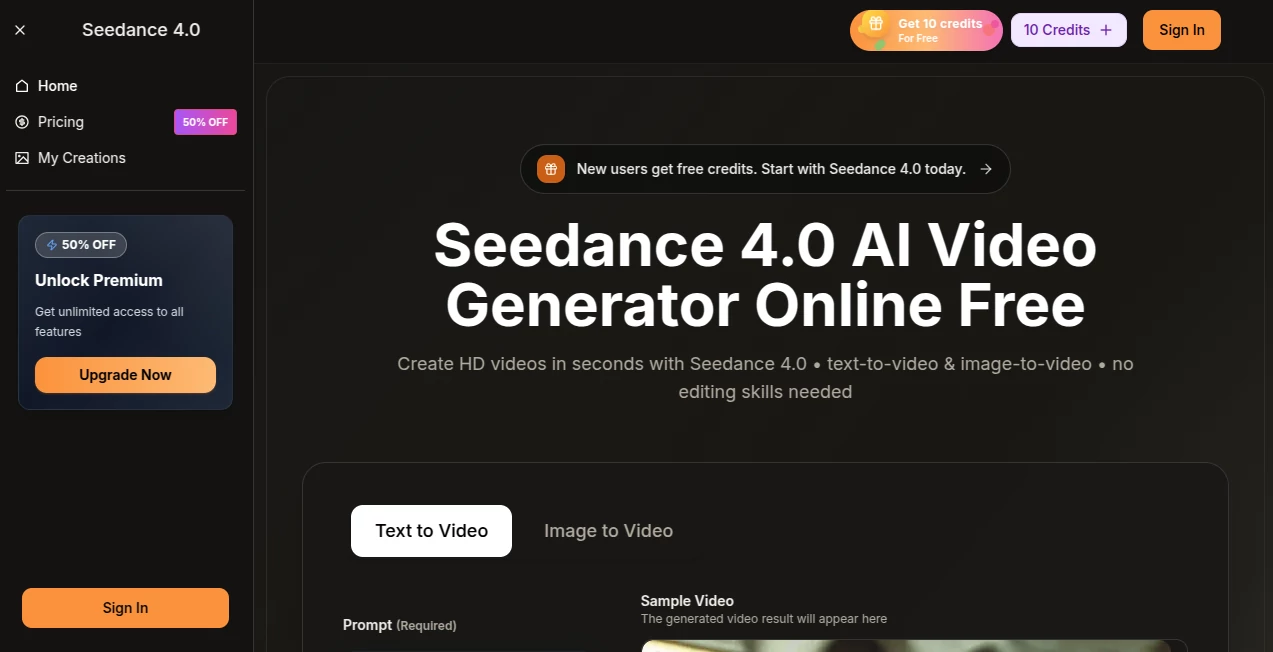
What is seedance 2?
There’s a special kind of excitement when you describe a scene in plain words and a few seconds later a smooth, emotionally charged clip plays back that actually feels directed. Not jerky motion, not melting faces—just natural movement, thoughtful lighting, and a sense of story that makes you want to watch it again. This tool consistently delivers that feeling. I’ve shown clips to fellow creators who normally roll their eyes at AI video, and watched their skepticism turn into genuine surprise when the character stayed consistent, the camera moved with purpose, and the mood carried through every frame. It’s the kind of result that makes storytelling feel accessible again.
Introduction
Making video has always been time-consuming and expensive. Even short clips require planning, shooting, editing, and sound work. Seedance 4 quietly removes many of those barriers. You start with text, add a reference image if you want more control, and get a short cinematic piece that understands pacing, emotion, and visual continuity. It’s not perfect every single time, but the hit rate is high enough that it feels like a real creative partner rather than a novelty. Creators are using it to prototype ideas, make social content, visualize music, and test story beats long before investing in full production. The gap between “I have an idea” and “here’s something watchable” has never been smaller.
Key Features
User Interface
The interface is refreshingly straightforward. A large prompt box, an optional image upload area, simple choices for aspect ratio and duration, and one clear generate button. Previews load fast so you can iterate without losing your train of thought. No overwhelming menus or hidden settings—just enough controls to guide the output without getting in the way. Beginners get results quickly; experienced users appreciate how little friction there is between idea and final clip.
Accuracy & Performance
Characters keep their identity across shots and lighting changes. Motion feels natural—hair moves with wind, fabric drapes realistically, objects interact with believable physics. The model handles complex prompts involving multiple subjects and camera moves with impressive coherence. Generation times are reasonable, often under a minute for short clips, and the output quality holds up well even on detailed scenes. It rarely falls into the usual AI traps of jitter or sudden style breaks.
Capabilities
Text-to-video, image-to-video, hybrid mode that combines both, multi-shot storytelling with natural transitions, native audio sync for dialogue and effects, and support for different aspect ratios (vertical for social, horizontal for trailers, square for posts). You can guide the style with reference images or text descriptions, and the tool maintains visual consistency across frames. It works well for emotional close-ups, product reveals, music visuals, and short narrative scenes.
Security & Privacy
Your prompts and reference images are processed temporarily and not stored long-term unless you choose to save the output. No unnecessary data collection or training on user content. For creators working with client ideas or personal projects, that clean approach provides real peace of mind.
Use Cases
A small fashion brand turns one product photo into a stylish lifestyle clip that performs better than their previous live-action ads. An indie musician creates a visualizer that matches the song’s mood instead of using generic stock footage. A short-form creator builds consistent character-driven Reels without filming every day. A filmmaker quickly mocks up emotional beats to test tone before full production. The common thread is speed combined with quality—getting something shareable and emotionally engaging without weeks of work.
Pros and Cons
Pros:
- Strong character and style consistency across shots, which is still rare in AI video.
- Cinematic camera moves and lighting that feel thoughtful rather than random.
- Hybrid text + image guidance gives creators real control over the final look.
- Fast enough generation to support genuine creative iteration.
Cons:
- Clip length is still modest (typically 5–10 seconds), though multi-shot helps tell longer stories.
- Very abstract or contradictory prompts can occasionally produce unexpected results.
- Higher resolutions and priority processing require a paid plan.
Pricing Plans
Free daily credits let anyone test the quality without commitment. Paid plans unlock higher resolutions, longer clips, faster generation times, and unlimited creations. Pricing feels reasonable for the leap in output quality—many creators say one month covers what they used to spend on freelance editors or stock footage for a single campaign.
How to Use Seedance 4
Start by writing a clear scene description in the prompt box. Optionally upload a reference image for stronger visual consistency. Choose your preferred aspect ratio and duration. Hit generate and watch the preview. If the result isn’t quite right, tweak the prompt wording or reference strength and try again. Once satisfied, download the clip. For longer stories, generate several connected shots and combine them in your favorite editor. The whole process is fast enough that you can refine several versions in one sitting.
Comparison with Similar Tools
Many AI video tools still suffer from character drift, unnatural motion, or lighting inconsistencies. This one stands out for its focus on coherence and cinematic feel. The hybrid guidance (text + image) gives more director-like control than pure text-to-video rivals, while keeping the workflow simpler than heavy professional tools. It’s less about raw length and more about delivering short clips that actually feel directed and emotionally resonant.
Conclusion
Creating video has always been one of the most time-intensive parts of storytelling. Tools like this quietly lower that barrier, letting more people turn ideas into moving pictures without a full production team. It doesn’t replace skill or taste—it amplifies them. When the gap between “I have an idea” and “here’s a watchable clip” shrinks to minutes, something important shifts for creators everywhere. If you think in scenes and stories, this is worth experiencing.
Frequently Asked Questions (FAQ)
How long are the generated clips?
Typically 5–10 seconds per generation. Longer narratives are possible by creating multiple connected shots.
Do I need a reference image?
No—text-only works well—but adding one significantly improves character and style consistency.
What resolutions are available?
Up to 1080p on paid plans; free tier offers good preview quality.
Can I use the videos commercially?
Yes—paid plans include full commercial rights.
Is there a watermark on free generations?
Free clips usually carry a small watermark; paid plans remove it completely.
AI Animated Video , AI Image to Video , AI Video Generator , AI Text to Video .
These classifications represent its core capabilities and areas of application. For related tools, explore the linked categories above.
seedance 2 details
Pricing
- Free
Apps
- Web Tools
Categories

seedance 2 Alternatives Product
Veo 3.2 AI V…

AI Animate I…

Veo4

Seedance 2.0…

ai seedance …

Seedance Art

Seedance 2.0

Sora 2 AI

AudioVideoGe…