🧠 AI Quiz
Think you really understand Artificial Intelligence?
Test yourself and see how well you know the world of AI.
Answer AI-related questions, compete with other users, and prove that
you’re among the best when it comes to AI knowledge.
Reach the top of our leaderboard.


















SimpleSeverance

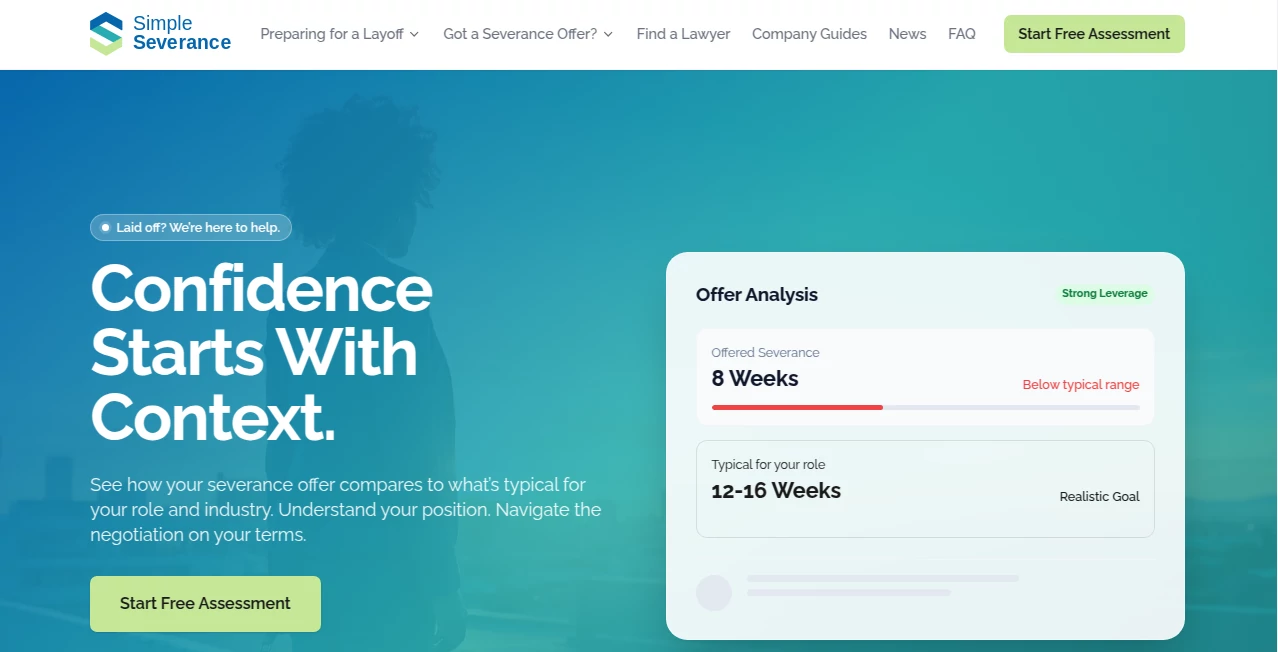
What is SimpleSeverance?
Letting someone go is never easy, but the way you handle it can leave a lasting impression—for better or worse. This platform turns what is often a messy, emotional, paperwork-heavy process into something calm, organized, and surprisingly humane. You set up the offboarding once, it guides both HR and the departing employee through every step, tracks documents, schedules final meetings, handles final pay calculations, and even sends automated well-wishes. I’ve heard from HR folks who used to dread these weeks; now they say it’s become almost routine—still respectful, but without the chaos or forgotten tasks. The quiet dignity it brings to an inherently difficult moment is what people remember most.
Introduction
Offboarding is one of those HR tasks everyone wants to get right but few enjoy doing. Emails get missed, paperwork gets lost, access isn’t revoked on time, and emotions run high on both sides. This tool was built to change that experience from the ground up. It creates a structured, transparent checklist that everyone can see and follow, automates reminders and document collection, calculates final pay accurately (including severance, PTO payouts, bonuses), and keeps a full audit trail for compliance. Companies that use it report fewer mistakes, happier departing employees, and HR teams that finally feel in control instead of firefighting. It’s not about making layoffs “fun”—it’s about making them fair, fast, and forgettable in the best possible way.
Key Features
User Interface
The dashboard is calm and logical: a central timeline shows every step of the offboarding process, color-coded by status. HR drags tasks, assigns owners, sets deadlines; the departing employee gets their own secure portal to view what’s expected, upload docs, sign electronically, and ask questions. Mobile-friendly, clean design, no clutter. Both sides say it feels respectful and professional—nothing confusing or condescending.
Accuracy & Performance
Final pay calculations pull from your payroll data (or manual entry) and handle complex scenarios—prorated salary, accrued PTO, severance formulas, tax withholdings—without errors that trigger post-departure disputes. Automated reminders ensure nothing slips; documents are tracked with timestamps and e-signatures. Performance is rock-solid even during high-volume layoffs; the system scales smoothly and keeps running reliably when pressure is highest.
Capabilities
Full offboarding workflow: access revocation checklist, equipment return tracking, knowledge transfer tasks, exit interview scheduling, final pay computation (with custom severance rules), secure document exchange, e-signatures, automated email sequences (goodbye notes, COBRA info, etc.), and complete audit logs for legal/compliance needs. It integrates lightly with HRIS/payroll systems or runs standalone. Multilingual support and customizable branding make it feel like your own process, not a third-party add-on.
Security & Privacy
Sensitive employee data is encrypted end-to-end, access is role-based and logged, and everything complies with GDPR, CCPA, and SOC 2 standards. Departing employees control what they see and when; HR controls revocation and audit trails. For companies handling layoffs or terminations, that level of care around privacy and compliance is non-negotiable—and it’s handled thoughtfully here.
Use Cases
A growing startup has to let go of five people during a pivot; the tool keeps everything organized, compliant, and kind—departing team members leave with dignity and the company avoids messy follow-ups. A mid-size firm standardizes voluntary resignations across departments; exit interviews are completed, equipment returned, access revoked—all on autopilot. An HR team managing seasonal layoffs uses it to process dozens of people smoothly without dropping critical steps. Wherever goodbyes happen, it brings structure and humanity to a process that desperately needs both.
Pros and Cons
Pros:
- Turns chaotic offboarding into a calm, predictable workflow everyone appreciates.
- Accurate final-pay calculations reduce post-departure payroll disputes.
- Secure document exchange and e-signatures eliminate paper chasing.
- Transparent timeline reduces anxiety for departing employees and HR alike.
- Scales from one-off terminations to large-scale reductions without breaking.
Cons:
- Initial setup (customizing workflows, connecting payroll) takes a few hours.
- Best value comes with paid plans; free tier is limited for small teams.
- Requires some HR involvement to configure properly for complex severance rules.
Pricing Plans
Free plan covers basic offboarding for very small teams—enough to see how much smoother the process can be. Starter and Professional plans unlock unlimited offboardings, advanced automation, custom branding, payroll integrations, detailed analytics, and priority support. Enterprise tier adds dedicated implementation help, SLA guarantees, and volume pricing. Pricing is per-employee-per-month or flat annual—most companies find it pays for itself quickly by reducing HR time, compliance risk, and post-termination issues.
How to Use Simple Severance
Create your organization profile, customize your offboarding template once (tasks, timeline, documents, email templates), then start a new case when someone is leaving. Add their info, assign tasks to HR/team leads, set final-pay details, and send the employee their secure portal link. They complete steps at their pace; you get real-time visibility and reminders. When everything’s done, generate final pay summary, revoke access, and close the case with full audit trail. It’s designed so you’re never chasing people or documents again.
Comparison with Similar Tools
Traditional HRIS offboarding modules are often clunky, slow to configure, and feel like an afterthought. Many standalone tools focus only on checklists or document collection without handling final pay or compliance audit trails. This one combines thoughtful workflow, accurate calculations, and real privacy/security into one cohesive experience. It’s less about feature overload and more about doing the hard parts right—making departures feel fair, organized, and professionally handled.
Conclusion
How you say goodbye matters. It shapes your reputation as an employer, affects departing employees’ willingness to speak positively about you, and can prevent costly post-termination surprises. This platform turns offboarding from a dreaded task into a manageable, even dignified process. When HR can breathe easier, employees leave feeling respected, and the company stays compliant and protected, that’s not just efficiency—it’s doing the right thing the smart way. For any organization that values people on the way out as much as on the way in, it’s hard to imagine handling departures without it.
Frequently Asked Questions (FAQ)
How long does it take to set up?
Most teams are running their first offboarding within a couple hours; full customization takes a day or two.
Do departing employees have to create an account?
No—just click the secure link in their email and complete tasks; optional account for saving documents.
Can it calculate complex severance?
Yes—custom rules, PTO accrual, bonuses, prorated salary, taxes—whatever your policy requires.
Is it compliant with labor laws?
Built with US federal/state and GDPR/CCPA in mind; audit trails support most common requirements.
What happens if someone refuses to complete tasks?
HR sees real-time progress; you can still close the case and revoke access on schedule.
Other .
These classifications represent its core capabilities and areas of application. For related tools, explore the linked categories above.
SimpleSeverance details
This tool is no longer available on submitaitools.org; find alternatives on Alternative to SimpleSeverance.
Pricing
- Free
Apps
- Web Tools
Categories