🧠 AI Quiz
Think you really understand Artificial Intelligence?
Test yourself and see how well you know the world of AI.
Answer AI-related questions, compete with other users, and prove that
you’re among the best when it comes to AI knowledge.
Reach the top of our leaderboard.

















v04 ai
What is v04 ai?
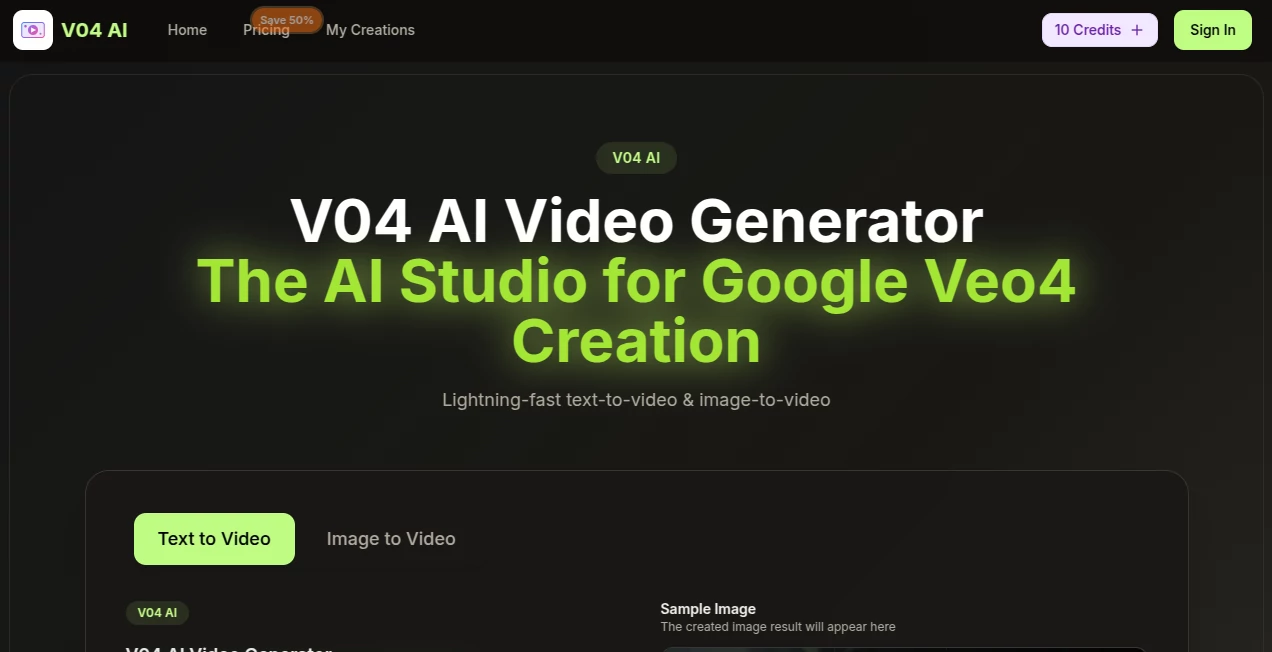
There’s something genuinely exciting about typing a few words and seeing a cinematic clip unfold—smooth camera moves, consistent characters, and that polished look that usually takes hours in editing software. This platform makes that moment feel almost effortless, especially when you’re working with Veo4’s strengths. I’ve seen creators go from a rough concept scribbled in a notebook to a share-ready video in under an hour, and the quality holds up even on the first try. It’s one of those tools that quietly changes how you think about moving images.
Introduction
Video creation used to mean heavy timelines, expensive gear, or a steep learning curve. Now imagine having a personal studio that understands your story, breaks it into meaningful shots, and delivers results that feel directed rather than generated. This tool leans hard into Google’s Veo4 capabilities, but wraps them in a thoughtful interface that handles the hard parts so you can focus on the vision. People are using it for everything from social media hooks to mini-narratives, and the feedback keeps circling back to the same thing: it saves time without sacrificing soul. Whether you’re testing a brand message or just playing with an idea, the output often surprises you with how intentional it looks.
Key Features
User Interface
The dashboard keeps things calm and focused—a wide prompt area, simple toggles for style and length, and a preview pane that updates quickly. Uploading a reference clip or image feels natural, and the whole flow avoids clutter. It’s the kind of layout where you can sit down with coffee, type what’s in your head, and not fight the tool to make it happen. Even on my first go, I didn’t need to hunt for buttons; everything was right where intuition expected it.
Accuracy & Performance
When you give it a detailed scene description or a reference, it rarely wanders off track. Characters stay recognizable across shots, transitions feel purposeful, and the pacing matches the mood you asked for. Generation times are impressively short for the quality—often under a minute for shorter clips—and the consistency across multi-shot sequences is what sets it apart. I’ve run the same prompt twice and gotten variations that still felt coherent, not random.
Capabilities
You can start from text alone, guide it with an image or short video clip, and even add your own audio for perfect sync. It handles cinematic camera language—dolly zooms, pans, tracking shots—and keeps lighting and style coherent from scene to scene. The multi-shot flow means you’re not stuck with disconnected clips; it thinks like a director piecing together a sequence. Whether you want something moody and slow or fast and energetic, it adapts thoughtfully.
Security & Privacy
Your prompts, uploads, and generated clips stay private; the system processes everything securely and doesn’t hold onto content longer than necessary. There’s no sense of your work being mined or shared behind the scenes. For anyone creating branded or personal content, that trust factor makes a real difference.
Use Cases
Social creators build Reels or TikToks that feel cinematic without spending days in Premiere. Small brands turn product shots into storytelling ads that stand out in feeds. Filmmakers prototype scenes or mood reels to pitch ideas quickly. Musicians sync tracks to visuals that match the emotion of the song. Even educators animate short explainers that keep students engaged. It’s flexible enough to fit real workflows, not just toy experiments.
Pros and Cons
Pros:
- Multi-shot coherence that makes videos feel like real stories, not stitched-together clips.
- Reference control (image or video) gives you precision without starting from scratch.
- Fast generations that keep creative momentum going.
- Clean, focused interface that respects your time.
Cons:
- Length capped at around 15 seconds in most modes—great for shorts, less for longer pieces.
- Watermark on free tier (removable with paid plan).
Pricing Plans
You can jump in for free with a daily quota—enough to experiment and see the quality firsthand. Paid plans remove watermarks, unlock higher resolutions, and give more generations per day, with tiers that scale as your needs grow. It’s set up so you only pay for the extra power you actually want, not a bloated package you’ll never use.
How to Use It
Start by typing a description of your scene or story—be as vivid as you like. Upload an image or short clip if you want to guide the style or character look. Choose resolution and any style presets, then hit generate. Preview the result, tweak the prompt if needed, and download when it feels right. Batch a few variations if you’re exploring ideas; it’s quick enough to iterate without losing steam. I usually start broad, then refine once I see what the model is picking up.
Comparison with Similar Tools
Lots of video generators throw out single shots or struggle with continuity—this one prioritizes narrative flow and reference control, which makes a noticeable difference in storytelling. It doesn’t overwhelm with endless options; instead it focuses on delivering usable, cohesive clips fast. For anyone tired of disconnected outputs or long wait times, the difference is clear and welcome.
Conclusion
This isn’t just another AI toy; it’s a real creative partner that lets you tell stories visually without getting stuck in technical weeds. The results feel directed, intentional, and surprisingly human—exactly what you want when you’re trying to move people with moving images. If you’ve got ideas waiting to be seen, this is one of the most satisfying ways to bring them to life right now.
Frequently Asked Questions (FAQ)
How long can the videos be?
Up to around 15 seconds in most cases—ideal for social media, teasers, or story snippets.
Do I need a reference to get good results?
Not at all—text alone works well, but adding an image or clip gives you more control over look and consistency.
Is there a watermark on free videos?
Yes, but it disappears once you move to a paid plan.
Can I use my own audio?
Yes—upload tracks and it syncs them naturally to the motion and pacing.
How fast are generations?
Usually under a minute, sometimes faster, so you can iterate without losing momentum.
AI Animated Video , AI Image to Video , AI Video Generator , AI Text to Video .
These classifications represent its core capabilities and areas of application. For related tools, explore the linked categories above.
v04 ai details
Pricing
- Free
Apps
- Web Tools
Categories

v04 ai Alternatives Product

Sora2 AI Vid…

AI Baby Dance

Sora by Open…
JoyFlix AI

Seedream 4.0…
ImagineToVid…

Omnigen Stud…
Aura AI

VIGGLE