
🧠 AI Quiz
Think you really understand Artificial Intelligence?
Test yourself and see how well you know the world of AI.
Answer AI-related questions, compete with other users, and prove that
you’re among the best when it comes to AI knowledge.
Reach the top of our leaderboard.


















Banana Pro
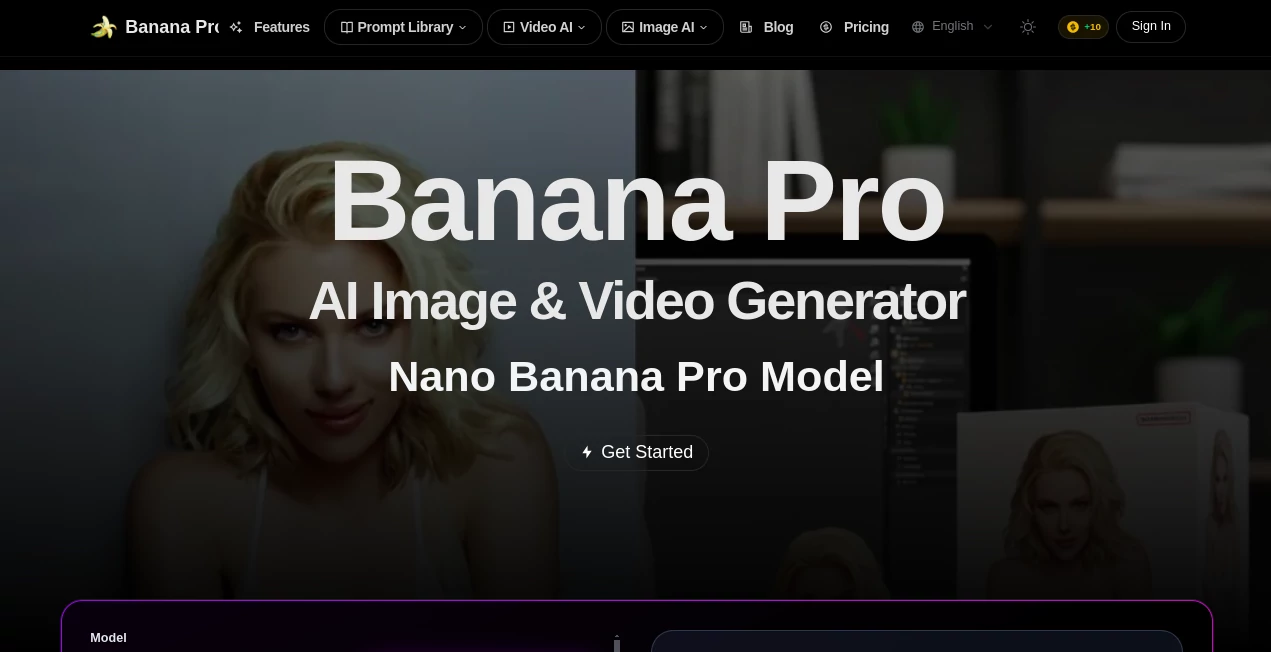
What is Banana Pro?
Banana Pro slips into the creative workflow like a trusty sidekick, transforming rough sketches and fleeting thoughts into polished images and clips that capture the essence just right. This platform draws in a crowd of makers who appreciate how it handles the heavy lifting, letting them focus on the vision rather than the mechanics. Folks who've given it a spin often share how it turns a quiet afternoon into a gallery of gems, making the leap from concept to canvas feel effortless and exciting.
Introduction
Banana Pro came together from a desire to streamline the visual crafting process, sparked by creators frustrated with tools that demanded too much tinkering for decent results. It rolled out with a focus on blending smarts with simplicity, quickly picking up steam among independent artists and small teams who needed reliable ways to produce standout pieces without breaking the bank. Over time, updates have layered in more depth, responding to user stories of breakthroughs—like nailing a brand look across a whole campaign in a single session. At its heart, it's about empowering those sparks of inspiration, turning them into tangible outputs that hold their own in any setting, from quick social shares to full project builds.
Key Features
User Interface
The entry point keeps things welcoming, with spots to drop in files or jot down ideas that guide the process without overwhelming. As you build, a chat-like flow lets you refine on the fly, pulling up previews that update smoothly and keep the momentum going. It's designed to feel intuitive, like bouncing thoughts off a collaborative partner, where each step builds on the last without losing track of where you started.
Accuracy & Performance
It shines when given a detailed outline, weaving elements together with a keen sense of placement and flow that rarely strays from the intent. Outputs arrive promptly, holding steady even under heavier loads, and deliver clarity that stands up to close inspection. Users point to moments where complex setups came together seamlessly, proving its knack for staying true to the brief while adding that extra polish.
Capabilities
From spinning single frames to chaining them into sequences, it covers a wide ground, incorporating touches like varied lighting or consistent figures across views. Options for different scales and formats make it adaptable, whether you're aiming for quick thumbnails or expansive displays. The real strength lies in how it layers in contextual details, opening doors to projects that blend narrative with nuance in ways that feel fresh and fitting.
Security & Privacy
Your drafts get treated with care, processed in isolated runs and cleared once complete, ensuring nothing lingers without your nod. It offers straightforward controls for what stays stored or shared, giving peace of mind for work that's meant to stay under wraps until ready. Creators value that straightforward approach, allowing bold experiments without the nagging doubt about loose ends.
Use Cases
Brand builders craft unified looks for marketing pushes, ensuring every piece echoes the core message without mismatched vibes. Storytellers map out sequences for pitches, seeing how scenes connect before committing to full production. Solo makers whip up personal portfolios, blending styles to showcase range without endless revisions. Teams in fast-paced spots use it for rapid prototypes, testing ideas that evolve into client winners.
Pros and Cons
Pros:
- Handles intricate setups with a steady hand, keeping everything aligned.
- Quick turns mean ideas don't cool off before they take shape.
- Versatile enough for solo spins or group flows without extra hassle.
- Outputs ready for real use, from screens to prints, right out the gate.
Cons:
- Best with clear guidance; loose sketches might need a second pass.
- Higher volumes tap into credits, which add up for heavy hitters.
- Some advanced tweaks are on the horizon, not fully here yet.
Pricing Plans
It starts with accessible entry points for light explorers, scaling to fuller access as needs grow, all built around a flexible credit setup that matches your pace. Options range from basic monthly dips to annual commitments that ease the load, with perks like faster queues and broader support layered in for those deeper dives. The structure keeps things fair, rewarding steady use without steep jumps that scare off newcomers.
How to Use Banana Pro
Begin by laying out your core idea in the prompt area, then add any reference files to ground the build. Let it generate the first round, review the options, and chat in adjustments to hone the details. Select your preferred view and grab the file in the format that fits, then iterate as needed to refine the set. It's a loop that builds confidence with each turn, turning initial hunches into honed highlights.
Comparison with Similar Tools
Compared to broader suites that pack in extras, Banana Pro zeros in on core crafting with less clutter, though those might offer more built-in libraries for variety seekers. Against quicker sketchers, it adds that layer of thoughtful integration, trading a touch of speed for outputs that feel more complete. It strikes a balance for users who want reliability without the overload, edging ahead in scenarios where cohesion counts.
Conclusion
Banana Pro stands as a solid bridge for turning abstract aims into concrete creations, blending ease with enough depth to keep things engaging. It empowers makers to push boundaries without the usual roadblocks, fostering work that's as rewarding to build as it is to share. As visual demands keep rising, this platform positions itself as a steady companion, ready to evolve alongside the ideas it helps bring to light.
Frequently Asked Questions (FAQ)
What file types can I upload?
Common formats like JPEG, PNG, and WEBP work smoothly, up to a reasonable size limit.
How does the refinement process work?
Through simple back-and-forth descriptions, it adjusts while holding onto prior elements.
Is it suitable for team projects?
Yes, with plans that support shared access and collaborative tweaks.
Can I use outputs commercially?
Absolutely, all plans include rights for professional applications.
What if my idea is in another language?
It handles multiple tongues well, incorporating them seamlessly into the visuals.
AI Text to Image , AI Video Generator , AI Art Generator , AI Design Generator .
These classifications represent its core capabilities and areas of application. For related tools, explore the linked categories above.
Banana Pro details
This tool is no longer available on submitaitools.org; find alternatives on Alternative to Banana Pro.
Pricing
- Free
Apps
- Web Tools
Categories

Banana Pro Alternatives Product

Nano Banana 2

LTX-3 AI

flux 3

Banana AI

Nanosora

AI Motion Co…

Seedance 2.0…

Veo 3 Flow

ChromaPeel