
🧠 AI Quiz
Think you really understand Artificial Intelligence?
Test yourself and see how well you know the world of AI.
Answer AI-related questions, compete with other users, and prove that
you’re among the best when it comes to AI knowledge.
Reach the top of our leaderboard.


















Mistral AI

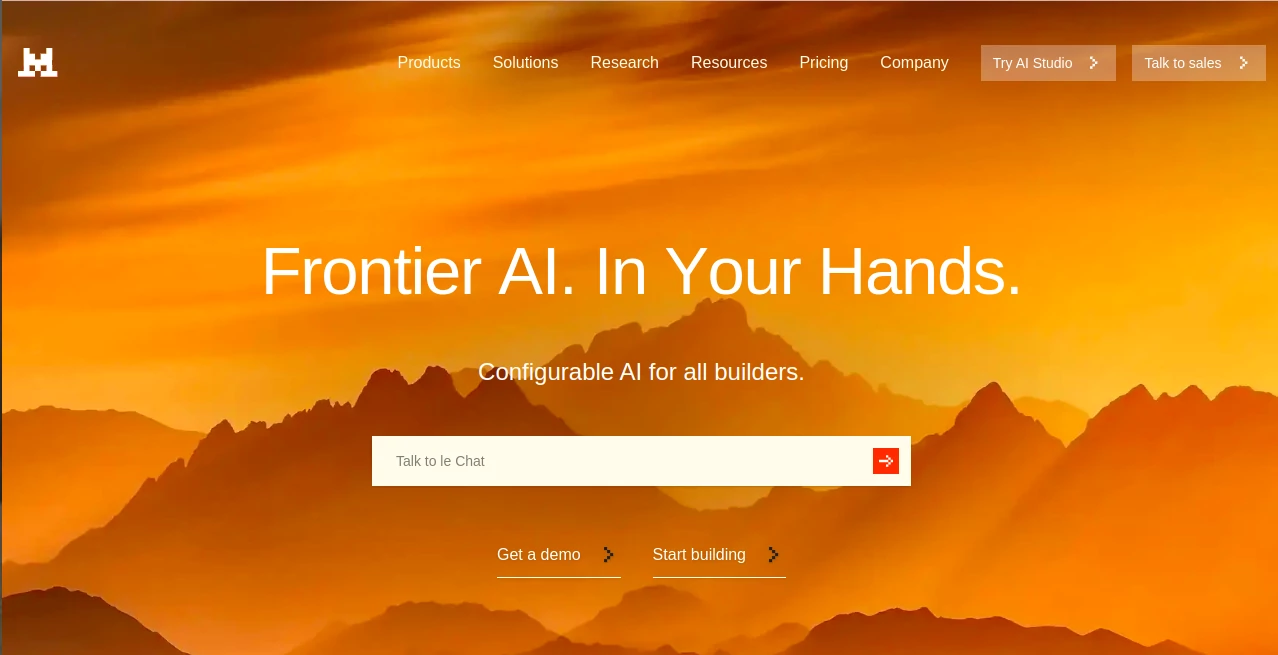
What is Mistral AI?
Mistral stands as a beacon for those shaping the next wave of smart systems, offering a suite of adaptable tools that turn bold visions into everyday realities. This platform draws in creators and teams by blending cutting-edge models with hands-on flexibility, letting users craft solutions that fit like a glove. Many who've dived in recount how it shifts the heavy lifting from shoulders to seamless flows, sparking projects that once felt out of reach.
Introduction
Mistral took flight a couple years back, sparked by a drive to open up advanced tech to more hands without the usual gates. It started with a focus on open models that anyone could tweak, quickly pulling in builders from garages to boardrooms who shared stories of overnight prototypes that changed their game. Today, it's a hub where enterprise needs meet inventive sparks, evolving through close ties with users to handle everything from quick chats to deep data dives. What keeps it buzzing is that commitment to keeping things in your hands, whether you're running setups close to home or scaling across clouds, turning what-if whispers into working wonders.
Key Features
User Interface
The main dash feels like a shared workspace, with clean tabs for jumping between chats, builds, and tweaks that load without a stutter. A central feed pulls in suggestions based on what you're doing, whether brainstorming lines or testing flows, all in a layout that scales smooth from desk to device. It's the kind of setup that invites lingering, with previews that update live and buttons that nudge you forward without overwhelming the screen.
Accuracy & Performance
When you throw in a complex query, it sorts the signal from noise with a precision that turns heads, drawing on vast backings to deliver answers that hold water under scrutiny. Tasks wrap up briskly, even for hefty pulls like code reviews or file scans, keeping the pace steady without drops. Users often point to how it nails those edge cases, like multilingual mixes or technical tangles, proving reliable where others might waver.
Capabilities
From spinning up chat helpers that handle multiple tongues and formats to coding aids that juggle dozens of dialects, it covers a wide swath of building blocks. You can link it to your own stores for tailored pulls, automate runs across apps, or even craft custom setups for niche needs like planning or predictions. The real strength lies in how it layers these, letting agents team up for bigger plays while keeping the reins firmly in your grip.
Security & Privacy
Your data stays where you want it, with options to keep everything on your turf or tap trusted clouds without leaks. It builds in checks for safe runs, giving you dials for what gets shared and logs to track the path. Folks handling sensitive stacks appreciate the no-nonsense approach, where control doesn't come at the cost of convenience, letting bold experiments happen without the nagging what-ifs.
Use Cases
Defense teams lean on it for mapping missions with quick, clear insights from scattered sources. Finance pros build virtual guides that sift client queries without the fluff, streamlining chats into actions. Logistics outfits tailor it for route tweaks that shave time off hauls, while energy watchers use it to forecast fixes before breakdowns hit. Even public planners pull it for data crunches that inform big calls, turning raw numbers into narratives that stick.
Pros and Cons
Pros:
- Adapts to your world, from edge runs to cloud swells, without lock-ins.
- Hands-on help from experts who get the grit of real builds.
- Covers coding, chats, and crunches in one flexible stack.
- Keeps things private and potent, even in tight spots.
Cons:
- Full custom dives might need a bit of back-and-forth to perfect.
- Open models shine bright but can demand tweaks for ultra-niche fits.
- Scaling big teams calls for planning around the pro paths.
Pricing Plans
It eases in with open access for light explorations, letting you test waters without a splash. From there, tiers likely ramp up for heavier pulls, with enterprise paths that bundle guidance and scale for outfits chasing custom curves. The setup keeps it approachable, with options that match your stride, often tying costs to what you actually use rather than flat fees that bite too soon.
How to Use Mistral
Start by picking your entry—maybe a quick chat for ideas or a studio spot for deeper digs. Feed in your goals, whether a code snippet or a data query, and let it propose paths with previews to poke. Tweak the ties to your tools, test the flow in a safe sandbox, and roll it out where it fits best. Swing back to refine with fresh inputs, building a rhythm that grows with your needs.
Comparison with Similar Tools
Where some stacks lock you into their world, Mistral hands over the keys for runs anywhere, though those might edge in sheer size for brute tasks. Against closed setups, it opens doors to tweaks that feel personal, but could trail in plug-and-play for cookie-cutter needs. It strikes a sweet balance for builders who want power without the chains, outshining in flexibility where others stick to scripts.
Conclusion
Mistral maps out a path where smart tech meets your terms, empowering creators to chase frontiers without the fences. It turns the promise of advanced aids into practical plays, fostering finds that fuel further flights. As more minds tap into tailored intelligence, this platform stands ready, bridging bold ideas to built realities one clever connection at a time.
Frequently Asked Questions (FAQ)
Can I run it on my own setup?
Yes, deploy it on-premises, edges, or devices for full grip.
What languages does it handle?
Over eighty for coding, plus multilingual chats that flow natural.
How's the help for big projects?
Expert teams jump in for custom trains and scaled rolls.
Is data safe across borders?
Built for privacy, keeping your stacks sovereign wherever.
Good for teams or solos?
Scales seamless from one builder to full crews.
AI Code Assistant , AI Developer Tools , AI Chatbot , Large Language Models (LLMs) .
These classifications represent its core capabilities and areas of application. For related tools, explore the linked categories above.
Mistral AI details
This tool is no longer available on submitaitools.org; find alternatives on Alternative to Mistral AI.
Pricing
- Free
Apps
- Web Tools
Categories

Mistral AI Alternatives Product

PolyBuzz

CodeProt

OhNoCode

DevUtilX

Emergent

vivgrid

Workik

MidJourney

ChatFlowchart
