


















UrbFact
What is UrbFact?
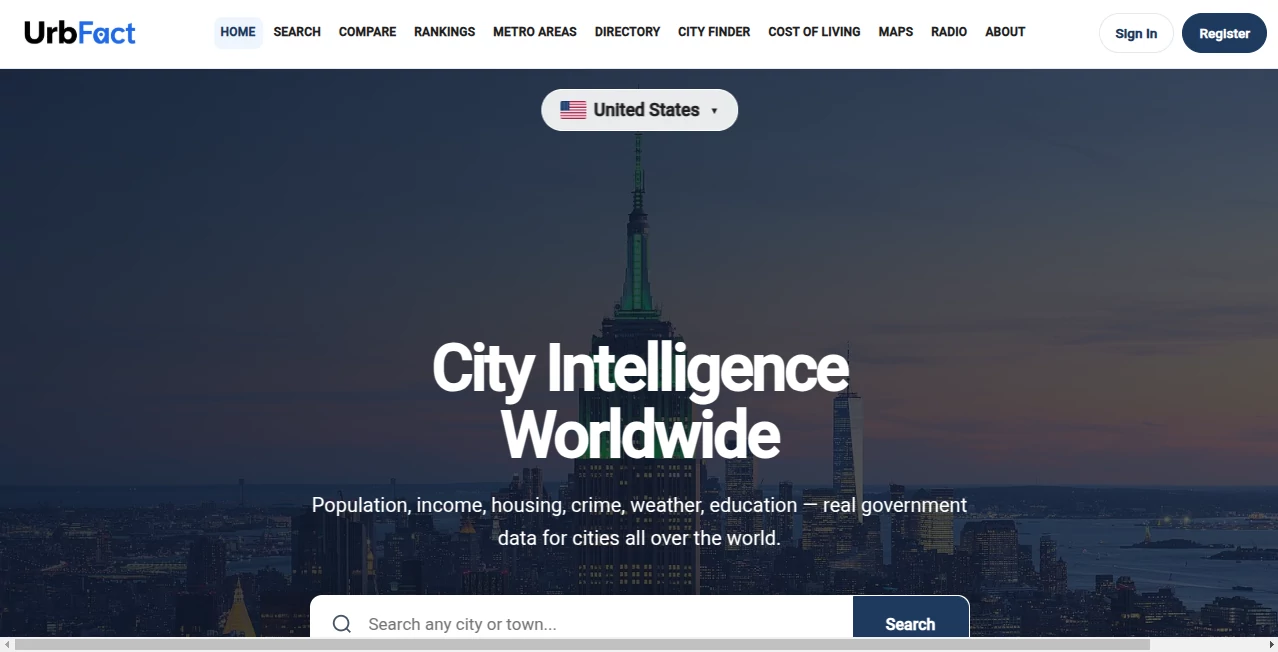
Moving to a new city, researching investment opportunities, or simply trying to understand where you live better can feel overwhelming. You end up jumping between ten different government sites, hoping the numbers are current. This platform brings it all together in one clean place. Population trends, income levels, housing costs, crime stats, weather patterns, education quality—real government data for over 238,000 cities and towns worldwide, presented clearly and updated regularly. I’ve used it to compare neighborhoods before a move and was surprised how quickly I could see meaningful differences that would have taken hours to uncover otherwise.
Introduction
UrbFact was built for people who need reliable city data without the headache of digging through official databases. Whether you’re a family planning a relocation, a business scouting new markets, a researcher looking for patterns, or just a curious resident, it turns scattered public information into something you can actually use. The numbers come straight from government sources, and the interface makes comparing cities or digging into one location feel effortless. It’s become a go-to reference for thousands who want facts, not opinions, when making decisions about where to live, work, or invest.
Key Features
User Interface
The design is straightforward and welcoming. Search for any city or town, and you land on a clean dashboard with key metrics at a glance—population, average income, home values, life expectancy, and more. Side-by-side comparison mode lets you pick two places and see how they stack up across dozens of data points. Everything loads quickly, and the information is organized logically so you don’t have to hunt. It feels like a modern atlas that actually understands what people want to know about places.
Accuracy & Performance
Because it pulls directly from official sources, the data carries real weight. Updates happen regularly so you’re not looking at outdated figures from years ago. The platform handles large-scale searches smoothly, whether you’re looking at one neighborhood or comparing dozens of cities. Users consistently mention how trustworthy the numbers feel compared to other aggregated sites that sometimes mix sources without clear attribution.
Capabilities
You can explore detailed profiles for individual cities or run side-by-side comparisons across population, economy, housing, crime, education, weather, and more. Browse by country, state, or population size. The search is powerful enough to handle small towns as well as major metros. It also surfaces interesting insights like cost of living indexes and demographic breakdowns that help paint a fuller picture of daily life in each place.
Security & Privacy
As a public data platform, it doesn’t collect unnecessary personal information. Your searches stay private, and there’s no aggressive tracking or account requirement for basic use. The focus stays on delivering open government data accessibly, without turning users into the product.
Use Cases
A young couple compares three different suburbs before deciding where to buy their first home, weighing schools, commute times, and housing costs in one view. A remote worker researches cities with good internet and reasonable living expenses before making the move. A real estate investor spots emerging markets by looking at population growth and income trends across multiple states. Students use it for geography or urban planning projects, pulling accurate, up-to-date statistics without endless government website hopping. It’s practical for anyone who needs to understand places better.
Pros and Cons
Pros:
- Enormous coverage—over 238,000 cities and towns worldwide.
- Clean, fast interface that makes data exploration enjoyable.
- Side-by-side comparisons that reveal differences at a glance.
- Relies on official government sources for credibility.
- Free to use for most everyday research needs.
Cons:
- Some very small towns have limited data points available.
- Advanced analytics and exports require a paid upgrade.
- Historical trend graphs could be more detailed in some areas.
Pricing Plans
The core experience is free, giving you generous access to search, profiles, and basic comparisons. Paid plans unlock deeper analytics, bulk exports, historical trends, API access, and ad-free browsing. Pricing is reasonable for researchers, businesses, or power users who rely on the data professionally. Many find the free tier more than sufficient for personal decisions.
How to Use UrbFact
Start by typing a city name in the search bar. Browse the key metrics on the overview page, then dive into specific categories like economy, housing, or education. To compare places, add a second (or third) location and switch between views. Use the filters to explore by state, country, or population size. Save favorite cities for quick access later. The whole experience is intuitive enough that you can start exploring meaningfully within your first minute on the site.
Comparison with Similar Tools
Many city data sites feel outdated or overwhelming with too much raw information. Others focus only on major metros and ignore smaller towns. This one stands out with its massive coverage, clean presentation, and practical comparison tools that actually help with real decisions. It avoids the bloat of government portals while delivering more depth than simple Wikipedia-style summaries.
Conclusion
Understanding places shouldn’t require a research degree or hours of frustration. UrbFact makes city intelligence accessible, accurate, and surprisingly engaging. Whether you’re planning a move, evaluating opportunities, or just satisfying your curiosity about the world around you, it delivers the facts you need in a format that actually makes sense. In a world full of noise, having clear, reliable data at your fingertips feels like a genuine advantage.
Frequently Asked Questions (FAQ)
How many cities are covered?
Over 238,000 cities and towns across more than 240 countries and territories.
Is the data up to date?
Yes—sourced from official government statistics and refreshed regularly.
Can I compare more than two cities?
Yes, the platform supports multi-city comparisons for deeper analysis.
Is basic use completely free?
Yes—core search, profiles, and comparisons are available without payment.
Do you offer data exports?
Yes—available on paid plans for users who need data for reports or analysis.
These classifications represent its core capabilities and areas of application. For related tools, explore the linked categories above.

UrbFact Alternatives Product

Ultimate Too…

Elicit
Dedoctive
Meet in the …

Manus
X-Installer

Robux Tax Ca…

Toonifyit

Ecom Mediate…
