
















NetlifyAPP
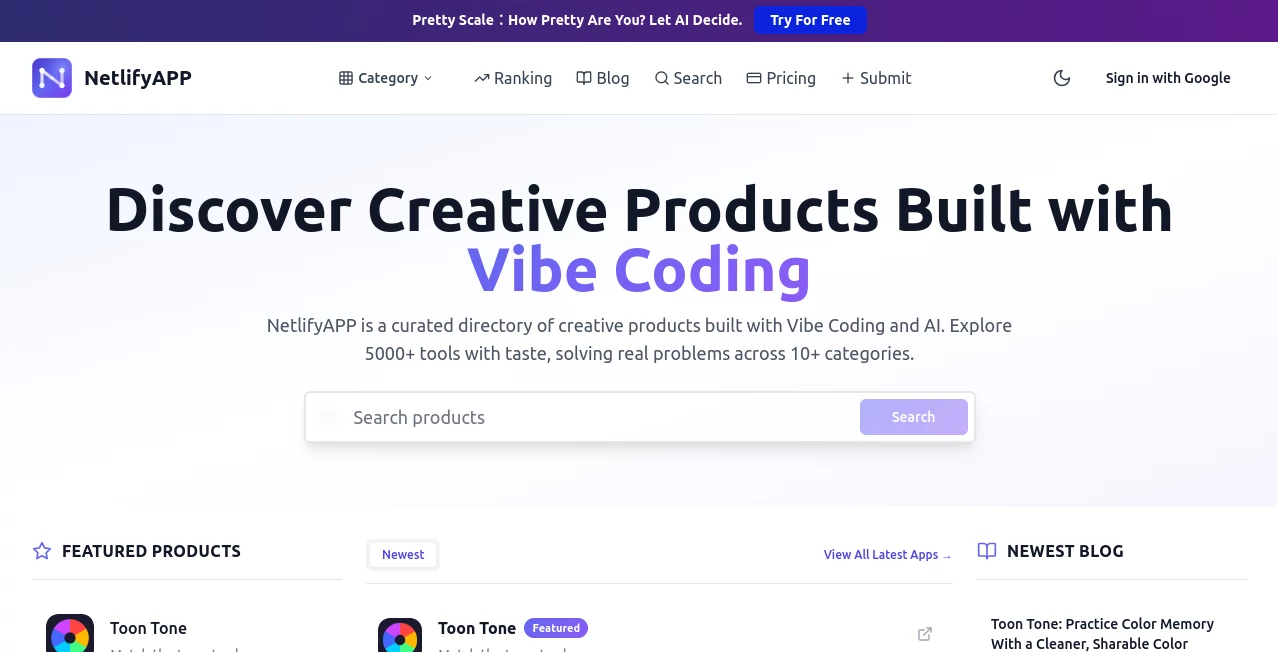
What is NetlifyAPP?
You know that feeling when you have a killer idea for an app, but the thought of managing servers, dealing with deployment pipelines, and wrestling with infrastructure kills your vibe? Yeah, we have all been there. It is the silent creativity killer for most developers and founders.
I remember trying to launch a simple side project a few months back, and I spent an entire weekend just trying to get the hosting environment to play nice with my API keys. It was exhausting, and honestly, it almost made me scrap the whole thing. That is exactly why a platform grew to be such a game-changer in this space. It steps in to wipe away all that unnecessary complexity. Instead of acting as a complicated roadblock, it acts like a silent engine. You just focus on building the cool stuff, and it handles the rest, getting your work from a messy code editor to a live, global URL in seconds, not hours.
Key Features
What makes this platform stand out in a crowded market is how deeply it has embraced the AI era. It isn't just a place to dump your files; it is a dynamic ecosystem designed for how we build today.
User Interface
The dashboard is refreshingly clean. There is no clutter, no confusing jargon thrown in your face. You connect your Git repository (you know, like GitHub) in a couple of clicks, and suddenly, every time you push code, the magic happens automatically. It feels like flying a drone with an automatic hover mode; you know it is doing complex stuff, but you don't have to touch any of the scary buttons. For someone who hates breaking their flow, this simplicity is a lifesaver.
Accuracy & Performance
We have all seen those hosts that promise the world but deliver a snail's pace. This one actually delivers on performance. With its global CDN, your content zips around the world almost instantly. But the real smarts are in the new "Observability" feature. If something breaks, you aren't left digging through a mountain of boring text logs. Instead, you get a clear, visual map of exactly where the slowdown happened. It used to take me hours to figure out why a function was timing out; now, it takes a few glances. It is like having X-ray vision for your app's health.
Capabilities
This is where things get exciting. They have introduced a feature called the "AI Gateway." Before this, adding AI to your app meant juggling API keys for OpenAI, Anthropic, or Gemini like a clumsy clown. You had to manage billing for each one, keep track of who used what, and pray you didn't accidentally expose a key. Now, the platform acts as a central hub. It manages all those credentials securely for you. You just write the code, and it routes the requests. Plus, with the "Prerendering" extension, your dynamic React sites finally show up correctly when an AI crawler or search engine looks at them. It solves the old problem of "blank page" SEO instantly.
Security & Privacy
Honestly, the speed of AI development used to scare me a bit when it came to security. You blink, and an AI agent writes 500 lines of code, but did it accidentally paste my database password? The platform thought of that. Their "Smart Secret Scanning" is like a paranoid bodyguard. Before your site even goes live, it scans the code for patterns that look like API keys or credentials [citation:9]. If it finds something risky, it blocks the deployment until you check it. It catches about 17% of potential leaks before they become disasters. And crucially, your data isn't sold to train other people's models, which is a massive relief for privacy.
Use Cases
This tool is incredibly versatile, fitting into many different workflows.
- Jamstack Junkies: If you love static site generators like Hugo, Astro, or Eleventy, this is basically the native habitat for your projects.
- AI Prototypers: Are you building a "Chat with your PDF" app or a quick MVP for an AI girlfriend? The AI Gateway lets you add those brainy features without the billing headache.
- Frontend Developers: Teams working with React, Vue, or Svelte get automatic previews for every pull request. Your designer can see the changes instantly without waiting for a deploy.
- Small Business Owners: Need a marketing site that actually loads fast and has forms? You can get it up in an afternoon without hiring a backend team.
Pros and Cons
Pros:
The biggest win is the speed to market. You can go from "git push" to a live URL in under a minute. The free tier is genuinely generous, giving you a ton of bandwidth and build minutes to play with. It integrates seamlessly with AI coding assistants like Cursor or Lovable, meaning you can deploy straight from your chat window [citation:2]. The built-in rollback feature is a lifesaver; if your latest update crashes, you revert to the last stable version with one click.
Cons:
Nothing is perfect, right? If you are building a heavy backend with lots of WebSockets or long-running background jobs, this might not be the best fit. It shines brightest for frontend and static logic. The new credit-based billing system for AI features can be a little confusing at first; you have to wrap your head around how many credits equals a dollar [citation:3]. Also, in rare cases, the build times can sometimes be a tad slower than a dedicated VPS if you are doing very complex compilation steps.
Pricing Plans
You can start for absolutely nothing. The free plan is not a trial; it is a real plan that includes 100GB of bandwidth, serverless functions, and 300 build credits per month. It is perfect for personal projects, portfolios, or learning.
When you need to collaborate with a team or handle heavier traffic, the "Pro" plan kicks in at around $19 per user per month. This gives you a massive 1TB of bandwidth, password protection for sites, and advanced analytics. For enterprises or startups dealing with massive scale, they have customizable "Enterprise" plans with specific SLAs and security guarantees. Honestly, for 90% of indie hackers and small teams, the free or Pro plan covers everything you need.
How to Use the Platform
Getting started feels almost too easy. First, you sign up using your Git account (GitHub, GitLab, or Bitbucket). Once you are in the dashboard, you just click "Add new site" and pick "Import an existing project." It pulls up your repos, you select one, and hit "Deploy."
That is it. It detects your build settings automatically. If you want to add AI powers, you just install the AI Gateway plugin in your project settings, and it injects the environment variables for you. You never even have to open a terminal to configure a server. It turns a process that usually takes 2 hours into a 2-minute coffee break.
Comparison with Similar Tools
You might be looking at Vercel or GitHub Pages. Vercel is amazing, especially if you are obsessed with Next.js. However, it tends to be a bit more expensive on the free tier limits, and its pricing per user can add up fast [citation:5].
GitHub Pages is great for bloggers, but it fails completely the moment you need server-side logic or an API endpoint. You cannot run a "smart" app on GitHub Pages; it is strictly static.
Where this platform wins is the balance. It gives you serverless functions (so you can run logic) plus the new AI features, all while maintaining the drag-and-drop simplicity of static hosting. It is the sweet spot between "too simple" and "too complex."
Conclusion
If you are building for the modern web, especially if you are leveraging AI tools to write your code, the old ways of hosting just feel clunky. Why spend your energy fighting with YAML files and SSH keys when you could be spending it on the actual product?
This platform respects your time. It provides a safety net for security, a rocket ship for deployment speed, and a clean room for your creativity. Whether you are a solo developer trying to launch a side hustle or a team shipping enterprise software, it removes the friction. It lets you fall in love with building all over again, without the burnout of managing the "boring stuff."
Frequently Asked Questions (FAQ)
Do I need a credit card to start using the free plan?
No. You can sign up and deploy your first site without adding any payment details, which is great for students or just testing the waters.
Can I use my own domain name?
Absolutely. You can buy a domain through the platform or connect one you already own (like from Namecheap or GoDaddy). They provide free SSL certificates to make it secure.
What happens if I go over my free bandwidth limit?
The site will pause to prevent overage charges. You will get a notification, and you can simply upgrade your billing plan to get things running again.
Does it work with databases?
Yes, but you usually use a third-party service like Supabase, Neon, or MongoDB Atlas. The platform handles the frontend/functions, and your database lives elsewhere, connected via API.
Is it good for e-commerce?
For the frontend store (product pages, cart UI), yes, it is excellent. For the actual checkout payment processing, you would integrate Stripe or Shopify via the serverless functions.