
Pitchtank
What is Pitchtank?
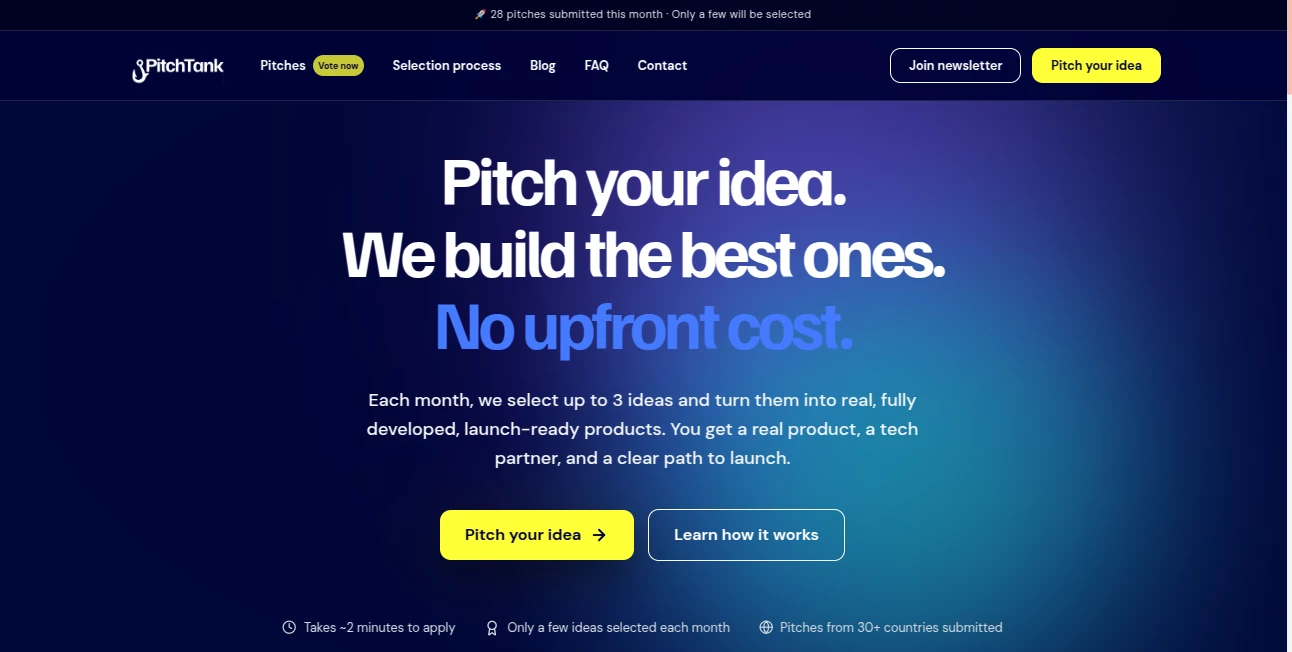
Most people have ideas. Few ever see them built. The gap between “what if” and a real product is usually money, time, or technical know-how. PitchTank quietly bridges that gap. You share your app, website, or business idea, and every month they pick winners and build the winning ones completely free. The founder keeps 70% of the revenue forever. It’s not a contest with trophies — it’s a genuine shot at turning your idea into something real without the usual startup funding grind. I’ve seen founders light up describing how their long-held concept finally got legs, and that kind of story keeps the platform feeling refreshingly different.
Introduction
Building something from scratch is exciting but brutally hard. You need developers, designers, servers, marketing — the list goes on. PitchTank flips the script: instead of chasing investors or learning to code, you simply pitch your idea clearly. A panel reviews submissions, selects the most promising ones each month, and then their team builds the product end-to-end. No equity grab, no complicated contracts — just a fair revenue split that rewards the original thinker. It’s become a beacon for solo founders, side-hustlers, and first-time entrepreneurs who have vision but lack the resources to execute. The best part? Even if you don’t win, the pitching process itself forces clarity and often sparks useful feedback.
Key Features
User Interface
Submitting is refreshingly straightforward. You fill out a clean form describing your idea, target audience, why it matters, and any supporting details or mockups. The dashboard for tracking submissions is simple and transparent. The whole experience feels designed by people who understand that founders want to focus on their idea, not on learning another complicated platform.
Accuracy & Performance
The selection process is thoughtful and transparent. Winners are chosen based on viability, originality, and potential impact rather than hype. Once selected, the build process moves quickly, with regular updates to the founder. The final products are built to a professional standard, not rushed prototypes, which gives winners a real chance at success in the market.
Capabilities
They build full apps, websites, SaaS tools, and digital products. You keep ownership and the majority of revenue. The team handles design, development, launch, and even basic initial marketing support for winners. It’s not just an idea showcase — it’s a genuine build-and-launch partnership for the selected few each month. This end-to-end support is what makes it stand out from typical pitch competitions.
Security & Privacy
Your idea stays protected during submission. They have clear processes to respect intellectual property, and only selected ideas move forward to development. The straightforward agreement ensures founders understand the revenue split and ownership from day one, creating trust on both sides.
Use Cases
A teacher with an idea for a better classroom management tool pitches it and wins — now thousands of educators use the built product. A side-hustler who noticed a gap in local service booking submits their concept and watches it become a real business they co-own. Non-technical founders who have spent years refining an idea finally see it live without learning to code or raising money. It’s perfect for anyone with a strong vision but limited resources or technical background.
Pros and Cons
Pros:
- Completely free development for selected winners — zero upfront cost.
- You keep 70% of revenue forever, with clear terms.
- Professional build quality from an experienced team.
- Real chance for non-technical founders to see their ideas launched.
- Monthly cadence keeps momentum high for the community.
Cons:
- Highly competitive — only a few ideas are selected each month.
- You give up 30% of revenue in exchange for the build and launch support.
- Not every good idea will be chosen, so patience and iteration may be needed.
Pricing Plans
Submitting your idea is completely free. There are no hidden fees or paid tiers to get noticed. The only exchange happens if you win: they build it for free and take 30% of revenue as their return on investment. It’s one of the fairest “no money down” models I’ve seen for early-stage ideas.
How to Use PitchTank
Head to the site and click to submit your idea. Write a clear description of the problem you’re solving, your proposed solution, target users, and why you believe it will work. Add any mockups or supporting details if you have them. Submit and wait for the review round. If selected, you’ll work with their team through the build process, providing feedback along the way. Once live, you focus on growth while they handle the technical side. The whole journey from pitch to launch is designed to be straightforward for the founder.
Comparison with Similar Tools
Traditional accelerators and pitch competitions often take significant equity or require relocation. Many idea platforms are just showcases without execution. PitchTank stands out by offering full build support with a fair revenue split and no upfront equity dilution. It’s less about mentoring theater and more about actual delivery — a practical path for ideas that might otherwise never leave the notebook.
Conclusion
Great ideas deserve a chance, even if their creators don’t have funding or technical skills. PitchTank gives those ideas a genuine opportunity by removing the biggest barriers to execution. It’s not a guarantee — competition is real — but for the winners, it’s a life-changing shortcut from concept to revenue-generating product. In a world where building something usually costs a fortune, this model feels refreshingly fair and focused on the idea itself. If you’ve been sitting on something you believe in, this might be the push it needs.
Frequently Asked Questions (FAQ)
How often do they select winners?
They run monthly selection rounds and build the chosen ideas.
What kinds of ideas do they accept?
Apps, websites, SaaS tools, and digital business ideas with clear potential.
Do I lose ownership if I win?
No — you keep ownership and 70% of revenue. They take 30% for building it.
Is there any cost to submit?
Completely free to pitch your idea.
What if my idea isn’t selected?
You can refine and resubmit in future months. Many successful ideas took a couple attempts.
These classifications represent its core capabilities and areas of application. For related tools, explore the linked categories above.

Pitchtank Alternatives Product

5SVG

AI for daily…

Marketing To…
Aback Launch

Ai Ranking

aitoolhunt.t…

Startup Tool…

Best of AI

Launchelion